
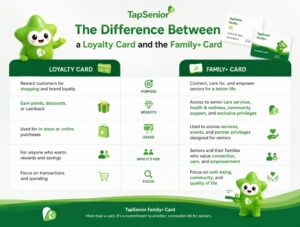
As people live longer and healthier lives, families are spending more time helping aging parents and grandparents navigate everyday life. Finding dependable healthcare providers, transportation services, pharmacies, home maintenance companies, wellness programs, restaurants, financial services, and community activities has become a regular responsibility for millions of caregivers. While technology has made information easier to access, discovering businesses that truly understand the needs of older adults still requires significant time and effort. Many families search through online reviews, compare websites, ask friends for recommendations, and visit multiple businesses before finding one they trust. Unfortunately, this process repeats every time a new need appears. The challenge is no longer simply finding a business. It is finding a reliable network that continues providing value over time. This is why TapSenior introduces an entirely different concept through the Family+ Card. Instead of functioning like a traditional loyalty card that rewards customers only within one business, the Family+ Card connects seniors, families, and participating businesses into one growing ecosystem. When discussing The Difference Between a Loyalty Card and the Family+ Card, it is important to understand that today’s families expect much more than discounts or occasional promotions. They want convenience, trusted relationships, financial value, and confidence that every purchase contributes to future benefits. Older adults deserve solutions that support independent living while rewarding their loyalty across multiple services they already use every day. Caregivers deserve a system that reduces the burden of constantly searching for new providers. Businesses deserve opportunities to build lasting customer relationships while growing alongside other trusted organizations. TapSenior brings these goals together through an innovative Family+ ecosystem where every interaction creates additional value. Understanding The Difference Between a Loyalty Card and the Family+ Card begins with recognizing why conventional loyalty programs no longer meet the changing expectations of modern families caring for older loved ones.
The Reality Many Families Experience
Supporting an aging parent rarely involves only one service.
A family may first help arrange transportation for medical appointments.
Soon after, prescription medications become a regular expense.
Home maintenance becomes more important.
Routine health screenings become more frequent.
Nutrition, exercise, social activities, financial planning, hearing care, vision care, and personal wellness gradually become part of everyday life.
Each need introduces another business.
Each business introduces another membership.
Another account.
Another loyalty card.
Another reward program.
Instead of making life easier, these separate systems often create unnecessary complexity.
Many older adults carry multiple membership cards but receive only limited benefits from each one.
Families spend time managing programs that rarely work together.
The experience feels fragmented rather than connected.
What Is a Traditional Loyalty Card?
Most people are familiar with loyalty cards.
A supermarket rewards customers after repeated purchases.
A pharmacy offers points that can only be redeemed in its own stores.
A restaurant provides discounts after several visits.
Coffee shops reward regular customers with free drinks.
These programs successfully encourage repeat business.
They strengthen relationships between one customer and one company.
For decades, this model has worked well.
However, it was never designed to support the complex needs of older adults.
Seniors rarely depend on just one business.
They interact with many different service providers throughout the year.
A loyalty card that works inside only one company provides value, but only within very limited boundaries.
The Hidden Limitations of Traditional Loyalty Programs
At first glance, loyalty cards appear generous.
Customers receive points.
Occasional discounts.
Special promotions.
Birthday rewards.
Exclusive offers.
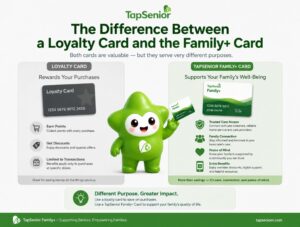
Yet every benefit remains tied to a single business.
Imagine an older adult who regularly visits a pharmacy.
Their points grow steadily.
A few days later they visit a transportation company.
Their pharmacy points cannot be used.
Next week they receive home care assistance.
Again, those points have no value.
Later they enjoy lunch at another participating restaurant.
Another loyalty card.
Another separate reward account.
The cycle continues.
Instead of creating one meaningful experience, every business asks customers to begin again.
Families often wonder why loyalty cannot follow seniors wherever they go.
Why Older Adults Need Something Different
The needs of seniors naturally extend across multiple industries.
Healthcare.
Transportation.
Home services.
Personal care.
Financial planning.
Community activities.
Dining.
Wellness.
Unlike younger consumers who may shop occasionally, many seniors interact with service providers on a regular basis.
This makes continuity incredibly valuable.
A reward system that follows the customer rather than remaining inside one business creates a much better experience.
Families appreciate simplicity.
Older adults appreciate familiarity.
Businesses appreciate loyal customers.
A connected model serves all three.
Loyalty Should Follow the Person, Not the Store
Think about how families actually support older loved ones.
They do not think in terms of businesses.
They think in terms of daily living.
Today may involve visiting a doctor.
Tomorrow may involve buying medication.
Next week may require transportation.
The following month may include home repairs.
These activities are all connected because they support one person’s quality of life.
Traditional loyalty programs fail to recognize this broader journey.
Each company rewards only its own transaction.
The customer’s overall experience remains disconnected.
The Family+ Card approaches the situation from an entirely different perspective.
Instead of rewarding purchases made at one location, it follows the individual throughout the participating network.
That simple shift changes everything.
Families Want Relationships, Not Collections of Cards
Caregivers already manage enough responsibilities.
They coordinate appointments.
Organize medications.
Communicate with healthcare providers.
Arrange transportation.
Monitor home safety.
Support emotional well-being.
Adding another collection of loyalty cards does little to simplify their lives.
Most families would rather have one trusted membership that connects services together than dozens of unrelated reward programs.
Convenience becomes increasingly valuable as responsibilities grow.
This is especially true for seniors who may prefer carrying fewer cards while still enjoying meaningful benefits.
Looking Beyond Discounts
Traditional loyalty cards usually focus on discounts.
Spend more.
Earn more.
Receive a coupon.
Repeat.
While discounts certainly matter, families caring for older adults often seek something much deeper.
They want trusted businesses.
They want consistent service.
They want financial value that continues growing.
They want confidence that businesses understand senior needs.
Most importantly, they want a support system rather than isolated transactions.
This broader vision requires a completely different way of thinking.
Instead of rewarding purchases alone, the experience should strengthen relationships across an entire community.

A New Philosophy Begins with Connection
This is where the Family+ Card introduces a different philosophy.
Rather than asking how one business can reward one customer, it asks how an entire network can work together to improve the lives of seniors.
The answer begins with connection.
Businesses become partners instead of isolated competitors.
Families gain confidence through trusted relationships.
Older adults enjoy one membership experience that continues providing value wherever participating services are available.
Every interaction contributes to something larger than a single purchase.
Instead of ending when payment is complete, the relationship continues growing over time.
That ongoing connection transforms loyalty into something far more meaningful.
Why Businesses Also Need a Better Model
The challenges are not limited to families.
Businesses serving seniors also face increasing competition.
Every company invests time and money attracting new customers.
Advertising costs continue rising.
Digital marketing becomes more competitive.
Customer acquisition grows more expensive every year.
Traditional loyalty cards encourage repeat visits from existing customers but rarely create opportunities beyond one business.
Each company works independently.
Each company builds its own reward program.
Each company competes for attention.
There is little collaboration between organizations serving the same community.
This approach limits growth for everyone.
A connected ecosystem offers opportunities that traditional loyalty programs simply cannot provide.
Instead of competing for every customer individually, businesses can contribute to a shared network that benefits everyone involved.
Rethinking What Loyalty Really Means
Loyalty should not be measured only by how often someone visits one store.
For seniors, loyalty means trusting businesses that consistently help improve everyday life.
It means feeling comfortable returning because people recognize them, understand their needs, and provide dependable service.
Families also demonstrate loyalty.
When they find businesses they trust, they often recommend them to relatives, friends, neighbors, and caregivers.
True loyalty grows through relationships rather than promotions.
The strongest communities are built when businesses, customers, and families all benefit together.
That idea forms the foundation of TapSenior Family+ Card.
Instead of creating another isolated loyalty program, it introduces an ecosystem designed specifically for the realities of senior living.
As the needs of older adults continue evolving, loyalty must evolve as well.
The conversation is no longer simply about collecting points or receiving occasional discounts.
It is about creating lasting value across an entire network of trusted businesses.
Understanding this shift is the first step toward appreciating The Difference Between a Loyalty Card and the Family+ Card.
In the next part, we will explore how TapSenior Family+ transforms this philosophy into a practical ecosystem where seniors earn rewards across participating businesses, families receive long-term financial value, and businesses grow together through collaboration instead of competition.
One Card That Connects an Entire Community
The biggest difference between a traditional loyalty card and the Family+ Card is not the card itself.
It is the philosophy behind it.
A traditional loyalty card belongs to one business.
The Family+ Card belongs to the customer.
Instead of rewarding loyalty to only one company, it supports the senior’s entire journey across participating businesses.
A senior can create a Family+ Card directly through the TapSenior website.
Participating businesses can also create the card for their customers.
When a business creates the card, its logo appears on the membership, helping strengthen the relationship between the customer and the business that first introduced them to the ecosystem.
This simple feature creates familiarity from the very beginning while encouraging businesses to actively invite seniors into the network.
The card becomes much more than a membership.
It becomes a gateway to an expanding community.
Every Purchase Continues the Journey
Traditional loyalty programs often end when customers leave the store.
The Family+ Card works differently.
Every time a senior purchases a product or uses a service from a participating business, reward points are accumulated.
These points are not limited to that business alone.
Instead, they become part of a larger ecosystem where value continues growing with every qualifying transaction.
Imagine an older adult who visits a participating transportation provider for a medical appointment.
Later that week, they purchase healthcare products from another participating business.
The following month, they use a wellness service.
Each visit contributes additional points.
Rather than managing separate reward balances across different companies, everything contributes to one connected membership experience.
Over time, those points can be converted into value that helps pay for products and services across the participating network.
Instead of rewarding isolated purchases, the Family+ Card rewards an entire lifestyle.
Helping Seniors Receive More from Everyday Spending
Many seniors live on carefully planned retirement budgets.
Every purchase matters.
Medical expenses.
Transportation.
Personal care.
Nutrition.
Home maintenance.
These are not luxury purchases.
They are necessary parts of daily life.
Traditional loyalty programs provide occasional savings at individual businesses, but those savings often remain small because they are limited to one location.
The Family+ Card takes a broader approach.
Instead of allowing value to remain inside one company, it allows everyday spending across participating businesses to contribute toward future benefits.
This creates a more meaningful reward system because seniors continue building value through services they already need.
The more connected the ecosystem becomes, the greater the potential benefits for every member.
Making Life Easier for Families
Adult children often become the primary coordinators of senior care.
They arrange appointments.
Manage transportation.
Help compare service providers.
Monitor household needs.
Support financial decisions.
Every hour spent researching businesses is time taken away from caring for loved ones.
The Family+ Card helps simplify this process.
Rather than searching for businesses that each operate separate reward programs, families can focus on participating organizations connected through one ecosystem.
They know every qualifying purchase contributes toward long-term value.
They know trusted businesses are working together instead of functioning independently.
This consistency provides peace of mind while reducing unnecessary complexity.
Businesses Become Partners Instead of Competitors
Perhaps the most innovative part of the Family+ Card ecosystem is the way businesses collaborate.
Traditional loyalty cards encourage companies to compete for repeat customers.
Every business creates its own rewards.
Every business builds its own customer database.
Every business markets independently.
The Family+ model introduces something entirely different.
Businesses become partners within one ecosystem.
Suppose Business A creates a Family+ Card for a customer.
Later, that customer visits Business B and makes a purchase using the same card.
Business B benefits by serving a new customer.
The customer earns reward points.
At the same time, Business A receives a commission paid by Business B because it originally introduced that customer into the ecosystem.
Everyone benefits.
Instead of losing customers when they visit another participating business, companies continue sharing in the long-term value created throughout the network.
This creates powerful incentives for collaboration rather than competition.
Encouraging Sustainable Business Growth
Customer acquisition is one of the largest expenses facing modern businesses.
Advertising campaigns become increasingly expensive.
Online competition continues growing.
Finding loyal customers requires both time and investment.
The Family+ ecosystem introduces another path toward sustainable growth.
Businesses no longer depend entirely on traditional marketing methods.
As more organizations participate, customer referrals naturally increase throughout the ecosystem.
Each business contributes to the success of the others.
Every satisfied senior becomes part of a larger community.
The stronger the network becomes, the greater the opportunities for every participating organization.
Growth becomes shared rather than isolated.
Building Long-Term Relationships Instead of One-Time Transactions
Relationships matter, especially when serving older adults.
Seniors often prefer businesses where they feel recognized, respected, and understood.
Families also value consistency because familiar service providers reduce uncertainty.
The Family+ ecosystem strengthens these relationships by encouraging continued participation rather than isolated visits.
Every purchase builds additional value.
Every interaction reinforces trust.
Every participating business contributes to the member’s overall experience.
Over time, these consistent experiences create stronger connections between seniors and the businesses that support them.
Instead of measuring success by individual transactions, the ecosystem focuses on lasting relationships.
Supporting Independent Aging
Remaining independent is one of the greatest priorities for many older adults.
They want to continue making their own decisions while staying active within their communities.
The Family+ Card supports this goal by making everyday services more connected and rewarding.
Whether visiting healthcare providers, transportation services, wellness centers, restaurants, or other participating businesses, seniors enjoy one continuous membership experience.
This simplicity encourages confidence.
It reduces the need to manage multiple cards and separate reward systems.
Most importantly, it supports a lifestyle where older adults remain engaged with trusted businesses throughout their communities.
Strengthening Local Communities
Communities become stronger when local businesses work together.
Healthcare providers.
Restaurants.
Transportation companies.
Home service professionals.
Wellness providers.
Retail businesses.
Financial advisors.
Every organization serving seniors contributes something valuable.
Instead of functioning independently, the Family+ ecosystem encourages these businesses to support one another through shared customers and shared success.
Families benefit from greater convenience.
Businesses benefit from stronger customer relationships.
Seniors benefit from a growing network of trusted services.
Everyone becomes part of the same community.
Looking Toward the Future
The needs of aging populations will continue evolving in the years ahead.
Families will expect more connected experiences.
Businesses will seek better ways to build lasting customer relationships.
Communities will increasingly recognize the importance of collaboration when supporting older adults.
Traditional loyalty cards will always have a place within individual businesses.
However, the future belongs to ecosystems that connect people rather than separating them.
The Family+ Card represents this new direction.
It transforms loyalty from a single-business reward program into a community-centered experience where every participant contributes to long-term success.
Conclusion
When people compare ordinary loyalty programs with the Family+ Card, the differences become remarkably clear. A traditional loyalty card is designed to encourage repeat purchases within one business. It serves an important purpose, but its benefits usually stop at the company’s front door. Seniors who rely on many different services throughout the year often find themselves carrying multiple cards, collecting separate reward points, and managing unrelated memberships that never work together.
The Family+ Card created by TapSenior takes a completely different approach. Instead of rewarding transactions inside one business, it connects seniors, families, and participating businesses through one ecosystem where every qualifying purchase contributes to long-term value. Seniors earn reward points that can be redeemed across the participating network. Families enjoy greater convenience and financial value while supporting loved ones. Businesses grow through customer referrals, stronger loyalty, and commission opportunities that encourage cooperation instead of competition.
Ultimately, TapSenior is redefining what customer loyalty can mean for older adults. Loyalty is no longer limited to one company or one purchase. It becomes a shared journey that strengthens relationships, encourages community collaboration, and creates lasting value for everyone involved. That is the true answer to The Difference Between a Loyalty Card and the Family+ Card and the reason why this innovative ecosystem represents a smarter future for senior services, family support, and business growth.
Bài viết liên quan: