
How Communities Can Reduce Isolation Among Seniors. Growing older should never mean becoming disconnected from family, friends, or society. Yet millions of older adults experience loneliness every day because of limited mobility, retirement, health conditions, transportation barriers, or the loss of loved ones. The challenge is no longer simply helping seniors live longer but helping them remain socially connected, emotionally fulfilled, and actively engaged in their communities. This is why the topic How Communities Can Reduce Isolation Among Seniors has become increasingly important for families, healthcare providers, caregivers, local businesses, community organizations, and governments around the world.
As populations continue to age, communities are searching for practical ways to strengthen relationships between seniors and the people around them. Families often struggle to balance work responsibilities while ensuring their elderly parents receive enough companionship and support. Community centers may organize events, healthcare providers encourage regular social interaction, and local businesses look for meaningful ways to serve older adults. However, these efforts frequently remain disconnected from one another. Seniors need more than occasional activities; they need an ecosystem where every interaction contributes to a greater sense of belonging.
Social isolation affects every aspect of healthy aging. Research consistently links loneliness with depression, anxiety, cognitive decline, cardiovascular disease, reduced physical activity, weakened immune function, and lower quality of life. Older adults who remain socially engaged are more likely to maintain independence, participate in preventive healthcare, develop stronger emotional resilience, and enjoy greater life satisfaction. This makes community engagement an essential component of senior wellness rather than simply a desirable benefit.
Technology has created new opportunities to bridge these gaps, but many digital solutions fail to address the daily habits and preferences of older adults. Seniors often appreciate systems that are simple, rewarding, and connected to their everyday routines. When visiting healthcare providers, neighborhood shops, pharmacies, restaurants, wellness centers, or service providers becomes part of a broader community network, every interaction becomes an opportunity to strengthen social relationships.
This is where TapSenior introduces an innovative community-centered approach. Rather than focusing solely on discounts or individual services, it creates meaningful connections between seniors, families, and participating businesses through a unified membership ecosystem that rewards engagement, encourages local participation, and helps older adults remain active within their communities. Instead of asking seniors to change their lifestyles dramatically, the system integrates naturally into the places they already visit, creating continuous opportunities for connection and mutual benefit.
Understanding How Communities Can Reduce Isolation Among Seniors begins with recognizing that loneliness cannot be solved by families alone. It requires collaboration among healthcare providers, local businesses, caregivers, community organizations, and innovative platforms that encourage seniors to stay involved in everyday community life. When everyone contributes, seniors no longer feel forgotten they become valued members of a thriving community.
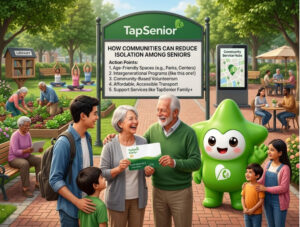
Understanding Why Senior Isolation Continues to Grow
Many people assume loneliness only affects seniors who live alone. In reality, isolation can affect older adults regardless of whether they live independently, with family, or in assisted living communities.
A senior may speak with relatives every week yet still feel disconnected from society.
Another may have neighbors nearby but rarely leave home because transportation has become difficult.
Others gradually lose confidence after retirement because they no longer have regular opportunities to meet people.
These situations become increasingly common as individuals age.
Several factors contribute to senior isolation.
Reduced mobility often limits participation in social activities.
Health conditions make frequent travel more challenging.
Friends move away or pass away.
Children become busy raising families.
Community activities may not be easily accessible.
Eventually, everyday social interactions become less frequent until loneliness becomes part of daily life.
For many families, this transition happens gradually.
Parents who once enjoyed shopping, meeting friends, attending community events, or visiting local businesses suddenly spend more time at home.
The change may seem small initially, but over months or years it significantly affects emotional wellbeing.
The Hidden Cost for Families
Isolation does not only affect seniors.
Families often experience emotional stress as well.
Adult children frequently worry whether their parents are safe, socially active, or emotionally healthy.
Many live in different cities or even different countries.
Although they call regularly, they cannot accompany their parents every day.
Caregivers face similar concerns.
Professional caregivers can provide assistance with daily activities, but companionship extends beyond scheduled appointments.
Communities therefore play an essential role in filling the social gap between family visits.
When neighbors, businesses, healthcare providers, and local organizations become connected, seniors receive ongoing encouragement to remain active.
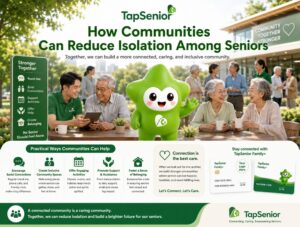
Why Communities Matter More Than Ever
Communities influence daily habits.
People naturally visit nearby businesses, healthcare providers, recreational centers, grocery stores, cafés, pharmacies, and wellness clinics.
Each visit represents more than a commercial transaction.
It creates opportunities for conversation, recognition, familiarity, and belonging.
When seniors regularly encounter welcoming staff who remember their names and appreciate their presence, those interactions become meaningful social experiences.
Small moments repeated consistently often have greater emotional impact than occasional large events.
Communities therefore become the foundation of healthy aging.
Instead of viewing local businesses as isolated service providers, they become trusted partners supporting senior wellbeing.
The Traditional Approach Has Limitations
Many communities organize senior activities.
These include exercise classes, educational workshops, health screenings, holiday celebrations, volunteer programs, and social clubs.
While these initiatives provide tremendous value, participation often remains inconsistent.
Some seniors hesitate to join unfamiliar groups.
Others lack transportation.
Many simply forget upcoming events.
Most importantly, these activities usually occur only occasionally.
Loneliness, however, is experienced every day.
Communities therefore require solutions that become part of seniors’ regular routines rather than occasional special events.
Everyday Engagement Creates Lasting Connections
Imagine a senior visiting a neighborhood pharmacy.
The pharmacist recognizes them by name.
The visit earns loyalty rewards.
Later that week they enjoy lunch at a participating restaurant.
Again they receive benefits.
The following weekend they visit a wellness center or purchase household necessities from another participating business.
Each visit contributes toward rewards while encouraging continued community participation.
Instead of isolated transactions, these become connected experiences.
Seniors begin recognizing familiar faces throughout the community.
Businesses recognize returning customers.
Relationships naturally develop.
This continuous engagement strengthens emotional wellbeing while supporting local economic growth.

A Different Way to Build Community Relationships
Rather than relying solely on organized social events, communities can encourage seniors to participate through everyday activities.
This philosophy forms the foundation of TapSenior.
The platform creates an interconnected network where seniors receive value from participating businesses while businesses strengthen relationships with older customers.
Families benefit because their loved ones become more motivated to remain active within their communities instead of staying home.
Businesses benefit because loyal customers return more frequently.
The community benefits because stronger relationships develop among all participants.
Everyone contributes to the same ecosystem.
Supporting Seniors Through Familiar Habits
Older adults generally prefer routines.
They enjoy visiting trusted businesses where staff understand their needs.
Familiarity creates comfort.
Comfort encourages continued participation.
Instead of asking seniors to learn entirely new behaviors, successful community programs build upon existing routines.
Shopping for groceries.
Visiting healthcare providers.
Enjoying coffee with friends.
Receiving personal care services.
Buying daily necessities.
Every routine represents an opportunity to strengthen community connections.
How Families Benefit
Families often feel powerless against loneliness.
They cannot accompany elderly parents every day.
However, they gain peace of mind when parents actively participate in welcoming communities.
Knowing that local businesses recognize their loved ones provides reassurance.
Every positive interaction becomes another layer of community support.
Rather than depending entirely on family members, seniors gradually build broader networks of trusted relationships.
These networks improve emotional resilience while promoting greater independence.
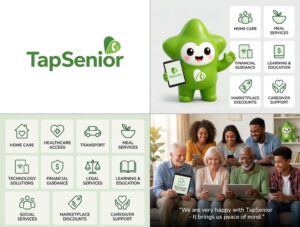
Local Businesses Become Community Partners
Businesses frequently underestimate the influence they have on senior wellbeing.
A welcoming greeting.
Patient customer service.
Accessible facilities.
Friendly conversations.
Consistent recognition.
These simple actions transform ordinary businesses into community anchors.
When businesses participate in connected networks, their impact extends beyond individual customer relationships.
They become contributors to healthier communities.
This also creates stronger customer loyalty because seniors appreciate businesses that genuinely value them rather than treating them as occasional customers.
Rewarding Participation Encourages Activity
Positive reinforcement changes behavior.
When seniors receive meaningful rewards for everyday participation, they naturally become more engaged.
Instead of viewing errands as obligations, they become enjoyable experiences.
Reward systems encourage exploration of participating businesses.
Families appreciate seeing loved ones become more socially active.
Businesses welcome increased customer engagement.
Communities experience stronger local economic activity.
Everyone benefits simultaneously.
Creating Connections Beyond Transactions
True community building extends beyond buying products or services.
Meaningful relationships develop through repeated interactions.
A familiar smile.
A brief conversation.
Helpful recommendations.
Remembering birthdays.
Celebrating milestones.
These moments create emotional connections that cannot be measured simply through financial transactions.
Community ecosystems encourage these interactions by increasing opportunities for seniors and businesses to meet regularly.
Over time, acquaintances become trusted relationships.
Isolation gradually gives way to belonging.
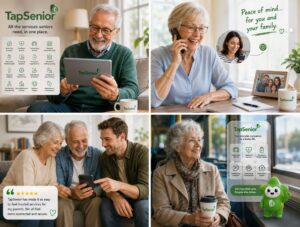
Looking Ahead
Communities have tremendous potential to transform the lives of older adults.
The challenge is not merely creating more programs but connecting existing people, businesses, and services into one supportive ecosystem.
Families want reassurance.
Seniors want independence.
Businesses want loyal customers.
Communities want stronger relationships.
The right platform brings these goals together in ways that benefit everyone.
In the next part, we will explore practical strategies communities can implement to reduce senior isolation, examine how connected reward ecosystems encourage long-term participation, and explain how TapSenior helps businesses, families, and seniors build lasting relationships while creating healthier, more connected communities.
Building a Community Where Seniors Feel Valued Every Day
One of the biggest misconceptions about reducing loneliness is believing that occasional social events are enough. While community gatherings, holiday celebrations, and wellness fairs certainly create enjoyable experiences, they rarely provide the continuous interaction that older adults need.
Isolation develops gradually through everyday life.
Likewise, meaningful connection is also built through everyday life.
When seniors regularly visit businesses where they are welcomed, recognized, and appreciated, they begin to feel that they are still active members of society rather than observers on the sidelines.
Communities become stronger when every interaction contributes to a larger support system.
Instead of viewing local businesses simply as places to purchase products or services, they become important meeting points where relationships naturally develop over time.
This philosophy helps transform ordinary daily routines into meaningful opportunities for social engagement.
Why Families Need More Than Good Intentions
Most families deeply care about their aging parents.
Unfortunately, modern life often limits the amount of time they can spend together.
Many adult children work full-time.
Others raise young children.
Some live hundreds or even thousands of miles away.
Phone calls and video chats certainly help maintain communication, but they cannot fully replace face-to-face interactions within the local community.
Many family members worry about questions such as:
Is Mom leaving the house often enough?
Is Dad interacting with other people?
Are they becoming lonely?
Are they still enjoying life?
These concerns are shared by millions of families around the world.
Communities that provide ongoing opportunities for seniors to stay engaged help reduce these worries while allowing older adults to maintain greater independence.
Creating Positive Reasons to Go Out
Many seniors eventually reduce their daily activities because they no longer feel motivated to leave home.
Perhaps they have already retired.
Perhaps close friends have moved away.
Perhaps driving has become difficult.
Without meaningful reasons to go out, staying home gradually becomes the easiest option.
An effective community should create positive motivation rather than obligation.
When seniors know they will receive benefits, recognition, friendly service, and valuable rewards every time they visit participating businesses, daily outings become more enjoyable.
This creates a cycle of positive engagement.
More outings create more conversations.
More conversations strengthen confidence.
Greater confidence encourages additional community participation.
How Businesses Become Part of the Solution
Every participating business has an opportunity to contribute to healthier communities.
Restaurants can create welcoming dining experiences.
Pharmacies can provide trusted healthcare guidance.
Wellness centers can encourage healthy lifestyles.
Home service providers can offer reliable assistance.
Retail stores can build lasting customer relationships.
Professional service providers can develop personal connections that extend beyond business transactions.
Rather than operating independently, businesses become members of a collaborative network focused on improving the quality of life for older adults.
This shared purpose strengthens both community relationships and customer loyalty.
The Role of TapSenior in Connecting Everyone
A connected community requires more than good intentions.
It requires a system that encourages continuous participation while creating value for everyone involved.
TapSenior introduces exactly this kind of ecosystem.
Older adults receive a TapSenior Family+ Card that can either be created independently through the platform or provided by participating businesses.
The card becomes much more than a membership.
It becomes a bridge connecting seniors with an expanding network of participating businesses.
Every eligible purchase or service visit allows seniors to accumulate reward points.
Instead of limiting those rewards to one specific business, accumulated value can be used throughout the participating network.
This creates flexibility while encouraging seniors to remain active across multiple community businesses rather than returning to only one location.
The result is greater community engagement, stronger business collaboration, and more opportunities for meaningful social interaction.
Benefits That Extend Beyond Reward Points
While earning points certainly motivates participation, the true value lies in the relationships created throughout the process.
Every participating business becomes another familiar destination.
Every visit creates another opportunity for conversation.
Every interaction strengthens trust.
Over time, seniors begin recognizing employees, service providers, and fellow customers.
These repeated encounters create a sense of belonging that cannot easily be achieved through isolated programs.
Families also appreciate knowing their loved ones continue participating in everyday community life.
The rewards simply encourage the behaviors that naturally reduce loneliness.
Business Collaboration Creates Stronger Communities
Traditional customer loyalty programs usually benefit only one business.
Community-focused ecosystems work differently.
When businesses collaborate instead of competing in isolation, everyone gains.
For example, one participating business may introduce a senior to the network by creating their Family+ card.
That senior may later visit several other participating businesses.
As those visits occur, the original business continues benefiting through the network’s commission structure.
This collaborative approach encourages businesses to actively support one another while expanding opportunities for seniors.
Rather than fighting for individual customers, businesses collectively strengthen the local senior community.
Everyone shares the benefits created through increased participation.
Helping Seniors Maintain Independence
Maintaining independence is one of the greatest priorities for older adults.
Most seniors want to continue making their own decisions.
They want to choose where they shop.
Where they receive services.
Where they socialize.
Where they spend their time.
Communities should empower these choices rather than replace them.
A connected business network supports independence by giving seniors additional reasons to remain active while rewarding everyday participation.
Instead of relying entirely on family members for social interaction, seniors continue building relationships throughout their own communities.
This strengthens confidence and preserves dignity.
Encouraging Healthier Lifestyles
Social engagement often leads to healthier lifestyles.
When seniors leave home more frequently, they naturally become more physically active.
Walking into stores.
Visiting healthcare providers.
Meeting friends for coffee.
Attending wellness appointments.
Participating in community activities.
These small actions accumulate over time.
Regular movement supports physical health.
Frequent conversations improve emotional wellbeing.
Continued participation helps preserve cognitive engagement.
Communities therefore support both physical and mental wellness simultaneously.
Strengthening Local Economies
Communities thrive when local businesses thrive.
Seniors represent one of the most loyal customer groups.
When businesses invest in serving older adults well, they often gain customers who return consistently for many years.
A connected rewards ecosystem encourages seniors to explore additional participating businesses while remaining within the same community network.
This increases customer retention.
Supports local entrepreneurship.
Encourages collaboration.
Generates sustainable business growth.
Creates additional opportunities for community investment.
Economic development and social wellbeing become closely connected.
Looking Toward the Future of Aging
Population aging will continue across many countries for decades.
Communities that prepare today will be better positioned to support future generations of seniors.
The most successful communities will not necessarily spend the most money.
Instead, they will build stronger relationships.
They will encourage collaboration.
They will recognize the value older adults bring to society.
They will create systems that make participation rewarding rather than difficult.
Technology will certainly play an important role, but the real goal is strengthening human relationships.
Digital platforms should simply make those relationships easier to create and maintain.
Why Community Networks Matter
When seniors feel connected, everyone benefits.
Families experience greater peace of mind.
Businesses develop loyal customers.
Healthcare providers see healthier patients.
Community organizations achieve greater participation.
Local economies become stronger.
Most importantly, older adults continue living with purpose, confidence, and dignity.
This is the true answer to How Communities Can Reduce Isolation Among Seniors.
Communities reduce isolation by making connection part of everyday life instead of limiting it to occasional events.
They create environments where seniors are welcomed, appreciated, and encouraged to remain active every day.
They support families by extending care beyond the home.
They help businesses become trusted community partners.
And they build ecosystems where every interaction contributes to healthier, happier aging.
Conclusion
The conversation surrounding How Communities Can Reduce Isolation Among Seniors is ultimately about creating lasting human connections. Families cannot solve senior loneliness alone, and businesses cannot build stronger communities independently. Real change happens when seniors, families, local businesses, caregivers, and service providers work together within a shared ecosystem that rewards participation and strengthens relationships over time.
TapSenior offers a practical approach to achieving this vision. Through the TapSenior Family+ Card, older adults gain access to a growing network of participating businesses where everyday purchases and services become opportunities to earn valuable rewards that can be used across the network. At the same time, businesses benefit from increased customer loyalty, collaborative referrals, and commission-sharing opportunities that encourage long-term partnerships instead of isolated competition.
More importantly, TapSenior helps transform routine activities into meaningful social experiences. Every visit creates another chance for conversation, every interaction reinforces a sense of belonging, and every participating business contributes to a community where seniors feel recognized and appreciated.
As communities continue adapting to the needs of aging populations, the most effective solutions will be those that connect people rather than simply provide services. By encouraging daily engagement, strengthening local business partnerships, supporting families, and helping older adults remain active members of society, TapSenior demonstrates how innovation and collaboration can build communities where every senior has the opportunity to live with dignity, purpose, connection, and joy.
Bài viết liên quan: