
The Future of Aging in Place in Canada. Canada is experiencing one of the most significant demographic transformations in its history. As life expectancy continues to rise and the population of older adults grows each year, more families are searching for sustainable ways to support aging parents while preserving their independence and quality of life. Discussions surrounding The Future of Aging in Place in Canada are becoming increasingly important because millions of seniors prefer remaining in their own homes instead of relocating to long-term care facilities. Aging in place is no longer simply a personal preference. It has become a practical objective supported by healthcare professionals, family caregivers, community organizations, home care providers, digital health technologies, transportation services, wellness programs, preventive healthcare, pharmacies, rehabilitation centers, and local businesses that work together to help seniors maintain active, fulfilling lives.
For many Canadian families, however, achieving this goal is not always easy. Adult children often balance demanding careers while helping parents coordinate healthcare appointments, transportation, grocery shopping, home maintenance, financial planning, medication management, and daily activities. Even when excellent services are available, they are frequently scattered across different providers with little coordination between them. Families spend considerable time researching trustworthy businesses, comparing service quality, managing appointments, and trying to reduce unnecessary costs. These challenges make it increasingly clear that the future of senior care depends not only on excellent individual services but also on stronger connections between the organizations that support older adults every day.
This changing landscape creates opportunities for innovative community-based solutions. Rather than treating every service separately, integrated senior service networks help families discover trusted providers while rewarding seniors for continuing to engage with participating businesses. TapSenior represents this new approach by connecting seniors, families, and businesses through the TapSenior Family+ digital membership card. Instead of simply offering discounts, the platform encourages long-term relationships, customer loyalty, community collaboration, and shared value for everyone involved. Understanding The Future of Aging in Place in Canada means recognizing how connected ecosystems can simplify everyday life while helping older adults remain independent, confident, and actively engaged within their communities.
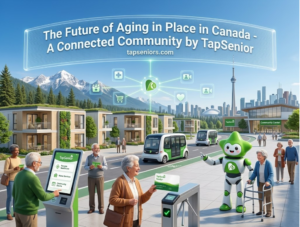
Why Aging in Place Matters More Than Ever
Growing older does not necessarily mean giving up independence.
Across Canada, countless seniors wish to continue living in familiar neighborhoods surrounded by friends, family members, and local communities. Remaining at home allows older adults to maintain routines, preserve emotional well-being, and continue participating in activities they enjoy.
Home represents security.
It represents memories.
It represents personal freedom.
For families, supporting this independence often becomes a shared responsibility. Adult children, spouses, relatives, and close friends work together to ensure that older adults receive the assistance they need while respecting their desire to remain self-sufficient.
As Canada’s senior population continues growing, this balance between independence and support becomes increasingly important.
The Everyday Challenges Families Face
Although aging in place offers many advantages, it also introduces practical challenges that families must manage every week.
A senior may require transportation to medical appointments.
Prescription medications need regular refills.
Home maintenance becomes more difficult.
Routine shopping requires additional assistance.
Health and wellness appointments become more frequent.
Each responsibility may seem manageable individually, but together they create a significant workload for family caregivers.
Many adult children live in different cities.
Others work full-time.
Some care simultaneously for both children and aging parents.
Coordinating services across multiple providers quickly becomes complicated.
Families often spend hours researching reliable businesses, comparing prices, checking reviews, scheduling appointments, and ensuring that every provider delivers consistent service.
Without an organized support network, every new need requires starting the search again.
The Limitations of Traditional Service Models
Many businesses provide outstanding services for seniors.
Healthcare clinics deliver medical care.
Transportation companies help seniors travel safely.
Pharmacies provide medications.
Wellness centers encourage healthy lifestyles.
Home service providers assist with maintenance.
Retail businesses supply everyday necessities.
Despite this wide range of available services, most operate independently.
Each company develops its own customer relationship.
Each maintains its own rewards system.
Each functions separately from the others.
Families therefore receive fragmented experiences rather than one connected journey.
Even loyal customers rarely benefit beyond individual businesses.
This fragmented approach creates unnecessary complexity for seniors and their caregivers.
Why Community Connections Matter
Communities become stronger when businesses collaborate rather than compete in isolation.
Families value recommendations from trusted providers.
Healthcare professionals frequently know reliable transportation companies.
Local pharmacies understand which rehabilitation centers serve seniors effectively.
Home care providers often recommend wellness programs.
When these relationships become part of a larger ecosystem, everyone benefits.
Families save time.
Businesses receive qualified referrals.
Older adults gain confidence.
Communities become more connected.
Strong community collaboration transforms individual services into a coordinated support network.
Technology Is Changing Senior Living
Digital technology continues reshaping how people access services throughout daily life.
Older adults are increasingly comfortable using smartphones, tablets, and digital membership systems with support from family members when necessary.
Simple digital solutions reduce paperwork.
Membership information becomes easier to manage.
Businesses recognize returning customers quickly.
Families can monitor participation more effectively.
Instead of carrying multiple physical loyalty cards, seniors benefit from one convenient digital identity that connects them with participating providers.
This creates a smoother experience while reducing unnecessary complexity.
Building Trust Through Long-Term Relationships
Trust remains one of the most important factors influencing decisions about senior care.
Families rarely choose businesses based solely on cost.
They look for professionalism.
Respect.
Reliability.
Consistency.
Excellent customer service.
Businesses that demonstrate genuine commitment to serving seniors gradually become trusted partners rather than occasional service providers.
These long-term relationships improve customer satisfaction while reducing uncertainty whenever new services become necessary.
Confidence grows naturally when families know they are working with organizations that prioritize senior well-being.
Rewarding Everyday Participation
Everyday spending represents another opportunity to improve the senior experience.
Older adults regularly purchase healthcare products, transportation services, wellness programs, household essentials, and personal care.
Traditionally, each transaction remains isolated.
Reward points earned at one business usually cannot be used elsewhere.
Families therefore miss opportunities to receive broader value from routine expenses.
An integrated service network changes this perspective.
Instead of isolated purchases, everyday activities contribute toward shared rewards that continue growing over time.
Families appreciate knowing that routine spending can support future savings across multiple participating businesses.
This encourages loyalty while making each purchase more meaningful.
A Smarter Way to Support Seniors
This is where TapSenior introduces a different approach.
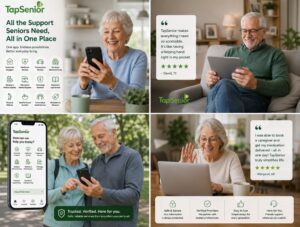
Through the TapSenior Family+ digital membership card, seniors may create their own membership or receive one from participating businesses. When a business registers a customer, its branding becomes part of that relationship, strengthening long-term engagement between the customer and the business.
As seniors visit participating businesses to purchase products or use services, they earn reward points through eligible transactions.
Unlike traditional loyalty programs that remain limited to one company, these accumulated points become valuable throughout the broader participating network.
Families no longer think about isolated purchases.
Instead, every visit contributes toward future value.
Daily activities become connected.
Routine spending becomes more rewarding.
This simple idea encourages seniors to continue choosing businesses that actively support older adults while allowing families to receive greater value from services they already use.
Supporting Independence Without Increasing Complexity
One of the greatest strengths of an integrated senior service network is that it helps older adults remain independent without making everyday life more complicated.
Seniors continue choosing where they shop.
They continue selecting services that meet their personal preferences.
They remain active members of their communities.
Meanwhile, families gain reassurance knowing that participating businesses share a common commitment to delivering quality experiences.
Rather than replacing personal choice, the network expands it.
Every additional participating business creates more opportunities while preserving convenience and familiarity.
This balance between independence and coordinated support reflects the direction many experts believe will define The Future of Aging in Place in Canada.
How the TapSenior Family+ Network Works
The success of any senior support ecosystem depends on how easily families and older adults can use it in everyday life. Complicated systems often discourage participation, while simple and practical solutions encourage long-term engagement.
The TapSenior Family+ card has been designed with simplicity in mind.
Older adults can create their own digital Family+ Card through the platform, giving them immediate access to a growing network of participating businesses. For seniors who are less familiar with technology, businesses can also register a Family+ card on their behalf, making the onboarding process quick and convenient.
When a participating business creates the membership, its logo becomes associated with that customer’s card. This seemingly simple feature creates an ongoing relationship between the business and the senior while opening opportunities for future collaboration throughout the network.
From the customer’s perspective, the process remains straightforward.
The senior presents the Family+ Card whenever purchasing products or using services at participating businesses.
Eligible purchases generate reward points.
These points accumulate over time.
Instead of remaining locked to a single business, the accumulated value can later be redeemed across participating businesses within the network for eligible products and services.
This transforms ordinary daily spending into long-term value.
Every purchase contributes toward future savings.
Every visit strengthens participation within the community.

Creating Benefits Beyond Traditional Loyalty Programs
Most loyalty programs focus on encouraging repeat purchases at a single business.
While this strategy benefits individual companies, it provides limited flexibility for customers.
Senior living rarely revolves around one provider.
Older adults regularly visit healthcare professionals, pharmacies, transportation providers, wellness centers, home service companies, restaurants, retail stores, and numerous other businesses.
Each fulfills a different need.
Traditional loyalty systems create separate accounts, separate rewards, and separate experiences.
The Family+ ecosystem introduces a broader perspective.
Instead of rewarding isolated transactions, it rewards participation across a connected community.
Families receive greater overall value because multiple everyday services contribute toward one continuing journey rather than remaining disconnected.
This collaborative approach supports both convenience and long-term engagement.
Helping Families Reduce Daily Stress
One of the greatest challenges facing family caregivers is decision fatigue.
Every week requires new decisions.
Which transportation provider should be trusted?
Which wellness service has experience serving seniors?
Where can parents shop comfortably?
Which businesses genuinely understand older customers?
Searching repeatedly consumes valuable time.
An established network significantly reduces this burden.
Participating businesses already share a commitment to serving seniors.
Families spend less time evaluating unfamiliar providers.
Instead, they can confidently explore businesses that belong to the same trusted ecosystem.
This creates peace of mind while simplifying everyday planning.
As the network grows, families gain access to an expanding range of reliable options without repeating the research process.
Supporting Local Businesses Through Collaboration
Healthy communities depend on strong local businesses.
Independent companies often provide exceptional service but face increasing competition when attracting new customers.
The TapSenior network creates opportunities for these businesses to grow through collaboration instead of competing alone.
Because seniors earn rewards by choosing participating businesses, customers naturally become interested in exploring additional providers within the network.
One business introduces the customer.
Another business provides a complementary service.
A third business meets future needs.
Every successful interaction strengthens the entire ecosystem.
Rather than losing customers to unrelated competitors, participating businesses become part of a larger community that encourages referrals, customer retention, and shared success.
A Unique Commission Model That Encourages Partnership
One of the most innovative aspects of the network is the commission structure available to participating businesses.
Imagine that a neighborhood pharmacy registers a Family+ card for one of its loyal senior customers.
Several weeks later, the customer visits a participating home healthcare provider.
The senior earns reward points from that purchase.
The home healthcare provider gains a valuable new customer.
Meanwhile, the pharmacy that originally introduced the customer receives a commission paid by the participating provider according to the network’s partnership model.
Everyone benefits from the same transaction.
The senior receives rewards.
The new business gains revenue.
The original business receives additional income.
The network becomes stronger because businesses have meaningful incentives to recommend high-quality participating providers rather than keeping customers within isolated business relationships.
This model transforms referrals into sustainable partnerships built on shared growth.
Encouraging Seniors to Stay Active Within Their Communities
Remaining socially connected is one of the most important factors influencing healthy aging.
Isolation can reduce confidence and negatively affect overall well-being.
A connected service network encourages seniors to continue participating in everyday community life.
Visiting local businesses.
Meeting familiar staff.
Exploring new services.
Participating in wellness activities.
Attending healthcare appointments.
Supporting neighborhood businesses.
Every interaction strengthens social engagement while helping seniors remain active and independent.
Families appreciate knowing that their loved ones continue participating confidently within supportive local communities.
Financial Value That Continues Growing
Although reward points alone cannot eliminate the cost of aging, they can significantly improve the overall value families receive from routine spending.
Transportation.
Healthcare products.
Personal care.
Home services.
Wellness programs.
Daily necessities.
These recurring expenses become opportunities to accumulate benefits instead of remaining isolated costs.
Over months and years, consistent participation allows seniors to redeem accumulated value across participating businesses, making everyday purchases work harder for the entire family.
This long-term perspective encourages thoughtful planning rather than short-term savings alone.
Preparing Canada for the Future of Senior Living
Canada’s aging population will continue creating demand for innovative solutions that strengthen independence while supporting families.
Communities cannot rely solely on healthcare institutions.
Local businesses also play essential roles.
Transportation providers improve accessibility.
Retail businesses support everyday living.
Wellness providers encourage healthier lifestyles.
Professional services solve practical challenges.
Technology connects every participant.
The future belongs to ecosystems that encourage cooperation across these different sectors.
Connected communities create better experiences than disconnected services operating independently.
Why Connected Networks Matter
Every family eventually faces important decisions about supporting aging parents or grandparents.
They want safety.
Convenience.
Reliable service.
Meaningful value.
Above all, they want older loved ones to remain independent for as long as possible.
Achieving this goal requires more than excellent individual businesses.
It requires cooperation.
Shared trust.
Long-term relationships.
Community engagement.
A connected service ecosystem makes these objectives achievable by bringing together businesses that share a common purpose while rewarding seniors for remaining active participants within the community.
Conclusion
Understanding The Future of Aging in Place in Canada means recognizing that successful aging is no longer supported by individual services alone. Families need coordinated solutions that reduce complexity, strengthen trust, and create lasting value throughout every stage of the senior journey.
By connecting seniors with trusted businesses through the Family+ membership card, rewarding eligible purchases across participating providers, and creating a partnership model that benefits both customers and businesses, TapSenior offers an innovative approach to community-based senior living. Families gain greater confidence when choosing services, seniors enjoy meaningful rewards while maintaining their independence, and businesses benefit from stronger customer loyalty, qualified referrals, and collaborative growth.
As Canada’s senior population continues to expand, connected ecosystems will become increasingly important in helping older adults remain active, respected, and engaged within their own communities. Platforms like TapSenior demonstrate how technology, local businesses, and family-centered support can work together to create a future where aging in place is not only possible but also more rewarding for everyone involved. The future of senior living will be built on stronger partnerships, shared value, and communities that place older adults at the center of every meaningful connection.
Bài viết liên quan: