
Seniors Are Owed Up To $22080 From Social Security – Most Never Claim It (Here’s How). For millions of older Americans, Social Security serves as the financial foundation of retirement. It helps pay for housing, groceries, healthcare, transportation, and countless everyday expenses. After decades of contributing through payroll taxes, retirees naturally expect to receive every benefit they have earned. Yet, recent changes to federal law have revealed that some retirees may have received less than they were entitled to because of rules that affected certain workers, particularly those with pensions from jobs not covered by Social Security.
In early 2025, an important piece of legislation known as the Social Security Fairness Act changed how benefits are calculated for many public servants and their families. The law repealed two long-standing provisions that had reduced or even eliminated Social Security benefits for millions of Americans. As a result, some eligible beneficiaries have seen increased monthly payments, while others have received retroactive payments covering benefits that had previously been reduced.
Headlines claiming that seniors are owed up to $22,080 have generated enormous interest. While some individuals may indeed qualify for substantial retroactive payments, it is important to understand that eligibility depends entirely on each person’s work history, pension, and benefit record. Not everyone will qualify, and payment amounts vary significantly.
This article explains what changed, who may be affected, how the previous rules worked, and the practical steps retirees can take to review their own records. Whether you are already collecting retirement benefits, receive a government pension, or are helping a spouse or parent manage retirement finances, understanding these recent changes could help ensure that every benefit you have earned is properly reviewed.
Most importantly, reviewing your record costs nothing. The official Social Security Administration provides free tools and assistance to help beneficiaries understand their benefits and determine whether any updates apply to their situation.

Why This Issue Matters to Millions of Seniors
Many retirees carefully budget every dollar they receive each month. Even a modest increase in Social Security benefits can make a meaningful difference over time.
For example, an additional $200 or $300 per month may help cover:
- Prescription medications
- Utility bills
- Property taxes
- Transportation costs
- Home maintenance
- Grocery expenses
For widows and widowers, survivor benefits often represent an even larger portion of retirement income. Losing part or all of those benefits can dramatically affect long-term financial security.
This is why recent legislative changes have attracted widespread attention among retirees, financial planners, and retirement organizations across the United States.
Understanding how these changes work allows retirees to verify that their benefit records accurately reflect current law.
Understanding the Social Security Fairness Act
The Social Security Fairness Act repealed two provisions that had affected many workers employed in jobs where Social Security payroll taxes were not withheld.
For decades, these rules primarily affected:
- Public school teachers in certain states
- Police officers
- Firefighters
- State government employees
- Local government workers
- Some federal employees hired under older retirement systems
Many of these individuals earned pensions through employment that did not participate in Social Security while also working other jobs where they paid Social Security taxes.
Although they contributed to Social Security during those other years of employment, previous law often reduced the retirement or survivor benefits they later received.
The repeal of these provisions means many affected retirees are now receiving higher monthly payments than before, while some may also qualify for retroactive adjustments beginning in 2024, depending on their circumstances.
The Two Rules That Changed Retirement Benefits
For many years, two specific provisions influenced benefits for certain retirees.
Understanding these rules helps explain why recent changes are so significant.
The Windfall Elimination Provision (WEP)
The first provision was known as the Windfall Elimination Provision, commonly called WEP.
Its purpose was to adjust Social Security benefits for individuals who earned pensions from employment that was not covered by Social Security while also qualifying for Social Security benefits based on other employment.
Although the policy had technical reasons within the benefit formula, many retirees felt the reductions were unfair because they had paid Social Security taxes during other parts of their careers.
Imagine a teacher who spent thirty years working in a public school system that did not participate in Social Security.
Earlier in life, she worked private-sector jobs where Social Security taxes were deducted from every paycheck.
When she retired, she expected to receive:
- Her teacher pension
- Social Security benefits earned through earlier employment
Instead, WEP reduced her Social Security retirement benefit.
For many retirees, these reductions continued throughout retirement.

The Government Pension Offset (GPO)
The second provision was the Government Pension Offset, commonly called GPO.
Unlike WEP, which affected retirement benefits based on an individual’s own work record, GPO affected benefits received through a spouse.
Social Security provides benefits not only to retired workers but also to eligible spouses, surviving spouses, and certain family members.
Under previous law, some retirees receiving government pensions experienced reductions in:
- Spousal benefits
- Survivor benefits
In some situations, the offset significantly reduced or eliminated these payments altogether.
For widows and widowers who depended on survivor benefits after losing a spouse, these reductions sometimes created substantial financial hardship.
The repeal of GPO has restored eligibility for many affected beneficiaries under current law.
Why Were These Rules So Controversial?
For decades, teachers’ organizations, public employee associations, retiree groups, and many lawmakers argued that these provisions treated certain workers unfairly.
Their concerns generally centered on several issues.
First, many affected workers had paid Social Security taxes through second jobs, seasonal work, or earlier careers.
Second, spouses who depended on survivor benefits often experienced reductions despite their family’s years of Social Security contributions.
Third, the benefit calculations were highly complex.
Many retirees did not fully understand why their monthly payments were lower than expected.
Because the rules were complicated, some individuals assumed their benefit calculations were correct without realizing the reductions resulted from specific provisions within federal law.
After years of debate, Congress ultimately approved legislation repealing both provisions.
Who May Be Affected by the New Law?
Although news reports often suggest that millions of seniors could receive additional benefits, eligibility is limited to specific groups.
You may wish to review your record if you fall into one of the following categories.
Public School Teachers
Some public school systems did not participate in Social Security.
Teachers in these systems often contributed to state pension programs instead.
If you also worked jobs where Social Security taxes were withheld, reviewing your benefit record may be worthwhile.
Police Officers
Many police departments maintained retirement systems separate from Social Security.
Officers who later qualified for Social Security through other employment may see changes depending on their individual work history.
Firefighters
Similar rules affected firefighters employed under pension systems outside Social Security coverage.
Those with mixed employment histories may wish to verify whether benefit adjustments have been applied.
State and Local Government Employees
Numerous state and municipal workers participated in pension systems rather than Social Security.
If you earned Social Security credits through other employment, current law may affect your benefits.
Certain Federal Employees
Employees hired under older federal retirement systems may also fall within the groups affected by these legislative changes.

What About Spouses and Survivors?
One of the most important aspects of the new law involves survivor benefits.
Many surviving spouses depend heavily on these monthly payments after losing a husband or wife.
Because previous law reduced benefits for some pension recipients, many families experienced lower retirement income than expected.
Today, some of these individuals may qualify for:
- Higher monthly survivor benefits
- Increased spousal benefits
- Retroactive benefit adjustments
Every case depends on individual employment history, pension status, filing dates, and Social Security records.
For this reason, beneficiaries should avoid assuming they either qualify or do not qualify without reviewing their official records.
Could Someone Really Receive More Than $22,000?
The widely shared figure of $22,080 comes from reports describing some of the largest retroactive benefit adjustments after the repeal of WEP and GPO.
However, it is important to understand what this number represents.
It is not a guaranteed payment.
Instead, it reflects examples of larger retroactive amounts that may apply to certain beneficiaries whose monthly benefits had been substantially reduced over an extended period.
Many eligible retirees may receive:
- Smaller retroactive payments
- Larger monthly checks going forward
- Both
Others may discover that their benefits were already correctly adjusted.
Because every Social Security record is unique, there is no universal payment amount.
Why Many Eligible Seniors Never Review Their Benefits
One surprising reality is that many retirees rarely review their Social Security records after benefits begin.
Several factors contribute to this.
Some believe benefit calculations cannot change.
Others assume government agencies will automatically contact them if adjustments become available.
Many simply find Social Security rules too confusing to understand.
Unfortunately, retirement laws occasionally change.
Benefit calculations may also be updated when Congress passes new legislation.
Reviewing your benefit information periodically helps ensure your records remain accurate.
It also provides an opportunity to ask questions if something appears inconsistent with current law.
The Importance of Staying Informed
Retirement planning does not end after filing for Social Security.
Changes in federal law, cost-of-living adjustments, Medicare premiums, and tax rules can all influence retirement income over time.
Remaining informed allows retirees to make better financial decisions and avoid missing opportunities that may improve long-term financial security.
Fortunately, obtaining accurate information has become easier than ever through official government resources and qualified retirement professionals.

How to Check Whether You May Be Eligible
If you believe your retirement benefits may have been affected by the repeal of the Windfall Elimination Provision (WEP) or the Government Pension Offset (GPO), the good news is that checking your status is relatively straightforward.
The first step is to review your own Social Security benefits rather than relying on rumors, social media posts, or unofficial websites. Every retirement record is unique, and only your official benefit history can determine whether changes apply to your situation.
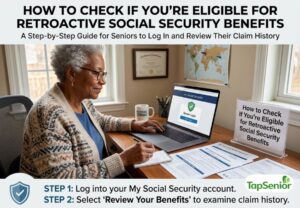
Start by logging into your personal Social Security account through the official website. Your account provides access to your earnings history, benefit information, payment details, and notices regarding any adjustments that may have been made.
Carefully review your benefit statement for references to previous reductions related to WEP or GPO. If your benefits were affected in the past, you may notice updated payment amounts or correspondence explaining recent changes.
Even if your monthly benefit has increased, it is still worth confirming whether any retroactive payment has also been processed.
Review Your Employment History Carefully
One reason many retirees overlook potential benefit adjustments is that they forget how many different jobs they worked throughout their careers.
You may have:
- Worked for a private company early in life.
- Served as a public school teacher.
- Later accepted a government position.
- Returned to private employment before retirement.
Every period of employment matters because different employers participated in different retirement systems.
A complete review of your work history can help determine whether you paid Social Security taxes during some years while contributing to a separate pension system during others.
This combination is exactly what affected many retirees under the previous rules.
Understand the Difference Between Retirement Benefits and Survivor Benefits
Many seniors focus only on their own retirement benefit without realizing that survivor benefits may also deserve careful review.
These benefits become especially important after the loss of a spouse.
Depending on your circumstances, you may qualify for:
- Retirement benefits based on your own work history.
- Spousal benefits based on your husband’s or wife’s earnings.
- Survivor benefits after the death of a spouse.
Under previous law, some government pension recipients experienced significant reductions in these family benefits.
Because the law has changed, reviewing both your personal retirement benefit and any family-related benefits is equally important.
Four Groups That Should Pay Special Attention
Although every case is unique, several groups may benefit from reviewing their Social Security records.
Public School Teachers
Many teachers worked in states where public school employees participated in pension systems outside Social Security.
If you also held jobs where Social Security taxes were deducted, your retirement record deserves careful review.
Police Officers and Firefighters
Public safety professionals often served under separate retirement systems.
Those who later earned Social Security credits through other employment may find that recent legislative changes affect their benefits.
State and Local Government Employees
Many government employees divided their careers between positions covered by different retirement systems.
Reviewing your complete earnings history helps ensure every qualifying benefit has been considered.
Widows, Widowers, and Surviving Spouses
This group may experience the most significant financial impact.
If survivor benefits were previously reduced because of pension-related rules, current law may affect future payments as well as possible retroactive adjustments.
What Should You Do If Something Looks Incorrect?
Mistakes can happen in any large administrative system.
If your benefit information appears inconsistent with your employment history, do not assume the record is automatically correct.
Instead:
- Gather your employment records.
- Review previous benefit notices.
- Compare current payment amounts with earlier statements.
- Contact the Social Security Administration if questions remain.
Keeping organized records makes these conversations much easier.
Whenever you speak with a representative, write down:
- The date.
- The representative’s name.
- Any reference number.
- A summary of the discussion.
Good documentation can be valuable if additional follow-up becomes necessary.
Why Some Cases May Take Longer Than Others
After major legislative changes, government agencies often process millions of records.
Some cases are relatively simple.
Others require additional review because they involve:
- Multiple employers.
- Several retirement systems.
- Survivor benefits.
- Pension calculations.
- Complex employment histories.
For this reason, two retirees with similar careers may receive updates at different times.
Patience is important, but so is following up if you believe your record has not yet been fully reviewed.
Beware of Social Security Scams
Whenever major benefit changes make national headlines, scammers quickly take advantage of the confusion.
Unfortunately, older adults remain one of the primary targets for financial fraud.
Remember these important safety tips.
The Social Security Administration will never ask you to:
- Pay a fee to receive benefits.
- Purchase gift cards.
- Transfer money to “unlock” payments.
- Provide online banking passwords.
- Send cryptocurrency.
- Share one-time security codes with strangers.
If anyone claims they can “release” your Social Security payment for a fee, it is almost certainly a scam.
Official benefit reviews are free.
When in doubt, contact the Social Security Administration directly using information from its official website rather than phone numbers provided by unsolicited callers, emails, or text messages.
Protecting your retirement income is just as important as maximizing it.
Keep Your Personal Information Secure
Identity theft continues to affect thousands of older Americans every year.
To reduce risk:
- Create strong passwords.
- Enable two-factor authentication whenever available.
- Monitor your financial accounts regularly.
- Never share your Social Security number unnecessarily.
- Store important retirement documents safely.
Taking these simple precautions helps protect both your identity and your retirement benefits.
How Often Should You Review Your Benefits?
Many financial professionals recommend reviewing your Social Security information at least once each year.
You should also review your records whenever:
- Congress passes major Social Security legislation.
- Your marital status changes.
- A spouse passes away.
- You begin receiving a pension.
- Your mailing address changes.
- Your direct deposit information changes.
Regular reviews help identify potential problems before they become larger issues.
Why Financial Planning Matters Throughout Retirement
Receiving every benefit you have earned is only one part of successful retirement planning.
Long-term financial security also depends on:
- Creating a realistic monthly budget.
- Managing healthcare expenses.
- Understanding Medicare costs.
- Planning for long-term care.
- Building emergency savings.
- Reviewing estate planning documents.
- Monitoring investment income.
Combining these strategies with accurate Social Security benefits creates a stronger financial foundation throughout retirement.
Common Misunderstandings About the New Law
Recent news coverage has generated considerable excitement, but several misconceptions continue to circulate.
Myth 1: Every Senior Will Receive $22,080
False.
Only certain beneficiaries whose benefits were affected by previous law may qualify for retroactive adjustments, and payment amounts vary widely.
Myth 2: Everyone Will Automatically Receive Money
Many benefit adjustments have already been processed.
However, some cases may require additional review, updated records, or further communication with the Social Security Administration.
Myth 3: You Must Hire Someone to Claim Your Money
False.
Reviewing your Social Security record and speaking with the Social Security Administration does not require paying a private company.
Be cautious of anyone promising guaranteed payments for a fee.
Myth 4: It’s Too Late to Review Your Benefits
Not necessarily.
If you believe your record deserves review, contacting the Social Security Administration remains an appropriate first step.
Practical Tips for Families Helping Older Adults
Many adult children assist parents with retirement planning.
If you help manage a loved one’s finances, consider discussing:
- Their complete employment history.
- Government pensions.
- Previous Social Security benefit notices.
- Survivor benefits.
- Recent benefit changes.
- Online account access.
Having these conversations early can help families avoid unnecessary confusion later.

Building Financial Confidence in Retirement
Retirement should be a time to enjoy life rather than constantly worrying about finances.
Understanding your Social Security benefits, reviewing your records periodically, and staying informed about legislative changes can provide greater peace of mind.
Knowledge also reduces the risk of becoming a victim of misinformation or fraud.
The more informed retirees become, the better equipped they are to protect the benefits they worked decades to earn.
Frequently Asked Questions
Can everyone receive additional Social Security payments?
No. Eligibility depends on individual work history, pension participation, benefit status, and how previous law affected your benefits.
What is the largest reported retroactive payment?
Some beneficiaries affected by the repeal of WEP and GPO have reported receiving retroactive payments exceeding $22,000. However, these represent individual cases rather than standard payments.
Should I contact the Social Security Administration if I’m unsure?
Yes. If you believe your benefits may have been affected by previous law, contacting the Social Security Administration for clarification is an appropriate step.
Is checking my Social Security record free?
Yes. Reviewing your account and speaking with the Social Security Administration about your benefits does not require paying any fee.
Can survivor benefits change after the new law?
Depending on individual circumstances, some surviving spouses whose benefits were previously affected by GPO may experience changes under current law.
Final Thoughts
Recent changes to federal law have created meaningful opportunities for some retirees to receive higher Social Security benefits, larger survivor benefits, and, in certain cases, significant retroactive payments. While headlines highlighting payments of up to $22,080 have captured public attention, the reality is that every individual’s situation is different. Eligibility depends on personal work history, pension participation, benefit records, and the specific provisions that previously affected each case.
The most important takeaway is simple: never assume your current benefit is automatically correct without reviewing your official records. If you worked in both Social Security-covered employment and a government position with a separate pension, or if you receive benefits as a spouse or surviving spouse, taking a few minutes to review your information could provide valuable peace of mind.
Most importantly, rely only on official information, protect yourself from scams, and remember that legitimate Social Security services are provided without charging you a fee. Staying informed, asking questions when necessary, and periodically reviewing your retirement income, Social Security benefits, survivor benefits, and overall retirement planning strategy will help ensure you receive every benefit you have earned throughout your working life.
Bài viết liên quan: