
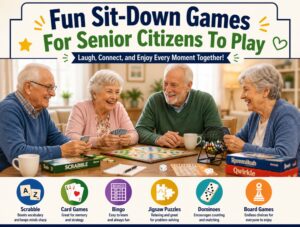
Fun Sit-Down Games For Senior Citizens To Play. Aging does not mean giving up fun, laughter, or meaningful social activities. In fact, staying mentally, physically, and socially engaged becomes even more important as we grow older. One of the easiest ways to encourage healthy aging is through fun sit-down games for senior citizens, which provide entertainment while supporting memory, concentration, communication, and emotional well-being. Whether someone lives independently, with family, in an assisted living community, or attends a senior center, seated games can create joyful moments that strengthen friendships and improve quality of life. Many healthcare professionals recognize that regular participation in activities for older adults, brain games for seniors, senior social activities, and cognitive exercises for seniors may help maintain mental sharpness while reducing feelings of loneliness. The best part is that these games require little equipment, can be adapted for different ability levels, and allow nearly everyone to participate comfortably. From classic word games to creative storytelling and gentle movement activities, there are countless ways to keep older adults entertained without requiring strenuous physical activity. This guide explores some of the most enjoyable sit-down games that families, caregivers, activity coordinators, and seniors themselves can enjoy together while creating lasting memories.
Why Sit-Down Games Are Important for Older Adults
Playing games is often associated with childhood, but research continues to show that adults, especially seniors, benefit enormously from regular recreational activities.
Games stimulate different areas of the brain while encouraging communication, laughter, and social interaction. They also provide structure to the day, making retirement or assisted living more engaging and enjoyable.
For seniors who experience limited mobility, arthritis, chronic pain, or balance concerns, seated games make participation possible without increasing the risk of falls.
Many games also encourage light hand movements, visual tracking, verbal expression, and decision-making skills.
These seemingly simple activities contribute to overall healthy aging.
Some of the key benefits include:
Improved cognitive function
Games challenge memory, reasoning, problem-solving, and attention.
Reduced loneliness
Playing with family members or friends creates opportunities for conversation and companionship.
Better emotional health
Laughter and friendly competition release feel-good hormones that improve mood.
Greater confidence
Successfully completing challenges helps seniors feel capable and accomplished.
Stronger family connections
Games encourage multiple generations to spend meaningful time together.
Stress reduction
Relaxing activities provide a welcome break from daily worries and health concerns.
Choosing the Right Games for Seniors
Not every game is suitable for every older adult.
The best activities consider individual preferences, health conditions, vision, hearing, mobility, and cognitive abilities.
When selecting games, think about several important factors.
Physical Comfort
Participants should remain comfortably seated with adequate back support.
Tables should be at a comfortable height.
Good lighting makes reading cards or game boards much easier.
Mental Ability
Games should provide enough challenge to remain interesting without becoming frustrating.
People with mild memory changes often enjoy familiar games with simple rules.
Social Interaction
Choose activities that encourage conversation rather than focusing only on winning.
Shared laughter is often more valuable than keeping score.
Flexibility
Many classic games can be modified to match different skill levels.
Rules can be simplified whenever necessary.
Personal Interests
Some seniors love trivia.
Others prefer storytelling.
Some enjoy cards while others appreciate creative games.
Matching activities with personal interests increases participation.
Game 1: Bingo with Creative Themes
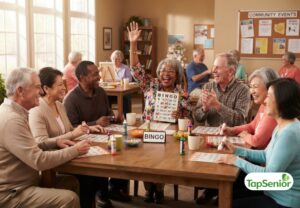
Bingo remains one of the most beloved games among older adults for good reason.
The rules are easy to understand, the pace is comfortable, and everyone has an equal chance of winning.
However, traditional bingo can become even more exciting with creative variations.
Instead of ordinary numbers, consider themed bingo cards featuring:
- Favorite movies
- Flowers
- Canadian wildlife
- Historical landmarks
- Classic songs
- Famous actors
- Healthy foods
- Travel destinations
- Seasonal holidays
- Family memories
Each time an item is called, participants often begin sharing stories connected to it.
A simple bingo game quickly becomes a conversation starter filled with laughter.
Benefits
Enhances concentration
Improves visual recognition
Encourages listening skills
Creates social conversations
Suitable for large groups
Tips for Making Bingo More Engaging
Use large-print cards.
Offer small prizes rather than focusing on expensive rewards.
Allow participants to help call numbers.
Play relaxing background music between rounds.
Encourage storytelling after each game.
Game 2: Word Association Challenge
Word association is one of the simplest brain games for seniors because it requires no equipment.
One player begins with a word.
The next person quickly says the first related word that comes to mind.
For example:
Tree
Forest
Camping
Fire
Marshmallows
Summer
Vacation
Beach
The game continues around the group.
More advanced versions include categories or timed responses.
Benefits
Strengthens vocabulary
Improves language processing
Stimulates memory
Encourages creativity
Promotes quick thinking
Families often discover fascinating stories as older adults explain why they chose certain words.
Variations
Only use animals.
Only use foods.
Only use places visited.
Only use famous people.
Only use words beginning with one letter.
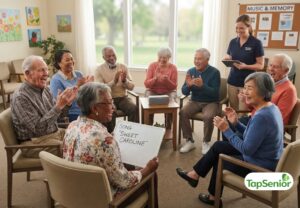
Game 3: Name That Tune
Music has an extraordinary ability to unlock memories.
Even older adults living with dementia often recognize familiar songs from decades earlier.
Playing short clips of classic songs creates a wonderful guessing game.
Participants can identify:
Song title
Artist
Movie soundtrack
Decade
Lyrics
After identifying the song, invite everyone to sing together.
The atmosphere often becomes joyful and energetic.
Why Music Works
Music activates multiple areas of the brain simultaneously.
Songs frequently connect to emotional memories, making recall easier than ordinary conversation.
This is one reason music therapy is widely used in senior care settings.
Benefits
Stimulates long-term memory
Encourages participation
Reduces anxiety
Creates positive emotions
Builds social connections
Game 4: Memory Tray Game
This classic activity improves observation skills and short-term memory.
Place several everyday objects on a tray.
Examples include:
Keys
Spoon
Coin
Pencil
Watch
Book
Cup
Glasses
Button
Scarf
Allow everyone one minute to study the tray.
Cover the objects.
Ask participants to write down or say everything they remember.
The person recalling the most items wins.
Increasing the Difficulty
Add more objects.
Reduce viewing time.
Group similar items together.
Ask participants to remember colors as well as objects.
Benefits
Exercises visual memory
Improves concentration
Supports attention to detail
Provides healthy mental stimulation
Game 5: Finish the Proverb
Older adults often enjoy familiar sayings they’ve heard throughout life.
One player begins a proverb.
Everyone else finishes it.
Examples include:
A stitch in time…
…saves nine.
Better late…
…than never.
Actions speak louder…
…than words.
Practice makes…
…perfect.
Where there’s a will…
…there’s a way.
These sayings frequently lead to interesting conversations about childhood memories and family traditions.
Benefits
Supports language skills
Strengthens long-term memory
Encourages storytelling
Requires no equipment
Perfect for small groups
Making Games Inclusive
One important consideration is ensuring everyone feels welcome regardless of physical or cognitive ability.
Simple adjustments make activities enjoyable for all participants.
Speak clearly.
Allow extra response time.
Use large-print materials.
Avoid rushing.
Celebrate participation rather than competition.
Offer encouragement throughout each activity.
These small changes create a positive experience where every senior feels respected.
The Social Value of Playing Together
Although many people focus on the mental benefits of games, the social advantages are equally significant.
Retirement, health challenges, or losing friends over time can reduce daily social interaction.
Regular game sessions help rebuild those important connections.
Conversation flows naturally.
Friendships develop.
Laughter becomes more frequent.
Confidence grows.
Many senior communities schedule weekly game afternoons because residents consistently report looking forward to these gatherings.
Even family members who struggle to find conversation topics often discover that games make spending time together much easier.
Grandchildren enjoy learning from grandparents.
Older adults appreciate feeling included.
Caregivers experience less pressure because activities happen naturally.
The result is meaningful interaction rather than simply filling time.
In many cases, the greatest reward isn’t winning the game at all.
It’s the smiles, shared memories, and sense of belonging that continue long after the game has ended.
Game 6: Trivia Time
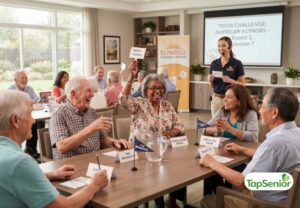
Trivia games are a fantastic way to encourage conversation while exercising long-term memory. Unlike quizzes that feel like tests, trivia should be fun, relaxed, and filled with opportunities to share stories. Many older adults enjoy remembering events, music, movies, sports, and historical moments from earlier decades.
You can organize trivia into different categories to suit the interests of your group.
Popular categories include:
Classic television shows
Hollywood films
Famous landmarks
Canadian history
Sports legends
Nature and wildlife
Food and cooking
Travel destinations
Holiday traditions
Music from the 1950s through the 1980s
Instead of simply announcing the correct answer, encourage participants to explain why they remember it. One question about an old television program might lead to a conversation about childhood, family traditions, or favorite actors.
Benefits
Improves recall abilities
Stimulates long-term memory
Encourages communication
Promotes confidence
Creates opportunities for storytelling
Game 7: Story Circle
Storytelling is one of the oldest forms of entertainment, and it remains an excellent activity for older adults.
Begin with one simple sentence.
For example:
“It was the coldest winter anyone could remember.”
The next person adds another sentence.
Each participant continues building the story until everyone has contributed.
The stories often become funny, surprising, and wonderfully creative.
There are no right or wrong answers, making this an ideal activity for seniors who may feel nervous about competition.
Story Prompts
A mysterious package arrived at the front door.
The family planned an unforgettable vacation.
A friendly dog appeared in the neighborhood.
Someone found an old photograph in the attic.
The first snowfall changed everything.
Benefits
Encourages creativity
Strengthens communication skills
Exercises imagination
Builds group interaction
Supports emotional expression
Game 8: Card Games
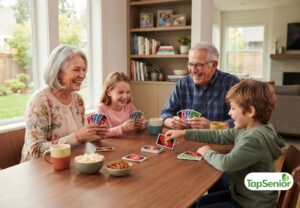
Card games have entertained generations and remain among the most popular activities for older adults.
Many games are simple enough to learn quickly while still providing mental stimulation.
Excellent choices include:
Go Fish
Crazy Eights
Uno
Old Maid
Rummy
Bridge
Cribbage
Skip-Bo
Playing cards help improve concentration, planning, memory, and visual recognition.
For seniors with arthritis, oversized playing cards are easier to hold and shuffle.
Automatic card shufflers can also make participation easier.
Benefits
Exercises strategic thinking
Supports memory
Encourages social interaction
Improves hand coordination
Suitable for small groups
Game 9: Categories Challenge
Choose one category.
Participants take turns naming items that belong to that category.
Examples include:
Animals
Vegetables
Countries
Flowers
Birds
Desserts
Cars
Occupations
Musical instruments
Cities
If someone cannot think of another answer within an agreed amount of time, the round ends and a new category begins.
This game is fast, energetic, and enjoyable without requiring complicated rules.
Benefits
Strengthens vocabulary
Improves mental flexibility
Exercises memory
Promotes quick thinking
Creates friendly competition
Game 10: Dice Conversation Game
This activity combines conversation with a simple dice game.
Assign one discussion topic to each number.
For example:
- Favorite vacation
- Childhood memory
- Favorite meal
- Best advice received
- Proudest accomplishment
- Dream destination
Each participant rolls the dice and answers the corresponding question.
There are no winners or losers.
The goal is simply sharing experiences.
Benefits
Encourages meaningful conversations
Builds friendships
Supports emotional well-being
Exercises memory
Helps new groups become comfortable together
Game 11: Picture Guessing
Collect photographs from magazines, calendars, or printed images.
Show one picture at a time.
Ask questions such as:
What season is this?
Where do you think this was taken?
What happens next?
Does this picture remind you of anything?
Picture games encourage observation while often triggering pleasant memories.
Family photo albums work particularly well because they inspire storytelling across generations.
Benefits
Supports visual recognition
Stimulates conversation
Exercises imagination
Encourages reminiscence
Game 12: Alphabet Challenge
Choose a topic.
Participants name one item beginning with each letter of the alphabet.
For example, if the category is fruit:
A – Apple
B – Banana
C – Cherry
D – Dragon fruit
Continue as far through the alphabet as possible.
The challenge becomes even more entertaining with unusual categories like famous cities or occupations.
Benefits
Exercises verbal fluency
Improves concentration
Supports memory retrieval
Provides mental stimulation
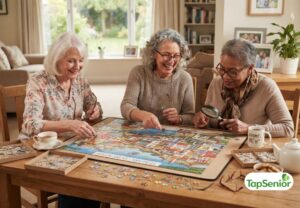
Puzzle Challenges
Jigsaw puzzles remain a favorite pastime among many older adults.
Large-piece puzzles are especially suitable for seniors with vision difficulties or arthritis.
Working together on one puzzle encourages teamwork rather than competition.
The finished picture provides a satisfying sense of accomplishment.
Word search books, crossword puzzles, and Sudoku are also excellent cognitive exercises for seniors.
These activities encourage:
Problem-solving
Attention to detail
Visual scanning
Logical thinking
Patience
Even completing a few puzzle pieces each day helps keep the mind active.
Chair-Friendly Movement Games
Not every seated activity needs to be completely still.
Gentle movement games combine fun with light exercise.
Examples include:
Ball toss using a soft foam ball
Scarf tossing
Chair dancing
Rhythm clapping
Bean bag passing
Follow-the-leader movements
These games improve coordination without placing excessive stress on joints.
Music can make these activities even more enjoyable.
Participants often laugh as they copy dance moves or rhythmic hand motions while remaining safely seated.
Games for Seniors Living with Dementia
Individuals living with dementia can still enjoy meaningful recreational activities.
The key is choosing games that reduce frustration while emphasizing success.
Helpful ideas include:
Matching picture cards
Sorting colorful objects
Simple bingo
Large-piece puzzles
Music guessing games
Reminiscence conversations
Photo matching
Finish-the-song activities
Keep instructions short.
Offer gentle encouragement.
Avoid correcting every mistake.
Focus on enjoyment rather than performance.
Many dementia care specialists recommend familiar activities because they often remain enjoyable even as memory changes progress.
Tips for Organizing a Successful Game Day
Whether hosting at home, a community center, church, retirement residence, or assisted living facility, thoughtful planning makes all the difference.
Create a Comfortable Environment
Arrange chairs in a circle so everyone can see one another.
Ensure adequate lighting.
Reduce background noise.
Keep the room at a comfortable temperature.
Provide Refreshments
Healthy snacks and drinks encourage conversation before and after activities.
Fresh fruit
Tea
Coffee
Water
Whole-grain crackers
Cheese
Yogurt
Encourage Participation
Never pressure someone who prefers to watch first.
Many seniors join in after seeing others having fun.
Celebrate every contribution.
Offer praise for effort rather than focusing only on winning.
Keep Sessions Flexible
Most older adults enjoy activities lasting between 30 and 60 minutes.
Take breaks if participants appear tired.
Alternate mentally challenging games with lighter conversation activities.
How Families Can Join the Fun
Games become even more meaningful when family members participate.
Children and grandchildren often discover fascinating stories while playing with older relatives.
Instead of viewing games as entertainment alone, families can use them as opportunities to strengthen relationships.
Ideas include:
Weekly family game nights
Holiday trivia competitions
Birthday bingo
Memory-sharing activities
Photo guessing games
Grandchildren teaching grandparents new card games
Grandparents teaching traditional games from their childhood
These shared experiences create memories that last far longer than the games themselves.
Supporting Healthy Aging Through Play
Recreation plays an important role in overall wellness.
Games cannot prevent every age-related change, but they contribute to many areas of healthy aging.
Regular participation in brain games for seniors may support attention, language, reasoning, and memory.
Social interaction helps reduce feelings of isolation.
Laughter lowers stress and creates positive emotional experiences.
Friendly competition encourages motivation.
Creative activities provide purpose and enjoyment.
When combined with regular physical activity, balanced nutrition, quality sleep, and routine healthcare, recreational games become one valuable part of a healthy lifestyle.
Frequently Asked Questions
How often should seniors play games?
Many experts recommend engaging in mentally stimulating activities several times each week. Even 20 to 30 minutes of enjoyable play can provide cognitive and social benefits.
Are seated games suitable for seniors with limited mobility?
Yes. Many seated games are specifically designed for individuals who use walkers, wheelchairs, or simply prefer remaining seated for comfort and safety.
What if someone has mild memory loss?
Choose games with simple rules, familiar topics, and plenty of encouragement. Activities that involve music, photographs, or storytelling are often particularly enjoyable.
Can games reduce loneliness?
While games are not a cure for loneliness, regular participation in senior social activities helps create meaningful connections and encourages ongoing interaction with friends, family, and caregivers.
What equipment is needed?
Many excellent games require little or no equipment at all. A deck of cards, printed trivia questions, large-print bingo cards, dice, or family photographs can provide hours of entertainment.
Final Thoughts
Growing older does not mean life becomes less enjoyable. In many ways, retirement offers new opportunities to spend quality time with family, friends, neighbors, and fellow community members. Fun sit-down games for senior citizens provide far more than simple entertainment. They inspire laughter, encourage meaningful conversations, stimulate the mind, and help older adults remain socially connected.
Whether you choose bingo, trivia, storytelling, puzzles, card games, conversation activities, or music-based challenges, the most important ingredient is creating an environment where everyone feels welcomed and valued. Success is not measured by who wins the most games but by the smiles shared, memories created, and friendships strengthened along the way.
At TapSeniors, we believe that healthy aging is about more than managing physical health. It is also about staying curious, maintaining relationships, and finding joy in everyday moments. By making sit-down games, activities for older adults, brain games for seniors, and cognitive exercises for seniors a regular part of daily life, older adults can continue learning, laughing, and connecting with the people who matter most for years to come.
Bài viết liên quan: