
Bathing & Dressing For Seniors. As people age, everyday routines that once seemed effortless can gradually become more challenging. Activities like bathing, grooming, and getting dressed may require additional time, physical support, or gentle reminders. These tasks, often referred to as Activities of Daily Living (ADLs), play a critical role in maintaining health, independence, and quality of life.
For family caregivers, assisting an aging parent, spouse, or loved one with personal care is one of the most meaningful yet emotionally sensitive responsibilities. Bathing and dressing involve privacy, dignity, and independence. Many older adults feel uncomfortable accepting help because they fear losing control, becoming embarrassed, or appearing dependent. Those living with Alzheimer’s disease or other forms of dementia may also experience confusion or anxiety during these routines.
Providing assistance isn’t simply about keeping someone clean or helping them put on clothes. It is about creating an environment where they continue to feel respected, valued, and safe.
With the right techniques, preparation, and attitude, senior bathing assistance and dressing support for older adults can become calm, comfortable experiences rather than stressful daily struggles.
This comprehensive guide explores practical caregiving strategies, bathroom safety tips, grooming techniques, clothing recommendations, and communication methods that help preserve dignity while reducing the risk of injury for both seniors and caregivers.
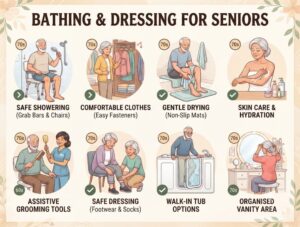
Understanding Activities of Daily Living (ADLs)
Healthcare professionals often evaluate an older adult’s independence by measuring their ability to perform Activities of Daily Living (ADLs).
These include essential personal care tasks such as:
Bathing
Dressing
Personal grooming
Using the toilet
Walking or transferring
Eating
As mobility decreases or chronic health conditions develop, these activities may become increasingly difficult. Arthritis, Parkinson’s disease, stroke recovery, vision loss, balance problems, muscle weakness, and dementia can all interfere with routine self-care.
However, needing assistance with ADLs does not mean a person has lost their independence completely.
The goal of caregiving should always be to support rather than replace independence.
Whenever possible, encourage your loved one to participate in every step they are capable of completing safely.
Even small actions holding a washcloth, brushing their own hair, or choosing between two outfits can help preserve confidence and self-esteem.
Why Bathing and Dressing Can Be Emotionally Difficult
Personal care is deeply personal.
Imagine needing someone else to help you shower or get dressed after spending an entire lifetime caring for yourself.
Many seniors experience feelings such as:
Embarrassment
Frustration
Loss of independence
Fear of falling
Anxiety about pain
Concern over becoming a burden
For individuals living with dementia, bathing can also be frightening because they may not understand what is happening or why.
Water may feel unfamiliar.
Mirrors can create confusion.
Running water may sound overwhelming.
Removing clothing may trigger feelings of vulnerability.
Recognizing these emotional challenges helps caregivers respond with compassion rather than frustration.
Patience often accomplishes far more than speed.
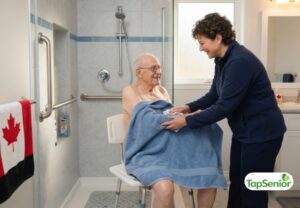
Respect Comes Before Every Task
One of the most important principles of elderly personal care is maintaining dignity throughout every interaction.
Instead of treating bathing or dressing as chores to finish quickly, approach them as opportunities to provide comfort and reassurance.
Simple habits make a tremendous difference.
Knock before entering the room.
Explain each step before beginning.
Ask permission whenever possible.
Maintain privacy using towels or robes.
Speak calmly.
Avoid rushing.
Offer encouragement instead of criticism.
These small gestures help older adults feel respected instead of helpless.
Many caregivers are surprised by how much cooperation improves simply by slowing down and communicating more effectively.
Preparing for a Successful Bathing Routine
Preparation makes bathing safer and less stressful for everyone involved.
Before your loved one enters the bathroom, gather everything you’ll need.
This may include:
Clean towels
Washcloths
Soap
Shampoo
Conditioner
Moisturizer
Clean clothing
Adult briefs if needed
Hairbrush
Comb
Electric razor
Personal hygiene products
Having supplies ready prevents unnecessary interruptions that could increase fall risks or leave your loved one feeling cold.
Creating a Safe Bathroom Environment
Falls remain one of the leading causes of injury among older adults.
The bathroom presents particular risks because water creates slippery surfaces.
Every bathroom used for senior home care should be designed with safety in mind.
Important safety improvements include:
Installing sturdy grab bars for seniors beside the toilet and inside the shower.
Using non-slip bath mats outside the shower.
Placing rubber mats inside tubs.
Installing a handheld showerhead.
Using a shower chair or bath bench.
Improving lighting.
Keeping frequently used items within easy reach.
Removing clutter from walking paths.
A safer bathroom not only reduces injuries but also increases confidence during bathing.
Many seniors become more willing to bathe once they feel secure.

Choosing the Best Bathing Method
Every older adult has different physical abilities and personal preferences.
The ideal bathing method depends on mobility, balance, medical conditions, and comfort level.
Most caregivers use one of three approaches.
Shower Bathing
For many seniors, showers provide the quickest and most comfortable option.
When assisting with a shower:
Adjust the water temperature before they enter.
Test the temperature with your hand.
Avoid water that is too hot or too cold.
Allow your loved one to hold the handheld showerhead if possible.
Encourage them to wash areas they can safely reach.
Offer assistance only when necessary.
Maintaining independence whenever possible helps preserve confidence.
Tub Baths
Some seniors continue enjoying traditional baths because warm water can ease joint stiffness and muscle discomfort.
However, entering and exiting a bathtub often becomes difficult.
Never encourage tub bathing unless safe transfer techniques and appropriate equipment are available.
A bath bench or transfer chair can significantly improve safety.
Sponge Baths
Not every senior requires a full shower every day.
A sponge bath for seniors provides an excellent alternative when someone:
Feels tired
Has limited mobility
Fears showers
Is recovering from surgery
Has advanced dementia
Needs quick daily hygiene between full baths
Sponge bathing keeps skin clean while reducing physical demands.
Step-by-Step Guide to Safe Shower Assistance
When helping an older adult shower, following a consistent routine creates familiarity and reduces anxiety.
Begin by warming the bathroom before bathing.
Cold rooms often make seniors reluctant to undress.
Encourage your loved one to sit on a shower chair whenever possible.
A seated position conserves energy while improving stability.
If standing is preferred, ensure they remain within reach of secure grab bars.
Keep a large towel nearby.
Some seniors feel more comfortable keeping parts of their body covered while bathing.
Wash one section at a time.
Explain what you’re doing before touching them.
Avoid sudden movements.
If shampooing hair, use the handheld showerhead carefully.
Position a folded washcloth across the forehead if necessary to prevent soap from entering the eyes.
Pay special attention to areas where moisture commonly collects.
These include:
Under the breasts
Beneath abdominal folds
Between the toes
Behind the knees
Under the arms
Proper cleaning and drying of these areas helps prevent skin irritation and fungal infections.
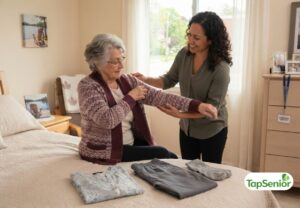
Drying After the Bath
Drying deserves as much attention as bathing itself.
Wet skin becomes fragile.
Moisture trapped within skin folds may lead to irritation, rashes, or infections.
Instead of rubbing vigorously, gently pat the skin dry using soft towels.
Be thorough.
Check areas between fingers and toes.
Dry behind the ears.
Dry beneath skin folds.
Assist your loved one onto a stable chair before continuing with grooming.
Avoid asking them to balance while drying.
Safety always comes first.
Caring for Dry and Sensitive Skin
Older skin naturally becomes thinner and drier with age.
Daily bathing, especially with hot water, may remove protective oils.
After drying, apply a gentle fragrance-free moisturizer across the body.
Pay particular attention to:
Arms
Legs
Hands
Feet
Elbows
Dry skin often causes itching that can lead to scratching and skin damage.
Regular moisturizing improves comfort while helping maintain healthy skin.
For seniors who perspire heavily or have deeper skin folds, caregivers may also use skin-protective powders sparingly to reduce moisture buildup, provided they are appropriate for the individual’s health needs and used according to medical guidance.
When a Sponge Bath Is the Better Choice
Many caregivers mistakenly believe a complete shower is necessary every day.
In reality, frequent sponge baths often provide sufficient hygiene while reducing physical strain.
A sponge bath works especially well when a senior is recovering from illness, has severe arthritis, experiences chronic fatigue, or feels anxious about entering a shower.
Begin with a basin of comfortably warm water and soft washcloths.
Wash the body from top to bottom, cleaning one area at a time while keeping the rest of the body covered with towels for warmth and privacy.
Rinse with clean water using another washcloth and dry each area immediately.
Because sponge baths can be completed while seated in a sturdy chair or on a bedside commode, they are often much less intimidating than traditional bathing.
For many older adults with dementia, this gentle approach reduces resistance while still promoting excellent hygiene.
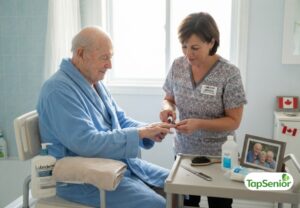
Grooming Is an Essential Part of Personal Care
Bathing is only one aspect of maintaining good hygiene. Regular grooming helps older adults feel comfortable, confident, and healthy. Something as simple as neatly combed hair, trimmed nails, or a freshly shaved face can significantly improve self-esteem and contribute to emotional well-being.
Many seniors have followed the same grooming routines for decades. Continuing those familiar habits whenever possible helps preserve a sense of normalcy. If your loved one has always visited a barber or beauty salon, they may still enjoy those appointments if transportation and mobility allow. Professional grooming also provides valuable social interaction, which can positively affect mental health.
For seniors who receive care at home, caregivers can safely assist with many grooming tasks after bathing, when hair and nails are softer and easier to manage.
Hair Care for Older Adults
Hair care should remain simple, comfortable, and consistent with the senior’s preferences.
Wash hair using warm not hot water and a gentle shampoo designed for sensitive skin. A handheld showerhead makes rinsing much easier, especially when the person is seated safely on a shower chair for seniors.
If your loved one has difficulty tilting their head backward, consider washing hair while they remain seated comfortably with proper neck support.
After washing:
Gently towel dry the hair.
Avoid vigorous rubbing.
Use a wide-tooth comb to prevent unnecessary pulling.
Choose hairstyles that require minimal daily maintenance.
Many caregivers also schedule haircuts every six to eight weeks to make grooming easier and help seniors feel refreshed.
Hair care is about much more than appearance. Clean hair reduces itching, removes excess oils, and contributes to overall comfort.
Nail Care Requires Special Attention
Healthy nails are important for both comfort and safety.
Long fingernails may trap dirt and bacteria, while overgrown toenails can make walking uncomfortable and increase the risk of falls.
After bathing, nails become softer and easier to manage.
Inspect both hands and feet carefully before trimming.
Look for:
Redness
Swelling
Discoloration
Ingrown nails
Cuts
Pressure sores
Fungal infections
If your loved one has diabetes, poor circulation, or severe neuropathy, consult a healthcare professional or podiatrist before trimming toenails. Even small injuries can become serious.
When trimming nails:
Cut straight across.
Avoid cutting too short.
Smooth rough edges with a nail file.
Never pull cuticles.
Gentle nail care helps prevent painful injuries while maintaining healthy hands and feet.
Safe Shaving Practices
Many older adults continue shaving as part of their daily routine.
Whenever possible, an electric razor is usually the safest choice.
Electric shavers reduce the risk of cuts while allowing many seniors to continue shaving independently.
If a traditional safety razor must be used, the caregiver should perform the shaving rather than asking the older adult to do it.
Use shaving cream designed for sensitive skin.
Stretch the skin gently.
Rinse the razor frequently.
Finish with a gentle moisturizer instead of alcohol-based aftershave, which may irritate aging skin.
Maintaining familiar grooming habits often helps older adults feel more like themselves.
Helping Seniors Get Dressed Safely
After bathing and grooming comes another essential Activity of Daily Living getting dressed.
While dressing may appear simple, it can become surprisingly challenging due to arthritis, limited flexibility, weakness, balance problems, vision impairment, or cognitive decline.
The caregiver’s role is not to take over completely but to provide the right amount of assistance.
Encourage your loved one to complete every step they safely can.
Even simple actions such as pulling on a sleeve or fastening one button help maintain independence and confidence.
Choosing Clothing That Encourages Independence
One of the easiest ways to simplify dressing is by choosing clothing specifically designed for comfort and ease of use.
Look for garments that feature:
Elastic waistbands
Stretch fabrics
Pull-on pants
Wide neck openings
Large buttons
Magnetic closures
Velcro fasteners
Front-opening shirts
Adaptive clothing can dramatically reduce frustration while making dressing faster and safer.
Avoid clothing with:
Small buttons
Complicated zippers
Tight sleeves
Long shoelaces
Difficult clasps
These features may become frustrating for seniors with arthritis or reduced hand strength.
The goal is clothing that promotes both comfort and independence.
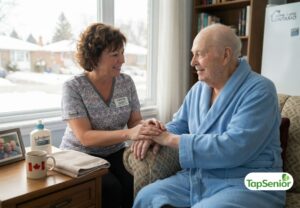
Simplifying Daily Clothing Choices
For seniors living with dementia, making too many decisions can become overwhelming.
Instead of opening an entire closet filled with options, prepare one complete outfit ahead of time.
Lay the clothes out in the order they should be put on.
For example:
Undergarments
Shirt
Pants
Socks
Shoes
This simple strategy reduces confusion while helping maintain independence.
Offering two choices instead of ten also helps.
Rather than asking, “What would you like to wear today?”
Try asking,
“Would you like the blue sweater or the green sweater?”
Smaller decisions are much easier to process.
Choosing Safe Footwear
Footwear plays an important role in fall prevention for seniors.
Shoes should fit properly without being too tight or too loose.
Good footwear includes:
Low heels
Non-slip soles
Lightweight construction
Secure fastening
Proper arch support
Avoid loose slippers without heel support, high heels, or smooth-soled shoes that increase slipping risks.
If balance problems exist, consult a healthcare provider regarding supportive footwear recommendations.
Communicating During Personal Care
Good communication often determines whether bathing and dressing become peaceful routines or stressful experiences.
Always explain what you’re about to do.
Speak slowly.
Use simple instructions.
Allow time for responses.
Maintain eye contact.
Offer reassurance frequently.
For example:
“I’m going to help you wash your hands now.”
“Let’s put your left arm into the sleeve.”
“The water is warm and comfortable.”
Calm communication reduces anxiety while increasing cooperation.
Caring for Seniors Living With Dementia
Bathing and dressing can become especially challenging for individuals with Alzheimer’s disease or other forms of dementia.
Confusion may cause them to misunderstand your intentions.
They may forget why bathing is necessary.
They may resist removing clothing.
They may become frightened by running water.
Patience becomes even more important.
Rather than arguing or forcing participation, try redirecting attention.
Use familiar routines.
Keep the environment quiet.
Reduce unnecessary noise.
Maintain consistent schedules whenever possible.
Sometimes demonstrating an action works better than explaining it.
Show how to hold the washcloth.
Guide their hand gently if needed.
Offer praise after each completed step.
Small successes build confidence.
Respecting Privacy Throughout the Process
Maintaining dignity should remain a priority during every caregiving activity.
Keep the body covered whenever possible using towels or robes.
Close doors and curtains.
Avoid unnecessary exposure.
Invite participation instead of giving commands.
Respect preferences whenever possible.
Older adults deserve the same privacy and respect they valued throughout their lives.
Preserving dignity strengthens trust between caregivers and loved ones.
Common Mistakes Caregivers Should Avoid
Even experienced caregivers sometimes develop habits that unintentionally create stress.
Common mistakes include:
Rushing through bathing.
Giving too many instructions at once.
Taking over tasks the senior could still perform independently.
Ignoring signs of discomfort.
Using water that is too hot.
Leaving wet floors unattended.
Forgetting to gather supplies beforehand.
Choosing difficult clothing.
Arguing when resistance occurs.
Instead, slow down.
Observe carefully.
Adjust your approach when necessary.
Remember that every individual has different needs.
Flexibility often produces better outcomes than rigid routines.
When Resistance Happens
Some days your loved one simply may not want to bathe or get dressed.
This is completely normal.
Fatigue, pain, confusion, depression, illness, or fear may all contribute to resistance.
Avoid power struggles.
Instead:
Pause.
Offer reassurance.
Try again later.
Sometimes waiting fifteen minutes is enough.
Other times waiting until the following day is the better decision.
Unless hygiene presents an immediate medical concern, preserving trust is usually more valuable than forcing cooperation.
Caregiving is a long journey built on relationships.
Patience today often makes tomorrow much easier.
Building a Comfortable Daily Routine
Older adults generally respond well to consistency.
Try bathing at approximately the same time each day or on the same days each week.
Keep the bathroom comfortably warm.
Play relaxing music if it helps reduce anxiety.
Use familiar soaps or shampoos with scents your loved one enjoys.
Maintain similar routines every time.
Predictability creates comfort.
The more familiar each step becomes, the less stressful personal care usually feels.
Frequently Asked Questions
How often should seniors bathe?
Most older adults do not require a full bath every day. Depending on their activity level, skin condition, and health status, two or three showers per week combined with daily sponge baths for seniors may provide excellent hygiene. Always follow recommendations from healthcare providers when specific medical conditions are involved.
What if my loved one refuses to bathe?
Remain calm and avoid forcing the situation. Try identifying the reason for resistance, such as fear, pain, embarrassment, or fatigue. Offering choices, maintaining privacy, and returning later often leads to better cooperation.
How can I reduce fall risks during bathing?
Install bathroom safety equipment for seniors, including grab bars, non-slip mats, a handheld showerhead, and a shower chair. Keep the bathroom warm, dry wet floors immediately, and never leave someone with poor balance unattended.
Is adaptive clothing worth buying?
Yes. Adaptive clothing for seniors makes dressing easier for people with arthritis, limited mobility, or dementia. Features such as elastic waistbands, magnetic closures, and Velcro fasteners improve independence while reducing caregiver strain.
Final Thoughts
Helping an older adult with bathing, grooming, and dressing is about far more than completing daily tasks. It is an opportunity to protect health, preserve dignity, and strengthen the bond between caregiver and loved one.
Every senior deserves to feel respected during personal care for older adults, regardless of how much assistance they require. By approaching each routine with patience, empathy, and encouragement, caregivers can transform potentially stressful moments into experiences that promote comfort, trust, and confidence.
Remember that independence does not disappear simply because someone needs help. Encourage your loved one to participate in every task they can safely manage, celebrate small achievements, and adapt routines to match their changing abilities. With thoughtful preparation, appropriate bathroom safety for seniors, supportive communication, and a compassionate attitude, bathing and dressing can remain safe, comfortable, and dignified parts of everyday life.
Above all, never underestimate the power of patience. Some days will go smoothly, while others may require extra time, reassurance, or flexibility. What matters most is creating an environment where your loved one feels secure, respected, and cared for. Those simple acts of kindness often make the greatest difference in supporting healthy aging and improving quality of life for both seniors and the family members who care for them.
Bài viết liên quan: