
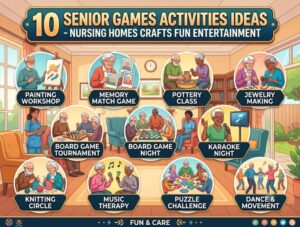
10 Senior Games Activities Ideas – Nursing Homes Crafts Fun Entertainment. Keeping older adults active, engaged, and socially connected is one of the most important goals in any nursing home or assisted living community. While quality healthcare and proper nutrition are essential, meaningful daily activities can have an equally significant impact on a senior’s overall quality of life. The right combination of games, crafts, gentle exercise, and social events can improve physical health, stimulate the mind, reduce feelings of loneliness, and create joyful memories that residents look forward to every day.
Many older adults experience major life transitions when moving into a nursing home. They may leave behind familiar routines, lifelong neighbors, treasured belongings, and even a sense of independence. These changes can sometimes contribute to boredom, anxiety, depression, or social isolation. Fortunately, thoughtfully planned activities can help transform daily life into something enjoyable and purposeful.
Whether you are a caregiver, family member, activity coordinator, volunteer, or healthcare professional, organizing senior games and activities does not require a large budget or elaborate equipment. Many of the most successful activities rely on creativity, conversation, teamwork, and shared experiences rather than expensive materials.
This guide explores ten engaging activities that support healthy aging while bringing fun into everyday life. From brain games for seniors and creative arts to music sessions and gentle physical exercise, these ideas can easily be adapted for residents with different mobility levels, cognitive abilities, and personal interests. Most importantly, these activities encourage laughter, confidence, friendship, and emotional well-being, helping every resident feel valued and included.
Why Activities Matter in Nursing Homes
Living in a nursing home does not mean life should become repetitive or monotonous. In fact, structured activities are an important part of person-centered care.
Daily engagement helps residents maintain their sense of identity while providing opportunities to learn, create, and socialize.
Research has consistently shown that meaningful recreational activities may help:
- Improve memory and concentration
- Encourage physical movement
- Reduce stress and anxiety
- Support emotional well-being
- Strengthen social relationships
- Increase confidence and self-esteem
- Promote better sleep
- Reduce feelings of loneliness
Even simple activities lasting 20 to 30 minutes can make a noticeable difference in a resident’s mood.
More importantly, activities give seniors something to anticipate each day. Looking forward to a weekly trivia competition, craft workshop, or music afternoon creates excitement and helps establish positive routines.
Choosing Activities for Different Ability Levels
Not every resident has the same physical or cognitive abilities.
Some individuals remain highly active, while others may use wheelchairs or experience memory loss.
The best activity programs are flexible enough to include everyone.
When planning activities, consider:
- Physical mobility
- Vision and hearing abilities
- Cognitive function
- Personal interests
- Cultural background
- Previous hobbies
- Medical conditions
Rather than focusing on limitations, activity coordinators should emphasize participation.
Success should be measured by enjoyment not perfection.
Inclusive activities help every resident feel respected and appreciated.
Benefits Beyond Entertainment
Games and creative activities are often viewed simply as entertainment.
However, their benefits extend much further.
Physical Benefits
Many activities encourage gentle movement that supports:
- Joint flexibility
- Balance
- Muscle strength
- Hand-eye coordination
- Blood circulation
- Mobility
Even seated exercises can improve overall fitness.
Mental Benefits
Mental stimulation keeps the brain active.
Activities involving memory, problem-solving, language, or creativity may help preserve cognitive function.
Examples include:
- Crossword puzzles
- Trivia games
- Storytelling
- Word searches
- Card games
- Arts and crafts
Emotional Benefits
Creative expression allows residents to share emotions that may otherwise remain hidden.
Painting, music, writing, and storytelling all provide opportunities for emotional healing.
Residents often feel proud after completing projects or winning friendly competitions.
Social Benefits
Perhaps the greatest advantage is social connection.
Activities encourage:
- New friendships
- Teamwork
- Communication
- Shared laughter
- Mutual support
Strong social relationships contribute significantly to healthy aging.
Activity #1: Trivia and Brain Games
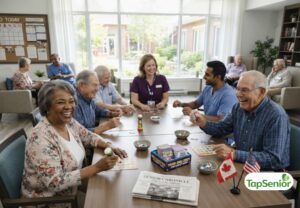
One of the easiest and most enjoyable ways to stimulate the mind is through brain games for seniors.
Trivia encourages residents to recall memories, share experiences, and participate in friendly competition.
Unlike traditional tests, trivia creates a relaxed environment where everyone contributes.
Why Trivia Works
Older adults possess decades of life experience.
Questions about past decades often trigger conversations that continue long after the game ends.
Topics may include:
- History
- Movies
- Music
- Sports
- Television
- Famous landmarks
- Holidays
- Childhood traditions
- Geography
- Food
Instead of simply answering questions, residents frequently tell stories connected to each topic.
These conversations strengthen both memory and social bonds.
Popular Trivia Themes
Changing themes keeps the activity fresh.
Popular ideas include:
- 1950s Pop Culture
- Classic Hollywood
- Famous World Capitals
- Historic Events
- Famous Inventors
- Television Classics
- World Landmarks
- Holiday Traditions
- Nature
- Famous Athletes
Special seasonal trivia sessions also add excitement throughout the year.
Make It Interactive
Technology can make trivia even more engaging.
Consider using:
- Vintage photographs
- Music clips
- Short movie scenes
- Sound effects
- Old advertisements
Visual and audio cues often help stimulate memory, particularly for residents living with mild cognitive impairment.
Other Brain Games
Trivia is only one option.
Additional memory games for seniors include:
- Large-print Sudoku
- Crossword puzzles
- Word searches
- Finish the proverb
- Name That Tune
- Guess the object
- Picture matching
- Memory card games
- Alphabet games
Rotating activities each week keeps participation high.
Friendly Competition
Residents often enjoy earning points.
Simple recognition can include:
- Certificates
- Stickers
- Small prizes
- Team trophies
- Monthly champions board
The emphasis should always remain on fun rather than winning.
Celebrating participation encourages everyone to join.
Activity #2: Chair Yoga and Gentle Movement
Regular movement plays a critical role in maintaining independence as we age.
However, not every older adult can participate in traditional exercise.
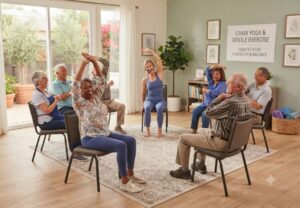
This is why chair exercises for seniors have become increasingly popular in nursing homes.
Chair yoga provides a safe, accessible way to improve mobility while reducing stress.
Benefits of Chair Yoga
A typical session helps improve:
- Flexibility
- Balance
- Circulation
- Muscle strength
- Posture
- Breathing
- Relaxation
Residents who use wheelchairs can often participate with only minor modifications.
Simple Chair Yoga Movements
Activities may include:
- Neck rolls
- Shoulder circles
- Arm raises
- Gentle twists
- Leg extensions
- Ankle rotations
- Deep breathing
- Hand stretches
Sessions usually last between 20 and 40 minutes.
Create a Relaxing Environment
The atmosphere matters.
Consider adding:
- Soft instrumental music
- Natural lighting
- Comfortable seating
- Lavender aromatherapy
- Guided breathing
- Short meditation
These elements help residents feel calm and focused.
Weekly Themes
Adding themes increases enthusiasm.
Examples include:
- Monday Morning Stretch
- Peaceful Tuesday
- Wellness Wednesday
- Flexible Friday
- Serenity Saturday
Residents often enjoy looking forward to recurring sessions.
Encourage Progress
Rather than comparing participants, celebrate personal improvement.
For example:
“I lifted my arms higher today.”
“I completed every stretch.”
“I feel less stiff than last week.”
These small victories build confidence.
Activity #3: Arts and Crafts Workshops
Creative expression has remarkable therapeutic value.
Even residents who claim they are “not artistic” frequently discover hidden talents once they begin creating.
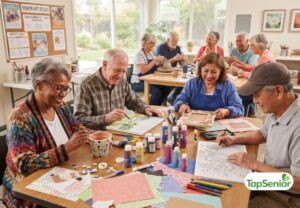
Arts and crafts for seniors encourage imagination while supporting fine motor skills and emotional well-being.
Benefits of Craft Activities
Creative projects help:
- Improve hand coordination
- Stimulate imagination
- Reduce anxiety
- Encourage conversation
- Increase self-confidence
- Preserve memories
Craft sessions also allow residents to work at their own pace.
There is no right or wrong result.
Easy Craft Ideas
Popular projects include:
- Watercolor painting
- Decorating flower pots
- Holiday ornaments
- Greeting cards
- Memory collages
- Birdhouses
- Picture frames
- Seasonal wreaths
- Scrapbooks
Simple materials often produce beautiful results.
Memory Through Creativity
Many projects inspire storytelling.
For example, while decorating photo frames, residents may discuss:
- Wedding memories
- Family vacations
- Childhood homes
- Favorite pets
- Military service
- Holiday traditions
These conversations often become as valuable as the artwork itself.
Accessibility Matters
Adaptive supplies help everyone participate.
Examples include:
- Foam paintbrushes
- Large-handled scissors
- Easy-grip markers
- Large stencils
- Non-toxic paints
- Lightweight materials
The goal is inclusion rather than artistic perfection.
Display Their Work
Nothing boosts confidence like seeing artwork proudly displayed.
Create:
- Hallway galleries
- Monthly exhibitions
- Resident art shows
- Family viewing days
Recognition helps residents feel appreciated for their creativity.
Activity #4: Music, Sing-Alongs, and Memory Stimulation
Music possesses a unique ability to connect with emotions and memories.
Even individuals living with advanced dementia often respond positively to familiar songs.
For this reason, music therapy for seniors has become one of the most successful activities in long-term care communities.
Why Music Is Powerful
Songs from childhood and early adulthood often remain deeply embedded in long-term memory.
A familiar melody may encourage:
- Smiling
- Singing
- Dancing
- Conversation
- Emotional expression
- Relaxation
Many families are amazed when a loved one who rarely speaks suddenly sings every word of a favorite song.
Organize Weekly Sing-Alongs
Popular song categories include:
- Classic country
- Gospel hymns
- Broadway musicals
- Patriotic songs
- Golden oldies
- Folk music
- Love songs
- Holiday classics
Provide large-print lyric sheets so everyone can participate.
Interactive Music Activities
Expand beyond singing.
Try:
- Name That Tune
- Musical bingo
- Guess the artist
- Finish the lyrics
- Rhythm games
- Karaoke afternoons
Adding tambourines, maracas, or hand drums encourages movement.
Invite Guest Performers
Local musicians, church choirs, school groups, and community volunteers often enjoy performing for nursing home residents.
Live performances create memorable experiences while strengthening community connections.
Personalized Playlists
Every resident has unique musical preferences.
Personal playlists featuring favorite artists can:
- Reduce anxiety
- Improve mood
- Encourage memory recall
- Promote relaxation
Music becomes especially meaningful during quiet moments or individual visits.
Activity #5: Balloon Volleyball and Pool Noodle Hockey
Physical activity does not need to feel like exercise.
Games encourage movement while creating laughter and teamwork.
Two of the safest and most popular choices are balloon volleyball and pool noodle hockey.
Balloon Volleyball
Residents remain seated in a circle or on opposite sides of a room.
The objective is simple:
Keep the balloon in the air.
Because balloons move slowly, everyone has time to react.
Benefits include:
- Improved coordination
- Gentle upper-body exercise
- Better reaction time
- Social interaction
- Shared laughter
Pool Noodle Hockey
Foam pool noodles become lightweight hockey sticks.
Residents gently pass a soft ball toward goals.
The game develops:
- Arm strength
- Coordination
- Teamwork
- Communication
Because the equipment is soft and lightweight, the activity remains safe for most participants.
Make It Festive
Increase excitement by creating team identities.
Ideas include:
- Team colors
- Fun hats
- Cheerleaders
- Scoreboards
- Friendly awards
Recognize achievements with humorous certificates such as:
- Best Team Spirit
- Most Enthusiastic Player
- Biggest Smile Award
- Balloon Champion
Include Everyone
Not every resident can actively play.
Alternative roles include:
- Scorekeeper
- Referee
- Cheer captain
- Music coordinator
- Photographer
Every participant contributes to the fun.
Looking Ahead
The first five activities demonstrate that meaningful engagement in nursing homes goes far beyond passing the time. Whether residents are answering trivia questions, practicing gentle yoga, painting a colorful masterpiece, singing beloved classics, or laughing during a balloon volleyball match, each activity strengthens physical health, cognitive function, emotional well-being, and social connection. The true goal is not competition or perfection, but creating joyful moments that help older adults feel valued, capable, and connected.
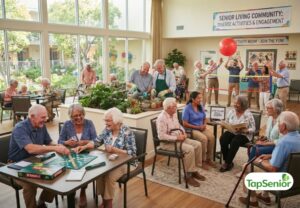
Activity #6: Board Games and Card Clubs
Traditional board games have brought families together for generations, and they remain one of the most effective ways to keep older adults mentally active while encouraging social interaction. In nursing homes, board games for seniors create opportunities for conversation, teamwork, and friendly competition without requiring strenuous physical activity.
Many residents already know the rules of classic games, making participation easy and enjoyable.
Benefits of Board Games
Board games stimulate several cognitive skills at once, including:
- Memory recall
- Decision-making
- Strategic thinking
- Concentration
- Pattern recognition
- Problem-solving
They also help reduce feelings of loneliness by encouraging residents to spend quality time together.
Popular Board Games
Choose games that are simple, familiar, and adaptable.
Excellent options include:
- Bingo
- Dominoes
- Checkers
- Chess
- Connect Four
- Rummikub
- Scrabble with large-print tiles
- Snakes and Ladders
- Jenga with oversized wooden blocks
Residents with arthritis may benefit from larger playing pieces that are easier to grasp.
Card Games Everyone Can Enjoy
Card games are another favorite activity because they require minimal equipment.
Popular choices include:
- Uno
- Go Fish
- Crazy Eights
- Old Maid
- Bridge
- Gin Rummy
- Solitaire
- Memory Matching Cards
Using large-print playing cards makes participation easier for residents with vision impairments.
Create Weekly Game Clubs
Rather than offering random activities, establish a regular schedule.
For example:
Monday: Bingo Afternoon
Tuesday: Domino Tournament
Wednesday: Card Club
Thursday: Puzzle Challenge
Friday: Family Game Night
Having a predictable routine gives residents something exciting to anticipate each week.
Encourage Teamwork
Not every game needs individual winners.
Team-based games encourage cooperation and communication.
Staff members and visiting family members can also participate, creating stronger relationships between residents and caregivers.
Activity #7: Movie Nights and Memory Viewings
Movies have an incredible ability to transport people back to meaningful moments in their lives.
A weekly movie night for seniors provides entertainment while encouraging conversation and shared memories.
Transforming a common room into a cozy theater creates an event residents genuinely look forward to.
Setting the Scene
A few simple touches make the experience memorable.
Consider including:
- Comfortable seating
- Soft blankets
- Popcorn
- Healthy snacks
- Dim lighting
- Movie posters
- Large-screen projection
- Good-quality speakers
Creating a theater atmosphere makes the event feel special.
Best Movie Choices
Classic films are often the most successful because they connect with residents’ younger years.
Popular categories include:
- Golden Age Hollywood
- Musicals
- Westerns
- Romantic classics
- Family films
- Historical dramas
- Classic comedies
- Nature documentaries
Avoid films with excessive violence or confusing storylines that may overwhelm some residents.
Memory Viewings
Instead of commercial movies, organize personalized memory presentations.
These may include:
- Family photographs
- Wedding pictures
- Childhood images
- Local historical photographs
- Vintage television commercials
- Community celebrations
- Old newspaper headlines
These visual reminders often inspire wonderful conversations and storytelling.
Discussion After the Movie
After each screening, invite residents to discuss:
- Their favorite character
- A memorable scene
- Similar life experiences
- Lessons from the story
- Favorite actors
There are no wrong answers.
The objective is conversation rather than film criticism.
Activity #8: Gardening and Nature Activities
Nature has a calming effect on people of every age.
For older adults, gardening activities for seniors offer both physical and emotional benefits while providing a meaningful sense of responsibility.
Watching plants grow reminds residents that they continue to nurture life and contribute to their community.
Physical Benefits
Gardening encourages gentle movement through:
- Watering plants
- Planting seeds
- Arranging flowers
- Pruning herbs
- Filling containers
- Decorating flowerpots
These small actions help maintain coordination and flexibility.
Emotional Benefits
Gardens create peaceful spaces where residents can:
- Relax
- Reflect
- Socialize
- Enjoy fresh air
- Reduce stress
Many older adults also reconnect with cherished memories of home gardens and family traditions.
Easy Gardening Projects
Simple projects include:
- Herb gardens
- Raised flower beds
- Indoor succulents
- Container vegetables
- Butterfly gardens
- Bird feeders
- Seasonal flower arrangements
Residents can participate regardless of their gardening experience.
Indoor Gardening
Outdoor access is not always possible.
Fortunately, many gardening activities work indoors.
Ideas include:
- Windowsill herbs
- Small potted flowers
- Terrariums
- Mini greenhouses
- Decorative planters
Even caring for one small plant provides a sense of purpose.
Celebrate the Seasons
Nature activities change beautifully throughout the year.
Spring:
Plant flowers and vegetables.
Summer:
Harvest herbs and enjoy outdoor picnics.
Autumn:
Collect colorful leaves for craft projects.
Winter:
Create evergreen centerpieces and indoor gardens.
Seasonal variety keeps activities fresh and exciting.
Activity #9: Storytelling and Journaling Circles
Every older adult has decades of memories worth preserving.
Unfortunately, many residents feel that nobody asks about their life experiences anymore.
Storytelling activities for seniors give them an opportunity to share their wisdom while strengthening emotional well-being.
Why Storytelling Matters
Sharing personal stories helps residents:
- Preserve memories
- Build confidence
- Strengthen identity
- Connect with others
- Reduce loneliness
Many stories become treasured family keepsakes.
Conversation Starters
Gentle prompts encourage discussion.
Examples include:
- My first job
- My childhood home
- My proudest achievement
- A lesson I learned
- My favorite holiday memory
- My first vacation
- The best advice I ever received
- My greatest adventure
One story often inspires another.
Journaling
Some residents enjoy writing.
Others prefer speaking while volunteers or caregivers write for them.
Both approaches are valuable.
Encourage journals containing:
- Gratitude lists
- Poems
- Letters to grandchildren
- Family recipes
- Favorite quotations
- Daily reflections
Writing supports both memory and emotional expression.
Create a Legacy Book
Collect stories from every resident into one community book.
Include:
- Photographs
- Quotes
- Family traditions
- Life lessons
- Favorite recipes
- Inspirational messages
Families often treasure these books for generations.
Group Storytelling
Another enjoyable activity involves collaborative storytelling.
One resident begins with a sentence.
The next continues the story.
The process repeats around the room.
The results are often humorous, creative, and surprisingly imaginative.
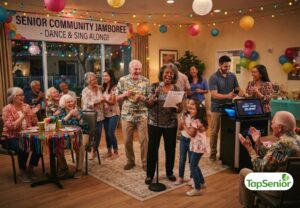
Activity #10: Dance Parties and Theme Days
Movement combined with music creates joyful experiences for nearly everyone.
Even residents who cannot stand can participate through seated dancing, hand movements, or rhythmic clapping.
Dance activities for seniors promote both physical wellness and emotional connection.
Why Dance Works
Dance encourages:
- Balance
- Coordination
- Flexibility
- Cardiovascular health
- Mood improvement
- Social interaction
Most importantly, it creates laughter.
Fun Theme Ideas
Themes make every event feel unique.
Popular choices include:
- 1950s Sock Hop
- Tropical Luau
- Country Western Night
- Disco Party
- Holiday Celebration
- Broadway Afternoon
- Rock and Roll Classics
- Pajama Dance Party
Simple decorations transform an ordinary room into a festive celebration.
Costumes and Accessories
Residents enjoy dressing for special occasions.
Offer:
- Colorful scarves
- Hats
- Sunglasses
- Flower leis
- Costume jewelry
- Fun photo props
Participation should always be optional.
Include Families
Inviting children and grandchildren creates unforgettable moments.
Intergenerational events strengthen family relationships while encouraging meaningful conversations.
Photographs from these events become treasured memories.
Celebrate Every Achievement
Dance parties are wonderful opportunities to recognize birthdays, anniversaries, volunteer appreciation, or resident milestones.
Simple recognition makes everyone feel valued.
Tips for Planning Successful Senior Activities
Successful activity programs are built around residents rather than schedules.
Keep these best practices in mind.
Focus on Ability Rather Than Age
Two residents of the same age may have very different interests and physical abilities.
Offer multiple options whenever possible.
Keep Instructions Simple
Explain one step at a time.
Demonstrate activities visually whenever possible.
Encourage Participation Without Pressure
Some residents prefer observing before joining.
Respect their comfort level.
Over time, many become active participants naturally.
Celebrate Small Successes
Completing a puzzle, planting a flower, or singing one favorite song deserves recognition.
Positive encouragement builds confidence.
Rotate Activities
Variety keeps programs exciting.
Alternate between:
- Physical activities
- Creative projects
- Educational sessions
- Music
- Games
- Outdoor experiences
Residents remain engaged when every week offers something new.
How Families Can Support Activity Programs
Family involvement greatly enhances a resident’s quality of life.
Even occasional participation makes activities more meaningful.
Families can:
- Join game afternoons.
- Donate puzzles or craft supplies.
- Share family photographs.
- Volunteer during special events.
- Lead hobby demonstrations.
- Play music together.
- Read favorite books aloud.
- Participate in holiday celebrations.
These shared experiences strengthen emotional bonds while creating new memories.
Frequently Asked Questions
What are the best activities for seniors with limited mobility?
Chair yoga, trivia games, music sessions, storytelling, crafts, card games, and balloon volleyball can all be adapted for individuals with limited mobility.
How often should nursing homes organize activities?
Most experts recommend offering a variety of structured activities every day, with both morning and afternoon options. Residents should also have opportunities for spontaneous recreation and quiet hobbies.
Are games beneficial for seniors with dementia?
Yes. Many studies suggest that familiar games, music, storytelling, and sensory activities may help improve mood, encourage communication, and reduce agitation in individuals living with dementia.
What supplies are needed for most senior activities?
Many activities require only inexpensive materials such as balloons, playing cards, puzzles, markers, paints, flowerpots, music players, books, or craft supplies.
How can shy residents become more involved?
Begin with small group activities, pair them with friendly participants, encourage observation without pressure, and celebrate every effort. Building trust often leads to increased participation over time.
Creating a Joyful Community Through Meaningful Activities
The best nursing homes understand that quality care extends far beyond medication schedules and medical appointments. A truly supportive environment nurtures the mind, body, and spirit through daily opportunities for connection, creativity, movement, and purpose.
Whether residents are enjoying brain games for seniors, participating in chair exercises for seniors, creating beautiful artwork, tending a small garden, sharing life stories, or dancing to timeless music, every activity contributes to a stronger sense of belonging and fulfillment. These moments of laughter, learning, and companionship help transform ordinary days into meaningful experiences that residents cherish.
The most successful activity programs are those that remain flexible, inclusive, and centered on each individual’s abilities and interests. By offering a wide variety of senior games and activities, caregivers can ensure that every resident has the opportunity to participate, succeed, and feel valued.
At TapSeniors, we believe that aging should be filled with dignity, purpose, and joy. Supporting older adults means more than meeting their physical needs it means helping them stay socially connected, mentally engaged, and emotionally fulfilled. Whether you’re a caregiver, family member, or activity coordinator, incorporating these ideas into your routine can brighten each day and enrich the lives of the seniors you care about.
Remember, the simplest activity a shared game, a favorite song, a heartfelt conversation, or a creative project can make an extraordinary difference. By investing time in meaningful engagement, we create communities where older adults continue to thrive, build friendships, celebrate their experiences, and enjoy every stage of life with confidence and happiness.
Bài viết liên quan: