
Best Games for Seniors to Stay Mentally Active. As people age, maintaining cognitive health becomes just as important as staying physically active. Fortunately, one of the most enjoyable ways to support lifelong brain health is through games that challenge memory, attention, reasoning, creativity, and social interaction. Whether played alone, with family members, or in a community setting, the best games for seniors, brain games for older adults, memory games for seniors, cognitive activities for seniors, and mental exercises for aging adults can help stimulate the mind while reducing boredom and encouraging meaningful connections. Research from organizations such as the Alzheimer’s Association, the National Institute on Aging, and healthcare professionals worldwide continues to highlight the importance of mentally engaging activities in promoting healthy aging. Games are not simply entertainment. They provide opportunities to practice problem-solving, strengthen memory, improve concentration, and maintain confidence. For seniors living independently, with family, or in assisted living communities across Canada and other countries, incorporating enjoyable games into a weekly routine can contribute to a healthier, happier, and more fulfilling lifestyle.
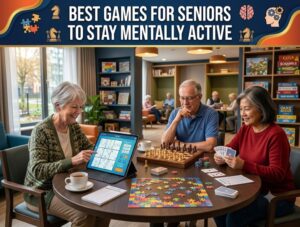
Why Mental Activity Matters for Seniors
The brain, much like the muscles in the body, benefits from regular exercise. While aging naturally brings changes in memory and processing speed, consistent mental stimulation helps keep the brain engaged and adaptable.
Playing games regularly can offer numerous benefits, including:
- Improving short-term memory
- Enhancing concentration
- Encouraging logical thinking
- Supporting decision-making skills
- Increasing creativity
- Promoting emotional well-being
- Reducing feelings of loneliness
- Creating opportunities for social interaction
- Boosting confidence through achievement
Games should never be viewed as a cure for dementia or Alzheimer’s disease. However, many experts agree that mentally stimulating activities are an important part of a healthy lifestyle that supports overall cognitive wellness.
What Makes a Game Good for Seniors?
Not every game provides the same cognitive benefits. The most effective games for older adults typically combine challenge with enjoyment.
An ideal game should:
- Be easy to learn
- Offer adjustable difficulty
- Encourage thinking rather than speed alone
- Promote social interaction when possible
- Be accessible for individuals with vision or mobility limitations
- Create a sense of accomplishment instead of frustration
The best game is ultimately one that a senior enjoys playing consistently.
1. Crossword Puzzles
Crossword puzzles have remained one of the world’s most popular brain exercises for decades.
They challenge multiple cognitive functions simultaneously, including:
- Vocabulary
- Long-term memory
- General knowledge
- Pattern recognition
- Problem-solving
Completing crosswords encourages seniors to retrieve information from long-term memory, strengthening neural pathways through repeated practice.
Crosswords are available in newspapers, puzzle books, websites, and mobile applications with various difficulty levels.
Benefits include:
- Improved language skills
- Better recall
- Increased concentration
- Daily mental stimulation
For beginners, simple crossword books provide an excellent starting point before progressing to more challenging puzzles.
2. Sudoku
Sudoku focuses entirely on logical thinking rather than mathematics.
Players arrange numbers so each row, column, and square contains every digit exactly once.
Although the numbers may appear intimidating, arithmetic is not involved.
Sudoku helps seniors strengthen:
- Logical reasoning
- Attention to detail
- Pattern recognition
- Working memory
- Focus
One advantage of Sudoku is its scalability. Easy puzzles provide gentle mental stimulation, while advanced puzzles offer a rewarding challenge for experienced players.
Many seniors enjoy solving one puzzle every morning alongside coffee or breakfast.
3. Chess
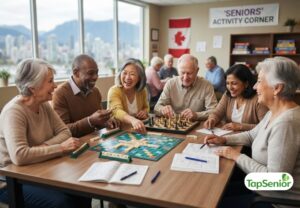
Chess has long been recognized as one of the most intellectually stimulating games available.
Each move requires careful planning while anticipating an opponent’s strategy.
Playing chess exercises several areas of cognitive function, including:
- Critical thinking
- Strategic planning
- Decision making
- Memory
- Concentration
- Adaptability
Studies have suggested that strategy games like chess may contribute to maintaining cognitive flexibility as people age.
Even beginners can enjoy casual games with family members or participate in local senior clubs.
Online chess platforms also allow seniors to play against opponents from around the world at their own pace.
4. Checkers
While simpler than chess, checkers remains an excellent mental exercise.
Players constantly evaluate options, predict future moves, and balance offense with defense.
Benefits include:
- Strategic thinking
- Planning ahead
- Visual processing
- Decision making
- Friendly competition
Its straightforward rules make it especially suitable for seniors who prefer games that are easy to learn yet mentally engaging.
5. Scrabble
Word games are outstanding tools for maintaining language abilities throughout later life.
Scrabble encourages players to:
- Expand vocabulary
- Recall spelling
- Develop creative thinking
- Calculate scores
- Build confidence
Families often discover that grandparents become some of the strongest Scrabble players because they possess decades of vocabulary knowledge.
The game naturally combines education with entertainment.
It also creates valuable opportunities for intergenerational bonding.
6. Boggle
Boggle offers a fast-paced alternative to Scrabble.
Players search for as many words as possible within a grid of letters before time expires.
This simple activity strengthens:
- Visual scanning
- Word retrieval
- Processing speed
- Concentration
Unlike lengthy board games, Boggle can be completed in just a few minutes, making it perfect for short daily mental workouts.

7. Jigsaw Puzzles
Jigsaw puzzles continue to be one of the most relaxing yet intellectually rewarding activities for seniors.
Completing a puzzle requires:
- Spatial reasoning
- Visual perception
- Memory
- Patience
- Planning
Larger puzzle pieces are widely available for seniors experiencing arthritis or reduced vision.
Many older adults enjoy working on puzzles gradually over several days, providing consistent cognitive engagement.
Completing a large puzzle also delivers a strong sense of accomplishment.
8. Card Matching Games
Classic memory matching games remain effective regardless of age.
Players flip over cards and attempt to remember their locations.
These games improve:
- Short-term memory
- Attention
- Visual recall
- Concentration
Difficulty can easily be adjusted by increasing or decreasing the number of cards.
Memory card games are commonly used in senior activity centers because they require minimal equipment while offering excellent cognitive benefits.
9. Dominoes
Dominoes have been enjoyed across generations and cultures for centuries.
Although the rules are relatively simple, successful play involves:
- Pattern recognition
- Planning
- Number recognition
- Strategic thinking
Many seniors appreciate dominoes because games encourage conversation while remaining mentally stimulating.
Social interaction itself plays an important role in supporting emotional and cognitive health.
10. Mahjong
Mahjong is a traditional tile-based game requiring memory, observation, and strategic planning.
Whether playing the classic multiplayer version or digital solitaire Mahjong, seniors practice:
- Pattern matching
- Visual attention
- Memory recall
- Strategic thinking
The colorful tiles and engaging gameplay keep players mentally involved for extended periods without feeling repetitive.
11. Bingo
Some people underestimate Bingo because of its simple rules.
However, Bingo requires participants to:
- Listen carefully
- Scan multiple numbers
- Maintain attention
- React quickly
Most importantly, Bingo creates valuable opportunities for laughter, conversation, and community engagement.
Social participation has been associated with improved emotional health among older adults.
Many retirement communities organize weekly Bingo sessions because they combine fun with mental activity.
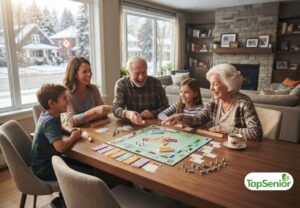
12. Trivia Games
Trivia challenges encourage seniors to retrieve information accumulated throughout their lives.
Questions may cover:
- History
- Geography
- Music
- Movies
- Science
- Sports
- Literature
- Current events
These games stimulate long-term memory while often sparking enjoyable discussions.
Family trivia nights also allow grandchildren to learn fascinating stories from older relatives.
13. Word Search Puzzles
Word search puzzles may appear simple, but they effectively strengthen several cognitive skills.
Players continually practice:
- Visual scanning
- Attention to detail
- Pattern recognition
- Concentration
The difficulty can range from children’s puzzles to expert-level grids containing hundreds of hidden words.
Many seniors appreciate the relaxing pace of word searches compared with more competitive games.
14. Rummikub
Rummikub combines aspects of cards and dominoes while requiring planning and flexibility.
Players organize numbered tiles into sequences and groups.
Benefits include:
- Logical thinking
- Organization
- Planning
- Adaptability
- Number recognition
Games remain different every time because tile combinations constantly change.
This unpredictability keeps the brain actively engaged.
15. Sequence
Sequence blends strategy with luck.
Players place chips on a game board by matching playing cards.
Winning requires careful planning while adapting to changing circumstances.
Sequence encourages:
- Strategic thinking
- Visual planning
- Memory
- Decision making
Because games usually last under an hour, Sequence is ideal for family gatherings.
Games That Promote Social Connection
Mental health extends beyond cognitive ability alone. Social interaction plays an equally important role in healthy aging.
Group games encourage conversation, laughter, teamwork, and emotional support.
Excellent social games include:
- Charades
- Pictionary
- Apples to Apples
- Mexican Train Dominoes
- Uno
- Yahtzee
- Scattergories
- Trivial Pursuit
Playing with others often motivates seniors to remain mentally active far longer than solitary activities.
It also helps combat loneliness, which has become an increasing concern among older adults.

Digital Games for Modern Seniors
Technology has introduced countless opportunities for brain training.
Many seniors now enjoy tablets and smartphones that provide convenient access to engaging games.
Popular digital options include:
- Sudoku apps
- Crossword applications
- Mahjong apps
- Solitaire
- Lumosity
- Elevate
- Peak
- Wordscapes
- Flow Free
- Brain-training platforms
Digital games often include adjustable difficulty settings, progress tracking, and daily challenges that encourage consistent participation.
For seniors new to technology, family members can help install easy-to-use applications and adjust font sizes for improved accessibility.
Choosing Games Based on Cognitive Ability
Every older adult has different interests, abilities, and health conditions. Selecting games that match an individual’s cognitive level ensures the experience remains enjoyable rather than frustrating.
For highly active seniors who enjoy intellectual challenges, strategy-based games such as chess, advanced Sudoku, and complex crossword puzzles can provide hours of stimulating entertainment. These activities encourage long-term planning, logical reasoning, and creative problem-solving while offering continuous opportunities to learn new strategies.
For seniors experiencing mild memory changes, simpler activities such as matching games, word searches, Bingo, or beginner jigsaw puzzles may be more appropriate. These games reinforce attention, visual recognition, and recall without placing excessive demands on working memory.
Individuals living with early-stage dementia can also benefit from carefully selected activities that emphasize enjoyment rather than competition. Large-piece puzzles, picture matching games, familiar card games, and music-based activities often help maintain engagement while reducing stress.
The key is to adapt the level of difficulty as needed. Success builds confidence, while tasks that are too difficult may discourage continued participation.
Creating a Weekly Brain Fitness Routine
Just as regular physical exercise supports the body, consistent mental activity can become part of a healthy lifestyle. Rather than relying on a single favorite game, many experts recommend rotating different types of activities to stimulate multiple cognitive skills.
A balanced weekly routine might include language games, strategy games, memory exercises, creative activities, and social games. This variety keeps the experience enjoyable while challenging different areas of the brain.
In the next section, we’ll explore additional games, creative activities, tips for caregivers, common myths about brain training, and practical strategies for building lifelong cognitive wellness through play.
16. Solitaire
Solitaire has remained one of the most beloved card games for generations, and for good reason. Although it is often viewed as a simple pastime, Solitaire requires concentration, planning, and problem-solving.
Players must carefully evaluate every move while anticipating how each decision affects the rest of the game. This continuous decision-making process keeps the brain actively engaged.
Benefits of Solitaire include:
- Improved concentration
- Better visual memory
- Enhanced strategic thinking
- Reduced stress through relaxing gameplay
- Convenient solo entertainment
Today, seniors can enjoy Solitaire using traditional cards or through tablet and smartphone apps that offer larger cards and adjustable settings.
17. Bridge
Bridge is often considered one of the most intellectually demanding card games.
Unlike games that depend primarily on luck, Bridge rewards communication, memory, logical reasoning, and teamwork.
Regular Bridge players continuously practice:
- Remembering previous cards
- Calculating probabilities
- Planning multiple moves ahead
- Collaborating with a partner
- Making strategic decisions under changing conditions
Many senior centers across Canada organize weekly Bridge clubs because the game combines mental exercise with meaningful social interaction.
18. Yahtzee
Yahtzee blends luck with strategy.
Although dice determine many outcomes, players must constantly decide which scoring combinations provide the greatest long-term advantage.
The game encourages:
- Quick decision making
- Number recognition
- Basic arithmetic
- Strategic planning
- Risk assessment
Because rounds are relatively short, Yahtzee works well during family gatherings or community events.
19. Pictionary
Not every brain game depends on numbers or words.
Pictionary stimulates creativity while encouraging teamwork and laughter.
Players communicate ideas through drawings rather than speech.
This helps strengthen:
- Visual thinking
- Creativity
- Communication
- Observation skills
- Flexible thinking
For seniors who enjoy art, Pictionary provides an enjoyable alternative to traditional board games.
20. Charades
Charades encourages participants to express ideas using only gestures and body language.
Although simple, it exercises multiple cognitive abilities simultaneously.
Players practice:
- Memory recall
- Interpretation
- Communication
- Creative thinking
- Social interaction
Because everyone participates together, Charades creates memorable experiences for families spanning multiple generations.
Creative Games That Exercise the Brain
Mental fitness extends beyond board games.
Creative hobbies also stimulate important cognitive functions.
Excellent options include:
Storytelling Games
Family members take turns adding one sentence to a shared story.
Benefits include:
- Imagination
- Language skills
- Memory
- Listening
- Creativity
Picture Guessing
Participants identify famous landmarks, historical figures, animals, or family photographs.
This strengthens:
- Long-term memory
- Observation
- Recognition
- Conversation skills
Music Guessing Games
Music has remarkable connections with memory.
Listening to short song clips and identifying artists or titles stimulates long-term memory while encouraging joyful discussion.
Many seniors recall songs from decades ago with incredible accuracy.
Outdoor Games That Stimulate Both Mind and Body
Remaining mentally active does not require staying indoors.
Outdoor activities combine movement with cognitive engagement.
Popular choices include:
Bocce Ball
Bocce requires players to judge distance, develop strategy, and coordinate movement.
Lawn Bowling
This traditional game promotes balance while requiring careful planning and precision.
Mini Golf
Mini golf combines concentration, problem-solving, and physical activity.
Players evaluate angles, slopes, and obstacles before each shot.
Scavenger Hunts
Community centers can organize simple outdoor scavenger hunts.
Participants search for objects, solve clues, and collaborate with teammates.
These activities strengthen:
- Observation
- Memory
- Planning
- Teamwork
Video Games for Seniors
Modern video games are becoming increasingly popular among older adults.
Contrary to stereotypes, many games encourage healthy cognitive engagement.
Appropriate options include:
- Puzzle games
- Farming simulation games
- Digital card games
- Interactive trivia
- Brain-training software
- Hidden object games
Some motion-controlled games also encourage gentle physical activity.
Gaming consoles that involve movement may improve coordination while making exercise more enjoyable.
How Caregivers Can Encourage Participation
Family caregivers often wonder how to motivate an older loved one who seems reluctant to play games.
The answer is rarely forcing participation.
Instead, caregivers should focus on creating positive experiences.
Helpful strategies include:
Choose familiar games first.
People are naturally more comfortable with activities they already know.
Keep sessions relaxed.
The objective is enjoyment rather than competition.
Celebrate participation.
Praise effort rather than winning.
Play together.
Shared experiences strengthen family relationships while making games more enjoyable.
Respect personal preferences.
Not every senior enjoys crossword puzzles or chess.
Some may prefer storytelling, gardening quizzes, music games, or simple card games.
The best activity is always one that the individual genuinely enjoys.
Adapting Games for Seniors with Physical Limitations
Many older adults experience arthritis, reduced vision, hearing loss, or limited mobility.
Fortunately, simple adaptations make games accessible.
Examples include:
Using larger playing cards
Purchasing extra-large puzzle pieces
Selecting boards with larger print
Improving room lighting
Using tablet zoom features
Choosing lightweight game pieces
Providing supportive seating
Allowing extra time
These adjustments allow seniors to focus on enjoying the activity rather than struggling with unnecessary physical barriers.
Games for Seniors Living with Dementia
Individuals living with dementia still benefit from meaningful cognitive activities, although expectations should differ.
The primary goals become:
- Encouraging engagement
- Reducing anxiety
- Creating enjoyment
- Supporting communication
- Preserving remaining abilities
Suitable activities include:
Simple matching games
Picture cards
Large-piece puzzles
Sorting activities
Color matching
Music games
Familiar card games
Reminiscence games using family photographs
Short sessions often produce better results than lengthy games.
Caregivers should remain patient and flexible.
There is no “right” score.
Success comes from creating moments of connection.
The Emotional Benefits of Playing Games
Mental activity involves much more than memory improvement.
Games contribute significantly to emotional well-being.
Regular participation may help seniors experience:
Greater confidence
Reduced boredom
Lower stress
More laughter
Improved social relationships
Greater sense of accomplishment
Renewed curiosity
Positive daily routines
Many retirees discover that scheduled game nights become highlights of their week.
Friendships deepen naturally through shared experiences.
Common Myths About Brain Games
Despite growing interest in cognitive wellness, misconceptions remain common.
Myth 1: Only Difficult Games Improve Brain Health
Reality:
Simple games played consistently often provide greater long-term benefits than extremely difficult games played occasionally.
Enjoyment encourages regular participation.
Consistency matters far more than complexity.
Myth 2: Digital Games Are Better Than Traditional Games
Reality:
Both offer valuable benefits.
Board games promote face-to-face interaction.
Digital games provide convenience and personalized challenges.
A combination of both creates the greatest variety.
Myth 3: It’s Too Late to Exercise the Brain
Reality:
The human brain remains adaptable throughout life.
Learning new skills, practicing memory, and solving problems continue stimulating neural connections even during older adulthood.
Myth 4: Brain Games Prevent Dementia
Reality:
No game can guarantee prevention.
However, mentally stimulating activities are considered one component of a healthy lifestyle alongside exercise, nutritious eating, quality sleep, social engagement, and regular healthcare.
Building a Brain-Healthy Lifestyle Beyond Games
Games are most effective when combined with other healthy habits.
Older adults should also prioritize:
Regular walking
Strength training appropriate for their abilities
Healthy eating
Adequate hydration
Quality sleep
Stress management
Reading books
Learning new hobbies
Volunteering
Maintaining friendships
Attending community events
Continuous learning
Each activity stimulates the brain in unique ways.
Together, they contribute to lifelong cognitive wellness.
Creating a Family Game Tradition
One of the greatest strengths of games is their ability to bring generations together.
Grandparents, parents, and grandchildren can all participate regardless of age.
Ideas include:
Weekly board game nights
Monthly trivia competitions
Holiday puzzle challenges
Family card tournaments
Seasonal scavenger hunts
Intergenerational storytelling evenings
These traditions create lasting memories while strengthening family relationships.
Children also benefit by learning patience, communication, and respect from older relatives.
Choosing the Right Game for Every Personality
No single game fits everyone.
Different personalities naturally gravitate toward different activities.
Analytical thinkers often enjoy:
- Chess
- Sudoku
- Bridge
- Strategy games
Creative individuals may prefer:
- Pictionary
- Storytelling
- Drawing games
- Music challenges
Social seniors frequently enjoy:
- Bingo
- Trivia nights
- Charades
- Dominoes
Independent learners often appreciate:
- Solitaire
- Crossword puzzles
- Word searches
- Jigsaw puzzles
Trying several options allows older adults to discover activities that become lifelong hobbies.
Frequently Asked Questions
How often should seniors play brain games?
Most experts recommend engaging in mentally stimulating activities several times each week. Even 20 to 30 minutes a day can become part of a healthy routine when combined with physical activity and social interaction.
Are online brain-training apps worth using?
Many apps provide enjoyable mental challenges and can help build consistency. However, they should complement rather than replace real-world activities such as reading, conversation, hobbies, and traditional games.
What is the best game for improving memory?
There is no single best choice. Memory games for seniors, matching games, crossword puzzles, trivia, Mahjong, and card games all challenge memory in different ways. Rotating activities provides broader cognitive stimulation.
Can games reduce loneliness?
Yes. Multiplayer games create opportunities to connect with family members, neighbors, and friends. Regular game nights, senior center activities, and community clubs encourage conversation and strengthen social bonds.
Should seniors learn new games?
Absolutely. Learning unfamiliar rules and strategies challenges the brain in ways that familiar activities cannot. Starting with simple games and gradually increasing difficulty can help maintain motivation and confidence.
Final Thoughts
Growing older does not mean giving up opportunities to learn, explore, or challenge the mind. In fact, retirement often provides more time to discover hobbies that may have been overlooked during busier years. Whether solving a crossword puzzle with a morning cup of coffee, enjoying a competitive game of chess with a friend, laughing through a family round of Charades, or relaxing with a colorful jigsaw puzzle, every mentally engaging activity contributes to a richer and more active lifestyle.
The best games for seniors to stay mentally active are those that inspire curiosity, encourage regular participation, and bring genuine enjoyment. While no game can stop the aging process or guarantee protection from cognitive decline, combining brain games for older adults, memory exercises for seniors, cognitive activities for aging adults, and social games for seniors with regular physical exercise, nutritious meals, quality sleep, and meaningful relationships creates a strong foundation for healthy aging.
Most importantly, games remind us that learning never truly ends. Every puzzle solved, every strategy developed, every word discovered, and every shared laugh with friends or family is an investment in lifelong well-being. By making enjoyable mental activities a regular part of everyday life, seniors can continue building confidence, preserving independence, strengthening relationships, and embracing each new stage of life with enthusiasm, purpose, and a sharp, active mind.
Bài viết liên quan: