
What’s the Difference Between Medicare and Medicaid?. As people enter their retirement years, understanding healthcare coverage becomes one of the most important parts of planning for a secure and comfortable future. Many seniors and their families often hear the terms Medicare and Medicaid, but they may not fully understand how these two programs work, who qualifies for each program, or how they differ from one another.
For older adults in the United States, healthcare costs can become a major concern. Doctor visits, hospital stays, prescription medications, rehabilitation services, long-term care, and support services can create significant financial pressure. Government healthcare programs such as Medicare and Medicaid were created to help eligible individuals access essential medical care while reducing the burden of healthcare expenses.
Although Medicare and Medicaid sound similar, they are two completely different programs with different eligibility requirements, coverage options, and purposes. Medicare is primarily designed to support older adults and certain individuals with disabilities, while Medicaid focuses on providing healthcare assistance to people with limited income and resources. Some seniors may even qualify for both programs at the same time, receiving benefits from each one.
For families caring for aging parents, understanding these programs can make a significant difference when planning healthcare decisions, managing expenses, and finding the right support services. Knowing the difference between Medicare and Medicaid can help seniors make informed choices about medical care, home support, transportation needs, and long-term planning.
This guide explains the key differences between Medicare and Medicaid, including eligibility requirements, coverage benefits, costs, and how each program can support seniors throughout different stages of aging.
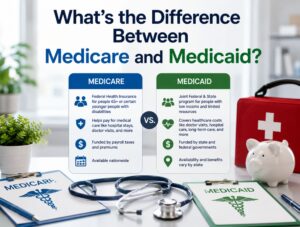
Understanding Medicare: Healthcare Coverage for Seniors
Medicare is a federal health insurance program designed primarily for adults aged 65 and older. It was established in 1965 to help seniors access affordable healthcare after retirement, especially at a time when many older adults struggled to obtain private health insurance due to age-related health risks.
Unlike Medicaid, Medicare eligibility is not based on income level. A person can qualify for Medicare regardless of their financial situation as long as they meet certain age, disability, or medical requirements.
Most seniors become eligible for Medicare when they turn 65. However, some younger individuals may also qualify if they have certain disabilities or specific medical conditions approved under federal guidelines.
Medicare plays an important role in helping older adults manage healthcare costs as they age. However, it does not cover every healthcare expense. Seniors often need additional coverage options, supplemental insurance, or financial planning strategies to manage services that Medicare does not fully pay for.
Who Qualifies for Medicare?
The main requirement for Medicare eligibility is age. Most individuals qualify when they reach 65 years old and are either:
• U.S. citizens
• Permanent legal residents who have lived in the United States for at least five continuous years
• Individuals who have paid Medicare taxes through employment or whose spouse has contributed to the Medicare system
People under age 65 may also qualify for Medicare if they:
• Have received Social Security Disability Insurance (SSDI) benefits for a certain period
• Have certain qualifying medical conditions
• Have End-Stage Renal Disease (ESRD)
• Have Amyotrophic Lateral Sclerosis (ALS)
Understanding eligibility is especially important for seniors approaching retirement because Medicare enrollment periods are limited. Missing an enrollment deadline may result in penalties or delays in receiving coverage.
Many older adults begin researching Medicare options several months before turning 65 to understand their choices and avoid unexpected healthcare costs.
The Different Parts of Medicare
One reason Medicare can seem confusing is because it is divided into several different parts. Each part covers different types of healthcare services.
Medicare Part A: Hospital Insurance
Medicare Part A helps cover inpatient healthcare services. This includes medical care received when a person is admitted to a hospital or certain healthcare facilities.
Part A commonly covers:
• Inpatient hospital stays
• Skilled nursing facility care after qualifying hospital stays
• Hospice care
• Some home healthcare services
Many seniors receive premium-free Medicare Part A if they or their spouse paid Medicare taxes while working.
However, Medicare Part A does not cover all long-term care expenses. For example, permanent nursing home care or ongoing assistance with daily activities is generally not covered unless specific conditions are met.
This is an important distinction for families planning for aging care because many seniors eventually need assistance beyond traditional medical treatment.

Medicare Part B: Medical Insurance
Medicare Part B covers many outpatient healthcare services that seniors commonly use.
Examples include:
• Doctor appointments
• Preventive care
• Medical tests
• Laboratory services
• Certain medical equipment
• Physical therapy
• Mental health services
Part B usually requires a monthly premium. The amount can vary depending on income and government guidelines.
Many seniors choose both Part A and Part B because together they provide broader healthcare protection for hospital and medical needs.
Medicare Part C: Medicare Advantage Plans
Medicare Part C, also known as Medicare Advantage, is an alternative way to receive Medicare benefits through private insurance companies approved by Medicare.
These plans combine Medicare Part A and Part B benefits and may include additional services such as:
• Prescription drug coverage
• Dental benefits
• Vision care
• Hearing services
• Wellness programs
Medicare Advantage plans vary depending on location and insurance provider. Seniors should carefully compare available plans to determine which option best fits their healthcare needs.
Medicare Part D: Prescription Drug Coverage
Medicare Part D helps seniors pay for prescription medications.
Prescription costs can become a significant expense as people age, especially for individuals managing chronic conditions that require multiple medications.
Part D plans help reduce these costs by providing coverage for many prescription drugs. Each plan has its own list of covered medications, known as a formulary, so seniors should review plans carefully before enrolling.
What Medicare Does Not Usually Cover
While Medicare provides valuable healthcare protection, many seniors are surprised to learn that it does not cover everything.
Generally, Medicare does not fully cover:
• Routine dental care
• Routine vision exams and glasses
• Hearing aids
• Cosmetic procedures
• Long-term custodial care
• Most non-medical personal care services
For many families, one of the biggest concerns is long-term care. Aging adults may eventually need assistance with bathing, dressing, meal preparation, transportation, or daily household activities. These services are often not covered by traditional Medicare.
Because of these limitations, families often explore additional resources such as Medicaid, private insurance, community programs, and senior support services.
Understanding Medicaid: Healthcare Assistance Based on Financial Need
Medicaid is a joint federal and state healthcare program designed to assist individuals and families with limited income and resources. Unlike Medicare, Medicaid eligibility depends heavily on financial circumstances and varies from state to state.
Medicaid provides healthcare coverage to millions of Americans, including seniors, children, individuals with disabilities, pregnant women, and low-income adults.
For seniors, Medicaid can become especially important because it may cover services that Medicare does not, including certain long-term care benefits.
Many older adults who require nursing home care or extensive assistance with daily living rely on Medicaid to help manage these expenses.

Who Qualifies for Medicaid?
Medicaid eligibility is based on several factors, including:
• Income level
• Household size
• Assets and resources
• State requirements
• Medical needs
Each state manages its own Medicaid program within federal guidelines, which means eligibility rules and benefits can differ depending on where a person lives.
For seniors, Medicaid qualification can involve a detailed review of financial information. Applicants may need to provide documentation regarding income, savings, property ownership, and other assets.
Because Medicaid rules can be complicated, many families seek assistance from financial advisors, elder law professionals, or healthcare specialists when preparing an application.
Medicaid Coverage for Seniors
Medicaid can provide important support for older adults who need ongoing healthcare assistance.
Depending on state rules, Medicaid may help cover:
• Nursing home care
• Home and community-based services
• Personal care assistance
• Medical transportation
• Doctor visits
• Prescription medications
• Preventive healthcare
• Certain medical equipment
One of the biggest differences between Medicare and Medicaid is Medicaid’s ability to help with long-term care services.
As seniors age, many require support beyond traditional medical treatment. Assistance with daily activities such as eating, bathing, dressing, and mobility can become necessary. Medicaid programs often provide resources to help seniors receive this type of care while maintaining a better quality of life.
Medicare vs. Medicaid: The Main Difference Explained
The simplest way to understand the difference between Medicare and Medicaid is:
Medicare is mainly based on age or disability, while Medicaid is mainly based on income and financial need.
Medicare is considered an earned healthcare benefit because many people qualify after paying Medicare taxes during their working years.
Medicaid is considered an assistance program designed to help individuals who cannot afford healthcare costs without additional support.
The two programs serve different purposes but can work together.
For example, a senior may use Medicare for hospital visits and doctor appointments while also qualifying for Medicaid to receive assistance with long-term care expenses.
This combination is commonly referred to as being “dual eligible.”
Why Understanding Medicare and Medicaid Matters for Seniors
Healthcare planning becomes increasingly important as people age. Without proper knowledge of available programs, seniors and families may face unexpected expenses or miss valuable benefits.
Understanding Medicare and Medicaid helps seniors:
• Choose appropriate healthcare coverage
• Reduce unnecessary medical costs
• Plan for future care needs
• Access available government assistance
• Make informed decisions about aging support
For adult children caring for aging parents, learning about these programs can also make caregiving responsibilities easier. Families can better prepare for medical appointments, home care needs, transportation arrangements, and future healthcare decisions.
Many seniors want to remain independent for as long as possible. Having the right healthcare coverage and support system allows older adults to maintain dignity, safety, and confidence while navigating the challenges of aging.

Medicare vs. Medicaid: A Detailed Comparison
Although Medicare and Medicaid both help Americans access healthcare services, the two programs were created for different reasons and serve different groups of people. Understanding the differences can help seniors and their families make better healthcare decisions.
The following comparison highlights the most important differences between Medicare and Medicaid:
| Category | Medicare | Medicaid |
|---|---|---|
| Purpose | Provides health insurance mainly for seniors and certain disabled individuals | Provides healthcare assistance for people with limited income and resources |
| Administration | Federal government program | Joint federal and state program |
| Eligibility | Primarily based on age, disability, or qualifying medical conditions | Based mainly on income, assets, and state requirements |
| Age Requirement | Usually available at age 65 or older | No specific age requirement |
| Income Requirement | No income requirement for basic eligibility | Income and financial limits apply |
| Coverage | Hospitals, doctors, medical services, prescriptions | Medical care, long-term care, personal assistance, and additional services |
| Long-Term Care | Limited coverage | More extensive coverage options |
| Cost | Premiums, deductibles, and coinsurance may apply | Often low-cost or free for eligible individuals |
The biggest difference is that Medicare is designed to provide healthcare insurance for older adults, while Medicaid is designed to provide additional healthcare support for people with financial limitations.
However, these programs are not mutually exclusive. Some seniors qualify for both Medicare and Medicaid, allowing them to receive broader healthcare protection.
What Does It Mean to Be Dual Eligible for Medicare and Medicaid?
Some seniors qualify for both Medicare and Medicaid at the same time. These individuals are known as “dual eligible beneficiaries.”
Being dual eligible can provide significant healthcare advantages because Medicare and Medicaid can work together to cover different types of services.
Typically:
• Medicare serves as the primary health insurance
• Medicaid helps cover additional costs and services that Medicare may not fully pay for
For example, Medicare may cover hospital care and physician visits, while Medicaid may assist with nursing home care, home support services, transportation, or certain out-of-pocket expenses.
Many low-income seniors with significant healthcare needs benefit from this combination because it provides access to a wider range of support.
Families caring for older adults should explore whether their loved ones may qualify for both programs. Understanding available benefits can help reduce financial stress and improve access to essential care.
Medicare and Medicaid Costs: What Seniors Should Expect
Healthcare expenses are one of the biggest concerns for many retirees. Even with Medicare or Medicaid coverage, seniors should understand that costs can vary depending on their situation.
Medicare Costs
Medicare is not always completely free. Depending on the type of coverage, seniors may pay:
• Monthly premiums
• Annual deductibles
• Copayments
• Coinsurance
For example, Medicare Part B usually requires a monthly premium, while prescription drug coverage through Part D may also involve additional costs.
Some seniors purchase supplemental insurance, often called Medigap, to help cover expenses that Original Medicare does not pay for.
Medicare Advantage plans may also have different pricing structures, depending on the insurance provider and location.
Medicaid Costs
Medicaid is generally designed to provide affordable healthcare assistance for individuals with limited income.
Eligible individuals may have:
• Low or no monthly premiums
• Minimal copayments
• Assistance with medical expenses
However, because Medicaid is based on financial eligibility, applicants must meet specific income and asset requirements.
For seniors, Medicaid planning can be an important part of preparing for future healthcare needs, especially when considering long-term care expenses.
Medicare, Medicaid, and Long-Term Care: What Seniors Need to Know
One of the most common areas of confusion involves long-term care coverage.
Many people assume Medicare will pay for all senior care needs, but this is not usually the case.
Medicare may cover certain short-term skilled care services, such as rehabilitation after a hospital stay, but it generally does not cover ongoing custodial care.
Custodial care includes assistance with daily activities such as:
• Bathing
• Dressing
• Eating
• Using the restroom
• Moving safely around the home
These services become increasingly important as many seniors experience mobility challenges or chronic health conditions.
Medicaid, on the other hand, may provide broader support for long-term care depending on state rules and eligibility requirements.
This is one of the main reasons many families begin researching Medicaid Long-Term Care Benefits when planning for aging parents.
Planning early can help families understand available options before a healthcare crisis occurs.
How Medicare and Medicaid Support Aging in Place
Many seniors prefer to remain in their own homes rather than move into assisted living communities or nursing facilities. This concept is often called aging in place.
Aging in place allows older adults to maintain independence while receiving the support they need.
Healthcare programs can play an important role in making this possible.
Depending on eligibility and location, seniors may receive support such as:
• Home healthcare services
• Medical equipment
• Prescription assistance
• Personal care support
• Transportation assistance
• Community-based programs
Having access to reliable resources allows seniors to continue living safely while staying connected to their communities.
For families, understanding available benefits can help create a realistic aging plan that balances independence, safety, and healthcare needs.
The Importance of Transportation Support for Seniors
Healthcare coverage is only useful if seniors can access the medical services they need.
Many older adults face transportation challenges because they no longer drive, have mobility limitations, or require assistance when traveling outside their homes.
Transportation barriers can lead to:
• Missed medical appointments
• Delayed treatments
• Increased health risks
• Reduced independence
For seniors managing chronic conditions, attending regular appointments is essential. Transportation to hospitals, clinics, pharmacies, and therapy sessions can become a critical part of maintaining health.
Professional senior transportation services help older adults travel safely while receiving the support they need.
Companies like TapSenior focus on helping older adults maintain independence by connecting them with senior-friendly solutions, including transportation resources, lifestyle support, and aging assistance.
When planning healthcare needs, families should consider not only insurance coverage but also how seniors will physically access healthcare services.
Common Mistakes Seniors Make When Choosing Healthcare Coverage
Choosing between Medicare options and understanding Medicaid eligibility can be complicated. Many seniors make mistakes that may affect their healthcare experience.
Mistake 1: Waiting Too Long to Research Options
Many people begin exploring Medicare only after they turn 65. However, learning about options before enrollment can prevent confusion and missed deadlines.
Seniors should review available plans early and understand what coverage best fits their medical needs.
Mistake 2: Assuming Medicare Covers Everything
Medicare provides valuable healthcare protection, but it does not cover every service.
Many seniors are surprised when they discover that dental care, hearing aids, vision services, and long-term custodial care may require additional planning.
Understanding coverage limitations allows families to prepare financially.
Mistake 3: Ignoring Medicaid Because of Misunderstandings
Some seniors believe Medicaid is only for certain groups of people and never explore whether they qualify.
However, Medicaid provides important support for many older adults, especially those facing significant healthcare expenses.
Eligibility rules vary, so seniors should research their state’s requirements.
Mistake 4: Not Planning for Future Care Needs
Healthcare needs often change as people age.
A healthy 65-year-old may eventually require assistance with daily activities, mobility support, or long-term care.
Planning early helps families avoid making rushed decisions during emergencies.
How Families Can Help Aging Parents Navigate Medicare and Medicaid
Adult children often play an important role in helping aging parents understand healthcare decisions.
Families can provide support by:
• Reviewing healthcare documents
• Helping compare insurance options
• Organizing medical information
• Understanding available benefits
• Planning transportation arrangements
• Discussing future care preferences
Open communication is one of the most important parts of successful aging planning.
Many seniors want to maintain independence and make their own decisions. Families can support them by providing information, encouragement, and practical assistance without taking away their sense of control.

Questions Seniors Often Ask About Medicare and Medicaid
Can Someone Have Medicare and Medicaid at the Same Time?
Yes. Some seniors qualify for both programs if they meet Medicare requirements and Medicaid financial eligibility rules.
Having both programs can provide additional healthcare support.
Is Medicaid Better Than Medicare?
Neither program is simply “better.” They serve different purposes.
Medicare is designed primarily for seniors and people with qualifying disabilities, while Medicaid provides assistance based on financial need.
The right program depends on an individual’s healthcare situation and financial circumstances.
Does Medicare Pay for Nursing Homes?
Medicare may cover limited skilled nursing facility care under certain conditions, but it generally does not cover long-term nursing home care.
Medicaid may provide more extensive long-term care assistance for eligible individuals.
Can Medicaid Help Seniors Stay at Home?
In many states, Medicaid programs provide home and community-based services that help seniors receive care while remaining at home.
Available services vary by location.
Do Seniors Need Both Medicare and Medicaid?
Not everyone needs both programs. However, seniors with limited income and significant healthcare needs may benefit from having both forms of coverage.
Final Thoughts: Understanding Medicare and Medicaid Helps Seniors Plan for the Future
Medicare and Medicaid are two essential healthcare programs that support millions of older adults across the United States. While they share similar names, they serve different purposes and have different eligibility requirements.
Medicare primarily provides healthcare coverage for seniors aged 65 and older and certain individuals with disabilities. Medicaid provides healthcare assistance for people who meet financial eligibility requirements and can offer important support for long-term care needs.
For seniors and families, understanding these differences is an important step toward better healthcare planning.
The aging journey involves many decisions, from selecting the right insurance coverage to arranging transportation, home support, and daily assistance. Preparing early allows seniors to maintain independence while ensuring they have access to the care they need.
Healthcare coverage is not only about paying medical bills. It is about creating a foundation for a safer, healthier, and more comfortable life during retirement.
By learning how Medicare Benefits for Seniors, Medicaid Long-Term Care Benefits, and other aging support programs work together, families can make informed decisions that protect both the health and quality of life of their loved ones.
For older adults, having the right information and support can make every stage of aging easier to navigate. Whether planning routine medical visits, managing chronic conditions, or preparing for future care needs, understanding available healthcare resources is one of the most valuable steps seniors and families can take.
Bài viết liên quan: