
Home Safety Tips for Seniors to Prevent Falls. Falls are one of the leading causes of injury among older adults, yet many accidents can be prevented with thoughtful planning and simple changes around the home. As people age, maintaining independence becomes increasingly important, and a safe living environment plays a critical role in supporting that goal. Whether an older adult lives alone, with a spouse, or receives occasional assistance from family members, reducing fall risks should always be a top priority. Understanding the most common hazards and taking proactive steps can significantly lower the chances of injury while allowing seniors to continue enjoying life in familiar surroundings. By following proven home safety tips for seniors, improving fall prevention for older adults, creating a safe home environment, installing bathroom safety modifications, and encouraging aging in place safely, families can help their loved ones remain confident, active, and independent for years to come.
Every year, millions of seniors experience falls that result in fractures, head injuries, or lengthy hospital stays. While aging naturally brings changes in balance, vision, strength, and mobility, these physical changes do not automatically mean falls are inevitable. Many accidents happen because of environmental hazards that can easily be corrected. Loose rugs, slippery bathroom floors, poor lighting, cluttered hallways, uneven steps, and inappropriate footwear all contribute to unnecessary risks.
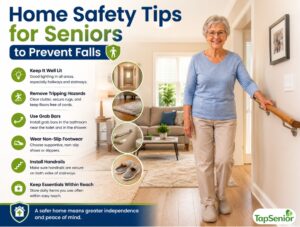
Creating a safer home doesn’t always require expensive renovations. In many cases, small improvements such as installing grab bars, adding brighter lighting, removing tripping hazards, or reorganizing frequently used items can make an enormous difference. These practical adjustments not only reduce injuries but also improve confidence, allowing older adults to move freely throughout their homes.
This guide explores the most effective ways to prevent falls at home. You’ll learn how each room presents unique challenges, which safety upgrades offer the greatest benefits, and how daily habits contribute to long-term independence. Whether you’re a senior planning ahead or a family caregiver looking for reliable guidance, these recommendations can help transform any home into a safer, more comfortable place to live.
Why Fall Prevention Matters for Older Adults
Falls affect more than physical health. They often impact emotional well-being, independence, and overall quality of life.
After experiencing one serious fall, many seniors develop a fear of falling again. This fear may cause them to avoid walking, exercising, visiting friends, or participating in hobbies they once enjoyed. Ironically, becoming less active weakens muscles even further, increasing the likelihood of future falls.
Preventing falls helps seniors:
- Maintain independence longer
- Stay active within their communities
- Avoid hospitalization
- Reduce healthcare costs
- Preserve confidence
- Continue living comfortably at home
For families, preventing falls also reduces caregiver stress while providing reassurance that loved ones remain safe.
The good news is that experts estimate many falls are preventable through education, exercise, home modifications, and regular health checkups.
Understanding Why Seniors Are More Vulnerable to Falls
Aging changes the body in ways that may not be immediately noticeable. Even healthy older adults experience gradual physical changes that influence balance and coordination.
Some of the most common age-related changes include:
Reduced Muscle Strength
Muscles naturally lose mass with age.
Weaker leg muscles make standing, climbing stairs, and recovering from a stumble much more difficult.
Simple activities such as getting out of bed or rising from a chair require greater effort than they once did.
Poor Balance
The body’s balance system relies on multiple senses working together.
Vision, hearing, muscle strength, joint flexibility, and inner ear function all contribute to stability.
When one or more of these systems decline, maintaining balance becomes increasingly difficult.
Slower Reflexes
Younger adults often recover quickly after tripping.
Older adults usually have slower reaction times, making it harder to regain balance before falling.
Vision Changes
Reduced depth perception, cataracts, glaucoma, and lower contrast sensitivity make hazards more difficult to see.
Poor lighting further increases these challenges.
Medication Side Effects
Many medications commonly prescribed to seniors may cause:
- Dizziness
- Fatigue
- Low blood pressure
- Confusion
- Blurred vision
Taking several medications simultaneously may increase these effects.
Common Causes of Falls at Home
Most falls don’t occur because of dramatic accidents.
Instead, they result from everyday situations that gradually become dangerous.
Understanding these risks is the first step toward prevention.
Cluttered Walkways
Items left on the floor create unexpected obstacles.
Examples include:
- Shoes
- Electrical cords
- Newspapers
- Laundry baskets
- Pet toys
- Extension cables
Keeping pathways clear allows safer movement throughout the home.
Slippery Floors
Wet surfaces greatly increase slipping hazards.
Bathrooms and kitchens are particularly dangerous because water and spills are common.
Immediately cleaning spills helps reduce accidents.
Loose Rugs
Area rugs often slide across hardwood or tile floors.
Corners may curl upward, creating tripping hazards.
If rugs are necessary, they should include non-slip backing or be securely fastened.
Poor Lighting
Dim lighting prevents seniors from recognizing hazards.
This becomes especially dangerous during nighttime bathroom trips.
Installing brighter bulbs and nightlights dramatically improves visibility.
Unsafe Footwear
Shoes without proper grip contribute to slipping.
High heels, loose slippers, thick socks on hardwood floors, and worn-out soles all increase fall risks.
Proper footwear should provide:
- Non-slip soles
- Good ankle support
- Secure fastening
- Comfortable fit
Pets
Beloved pets can unintentionally create hazards.
Dogs may stop suddenly in front of their owners.
Cats often weave around feet.
Keeping pet toys organized and training pets to avoid walking directly in front of seniors helps reduce accidents.
Room-by-Room Home Safety Tips
Every room presents different challenges.
Evaluating each space individually helps identify hidden dangers before injuries occur.
Making the Entrance Safer
The home’s entrance serves as the first line of defense against falls.
Outdoor hazards often become indoor hazards when shoes carry in rainwater, snow, or mud.
Important improvements include:
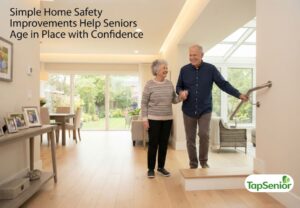
Installing sturdy handrails on both sides of steps.
Repairing cracked sidewalks.
Adding textured, non-slip surfaces.
Ensuring outdoor lighting fully illuminates pathways.
Keeping porches free of leaves and debris.
Using motion-sensor lights for nighttime arrivals.
Clearly visible house numbers also assist emergency responders if help is ever needed.
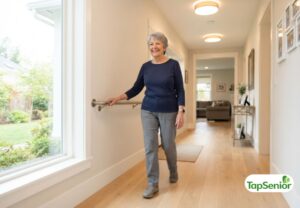
Improving Hallway Safety
Hallways should allow easy movement without obstacles.
Recommendations include:
Keeping pathways wide and uncluttered.
Removing decorative tables that narrow walking space.
Securing electrical cords against walls.
Installing nightlights.
Using bright LED lighting.
Avoiding polished flooring that becomes slippery.
If mobility aids such as walkers are used, hallways should comfortably accommodate them.
Living Room Safety Tips
Living rooms often contain furniture, rugs, cords, and decorative items that increase fall risks.
Simple changes make the space much safer.
Arrange Furniture Carefully
Leave wide walking paths between furniture.
Avoid placing coffee tables where they interrupt natural walking routes.
Furniture should remain stable and never wobble when used for support.
Secure Rugs
If area rugs remain in the room:
Use non-slip pads.
Tape edges securely.
Replace curled rugs.
Consider removing unnecessary rugs entirely.
Organize Electrical Cords
Television cables, phone chargers, and lamp cords should never stretch across walking paths.
Cord organizers help eliminate these hazards.
Choose Chairs with Armrests
Low, soft couches may be difficult for seniors to stand up from safely.
Chairs with firm cushions and supportive armrests make sitting and standing much easier.
Kitchen Safety Tips
The kitchen is one of the busiest rooms in any home.
It also presents multiple opportunities for slips, burns, and falls.
Store Frequently Used Items Within Reach
Avoid climbing on stools or chairs.
Frequently used dishes, spices, cookware, and utensils should remain between waist and shoulder height.
This minimizes unnecessary stretching.
Clean Spills Immediately
Even small water droplets create slipping hazards.
Grease, cooking oil, and food spills should be cleaned without delay.
Improve Lighting
Cabinets, countertops, sinks, and cooking surfaces all require bright lighting.
Under-cabinet lights improve visibility during meal preparation.
Use Stable Step Stools
If reaching higher shelves becomes necessary, use a step stool with:
Handrails
Wide steps
Rubber feet
Never stand on chairs.
Bedroom Safety Tips
The bedroom should provide both comfort and safety.
Many falls happen while getting in or out of bed, particularly during nighttime bathroom visits.
Bed Height Matters
Beds should allow both feet to rest flat on the floor when sitting on the edge.
Beds that are too high or too low increase fall risks.
Keep Essentials Nearby
Items that should remain within easy reach include:
Phone
Water
Glasses
Medication
Flashlight
Medical alert device
Avoid rushing across the room after waking.
Install Nightlights
Automatic nightlights guide safe movement during nighttime.
Motion-activated lights provide even greater convenience.
Eliminate Floor Hazards
Keep shoes organized.
Avoid clothing piles.
Remove unnecessary furniture.
Secure loose carpeting.
Bathroom Safety Tips
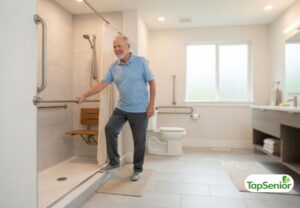
Bathrooms remain one of the most dangerous locations for older adults because water significantly reduces traction.
Fortunately, several inexpensive improvements greatly enhance safety.
Install Grab Bars
Properly mounted grab bars provide support near:
Toilets
Showers
Bathtubs
Grab bars should always be professionally anchored into wall studs.
Towel racks should never be used for support.
Use Non-Slip Mats
Bathtubs and shower floors become extremely slippery.
Rubber mats with suction cups improve footing.
Non-slip bathroom rugs also reduce slipping after bathing.
Consider a Walk-In Shower
Traditional bathtubs require stepping over high edges.
Walk-in showers eliminate this obstacle.
Adding a shower bench allows seated bathing.
Raise Toilet Height
Raised toilet seats reduce stress on knees and hips.
They also decrease instability while sitting or standing.
Stairway Safety
Stairs deserve special attention because falls on stairs often cause serious injuries.
Every staircase should include secure handrails on both sides whenever possible.
Handrails should extend the entire length of the staircase.
Lighting should eliminate shadows.
Each stair edge should remain clearly visible.
Avoid storing boxes, shoes, or decorations on stairs.
Non-slip stair treads improve traction, especially on hardwood surfaces.
If carrying laundry or groceries blocks visibility, consider making multiple trips instead of one heavy load.
The Critical Role of Lighting in Fall Prevention
Lighting is one of the simplest yet most effective safety improvements for older adults.
As vision changes with age, brighter illumination becomes increasingly important.
Older eyes require significantly more light than younger eyes to see clearly.
Dark areas can hide:
Loose rugs
Electrical cords
Uneven flooring
Furniture corners
Pet toys
Small steps
The goal is to eliminate shadows while providing consistent lighting throughout the home.
Natural daylight should be maximized whenever possible by opening curtains and trimming outdoor vegetation that blocks sunlight.
For evening hours, LED bulbs offer excellent brightness while consuming less energy than traditional incandescent bulbs.
Motion-activated lighting is especially useful in hallways, bathrooms, garages, and entrances because it removes the need to search for light switches in the dark.
Nightlights should be installed in bedrooms, bathrooms, hallways, and staircases to create continuous visibility during overnight trips.
Light switches should also be placed at both the top and bottom of staircases so seniors never need to climb stairs in darkness.
Flooring and Footwear Safety
The condition of the floor beneath a senior’s feet is just as important as the shoes they wear.
Uneven surfaces, worn carpets, loose tiles, and slippery finishes all increase the likelihood of falls.
Hardwood, laminate, and tile floors should be kept dry and free from waxes or cleaning products that leave a slick residue.
If carpeting is present, it should lie flat without wrinkles or loose edges. Torn carpet should be repaired promptly to prevent feet or mobility aids from catching.
Footwear deserves equal attention. Walking barefoot or wearing socks alone on smooth flooring can significantly reduce traction. Instead, seniors should wear supportive shoes indoors that feature non-slip rubber soles, closed heels, and a secure fit. Shoes that are excessively loose, worn out, or lacking tread should be replaced.
Comfortable footwear also helps maintain better posture, improves balance, and reduces fatigue during daily activities.
Using Assistive Devices Correctly
Mobility aids can dramatically reduce the risk of falls, but only when they are fitted and used properly.
Canes, walkers, rollators, and other assistive devices should match the user’s height and mobility needs. An improperly adjusted device may actually increase instability rather than improve it.
Healthcare professionals or physical therapists can help determine which mobility aid is most appropriate and ensure it is adjusted correctly. Seniors should also learn the proper techniques for walking, turning, sitting, and climbing small steps while using their device.
Regular maintenance is equally important. Worn rubber tips on canes, damaged walker wheels, or loose brakes on rollators should be repaired immediately. Even a well-designed mobility aid cannot provide reliable support if it is not in good condition.
Beyond physical devices, many older adults also benefit from wearable emergency alert systems that allow them to call for assistance if a fall does occur. While the goal is always prevention, having access to immediate help provides valuable peace of mind for both seniors and their families.
By combining a safer home environment with appropriate assistive equipment and healthy daily habits, older adults can continue living independently with greater confidence and significantly lower their risk of experiencing a serious fall.
Exercise and Balance Training: The Foundation of Fall Prevention
While creating a safer home environment is essential, maintaining physical strength and balance is equally important. A home can be free of hazards, but if an older adult struggles with muscle weakness or poor balance, the risk of falling remains high.
Regular exercise helps seniors maintain mobility, improve coordination, strengthen bones, and build confidence. In fact, healthcare professionals consistently recommend exercise as one of the most effective ways to reduce fall risk.
The best exercise program combines strength training, balance exercises, flexibility, and cardiovascular activity.
Strength Training
Strong muscles support the body’s joints and improve stability during everyday movements.
Older adults should focus on strengthening:
- Legs
- Hips
- Core muscles
- Back
- Shoulders
Simple exercises include:
- Chair squats
- Standing leg raises
- Heel raises
- Wall push-ups
- Seated knee extensions
Resistance bands and light dumbbells can gradually increase muscle strength without placing excessive stress on the joints.
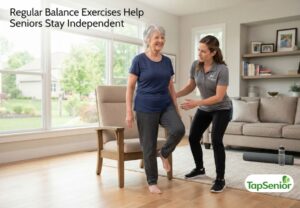
Balance Exercises
Balance naturally declines with age, but targeted exercises can significantly improve stability.
Examples include:
- Standing on one foot while holding a countertop
- Heel-to-toe walking
- Side leg raises
- Weight shifting
- Marching in place
These exercises help train the body’s balance system while improving confidence during everyday walking.
Flexibility Training
Flexible muscles allow smoother movement and reduce stiffness.
Stretching should focus on:
- Calves
- Hamstrings
- Hip flexors
- Lower back
- Shoulders
Gentle stretching also improves posture and makes daily activities easier.
Walking
Walking remains one of the safest forms of exercise for many seniors.
Benefits include:
- Better circulation
- Stronger leg muscles
- Improved endurance
- Better joint mobility
- Enhanced mood
Safe walking routes should have even surfaces and adequate lighting.
Tai Chi
Many studies have found Tai Chi to be one of the most effective exercises for reducing falls among older adults.
Its slow, controlled movements improve:
- Balance
- Coordination
- Flexibility
- Posture
- Body awareness
Tai Chi is suitable for many seniors because it places minimal stress on the joints.
Medication Management and Fall Prevention
Many people are surprised to learn that medications contribute to a significant number of falls each year.
Certain prescriptions may cause:
- Drowsiness
- Blurred vision
- Dizziness
- Low blood pressure
- Confusion
- Slower reaction time
The risk increases when multiple medications are taken together.
Schedule Regular Medication Reviews
Older adults should ask their healthcare provider or pharmacist to review all medications at least once a year.
This review should include:
- Prescription medications
- Over-the-counter medicine
- Vitamins
- Herbal supplements
Sometimes adjusting the dosage or changing the timing of a medication can greatly reduce side effects.
Never Stop Medication Without Medical Advice
Although some medications increase fall risk, they may still be essential for managing chronic health conditions.
Always consult a healthcare provider before making changes.
Stay Hydrated
Some medications increase dehydration.
Dehydration can lead to:
- Weakness
- Lightheadedness
- Low blood pressure
- Poor balance
Drinking enough water throughout the day supports overall health and reduces dizziness.
Vision and Hearing Care
Healthy vision and hearing are critical components of safe movement.
When either sense declines, everyday obstacles become more difficult to recognize.
Schedule Annual Eye Exams
Regular eye examinations help detect conditions such as:
- Cataracts
- Glaucoma
- Macular degeneration
- Diabetic eye disease
Updated eyeglass prescriptions also improve depth perception and clarity.
Keep Glasses Clean
Smudged lenses reduce visibility.
Cleaning glasses daily improves contrast and reduces eye strain.
Address Hearing Loss
Good hearing contributes to balance by helping the brain interpret environmental information.
If hearing loss develops, hearing aids may improve both communication and stability.
Nutrition for Strong Bones and Muscles
Good nutrition supports every aspect of fall prevention.
Healthy muscles, bones, and nerves all depend on proper nutrition.
Important nutrients include:
Calcium
Calcium strengthens bones and reduces fracture risk.
Good sources include:
- Milk
- Yogurt
- Cheese
- Fortified plant milk
- Leafy green vegetables
Vitamin D
Vitamin D helps the body absorb calcium.
Sources include:
- Sunlight
- Fatty fish
- Eggs
- Fortified foods
Some seniors require supplements after discussing them with their healthcare provider.
Protein
Protein maintains muscle mass.
Excellent choices include:
- Chicken
- Fish
- Eggs
- Beans
- Lentils
- Greek yogurt
Hydration
Even mild dehydration affects concentration and balance.
Seniors should drink fluids regularly throughout the day unless instructed otherwise by their physician.
Emergency Preparedness After a Fall
Despite every precaution, accidents can still happen.
Preparing in advance allows seniors to receive assistance quickly while reducing complications.
Wear a Medical Alert Device
Modern emergency response devices are lightweight and easy to wear.
Many include:
- Fall detection
- GPS tracking
- Two-way communication
- Emergency call buttons
These devices provide reassurance for both seniors and family members.
Keep Phones Accessible
Every frequently used room should contain easy access to a phone.
Large-button telephones may benefit seniors with reduced vision.
Cell phones should remain fully charged.
Create an Emergency Contact List
Post emergency numbers in visible locations.
Include:
- Family members
- Neighbors
- Primary care physician
- Pharmacy
- Emergency services
Store the same contacts in the senior’s mobile phone.
Know What to Do After a Fall
If a fall occurs:
Remain calm.
Take several deep breaths.
Determine whether pain prevents movement.
If unable to stand safely, call for help immediately.
Avoid rushing to get up.
If no injuries are present, use sturdy furniture for support while slowly rising.
Healthcare providers should evaluate any fall involving head injuries, severe pain, or loss of consciousness.
Smart Home Technology That Improves Safety
Technology has become a valuable tool for helping older adults live independently.
Many smart devices improve convenience while reducing fall risks.
Motion Sensors
Motion sensors automatically activate lights when movement is detected.
This eliminates searching for switches during nighttime trips.
Smart Lighting
Voice-controlled lighting systems allow seniors to turn lights on without walking across dark rooms.
Smart Doorbells
Video doorbells allow seniors to identify visitors without rushing to answer the door.
Voice Assistants
Devices such as voice assistants can:
- Set medication reminders
- Call family members
- Provide emergency assistance
- Control lights
- Answer questions
- Play relaxing music
These features reduce unnecessary movement around the home.
Smart Smoke and Carbon Monoxide Detectors
Connected detectors immediately alert both residents and caregivers when emergencies occur.
Smart Thermostats
Maintaining comfortable temperatures helps reduce fatigue while preventing dangerous overheating or excessive cold.
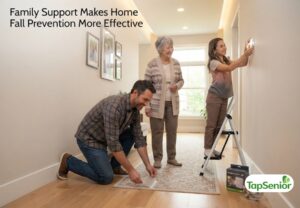
How Family Members Can Help Prevent Falls
Family members play a vital role in helping seniors remain safe without taking away their independence.
Open communication is essential.
Rather than waiting until after a fall occurs, families should discuss home safety early.
Perform Regular Home Safety Checks
Walk through the home every few months.
Look for:
- Loose rugs
- Burned-out light bulbs
- Worn flooring
- Clutter
- Broken handrails
Correcting small hazards early prevents larger problems later.
Encourage Physical Activity
Exercise becomes more enjoyable when shared.
Walking together, attending senior fitness classes, or practicing Tai Chi can improve motivation.
Respect Independence
Safety improvements should empower seniors rather than make them feel less capable.
Involving older adults in decision-making encourages cooperation.
Watch for Changes
Family members should pay attention to signs such as:
- Frequent stumbling
- Difficulty standing
- Holding onto furniture
- Slower walking
- Increased fatigue
- Forgetfulness
These changes may indicate that additional medical evaluation is needed.
Building Daily Habits That Reduce Fall Risks
Preventing falls is not only about home modifications. Daily habits also have a significant impact on safety.
Simple routines can become powerful tools for maintaining independence.
Healthy habits include:
- Standing up slowly after sitting or lying down
- Wearing supportive shoes indoors
- Keeping walking paths clear
- Using handrails every time
- Cleaning spills immediately
- Staying physically active
- Sleeping enough each night
- Scheduling regular health checkups
- Keeping vision prescriptions updated
- Drinking enough water
Consistency is more important than perfection.
Small habits repeated every day provide lasting protection.
Creating a Personalized Fall Prevention Plan
Every older adult has unique needs.
Someone with arthritis may require different home modifications than someone recovering from hip surgery.
A personalized safety plan should consider:
Current mobility level
Medical conditions
Vision
Hearing
Medication use
Home layout
Daily routines
Caregiver availability
Healthcare providers, occupational therapists, and physical therapists can all contribute valuable recommendations tailored to individual circumstances.
Frequently Asked Questions
At what age should seniors start making home safety improvements?
It’s never too early to begin. Many experts recommend evaluating home safety around retirement age or whenever mobility begins to change. Making gradual improvements before problems develop is often easier and more effective than waiting until after a fall occurs.
Are grab bars only necessary after someone has fallen?
No. Grab bars are preventive safety features. Installing them before a fall happens can significantly reduce the risk of injury, especially in bathrooms where slippery surfaces are common.
What type of shoes are safest indoors?
Shoes with closed backs, non-slip rubber soles, and a secure fit provide the best support. Walking in socks or loose slippers can increase the chance of slipping, particularly on hardwood or tile floors.
Can exercise really lower the risk of falls?
Yes. Regular strength, balance, and flexibility exercises improve stability, coordination, and muscle control. Activities such as walking, Tai Chi, and chair exercises have been shown to reduce fall risk for many older adults.
How often should a home safety assessment be performed?
A general home safety review should be completed at least once a year. Additional assessments are recommended after major health changes, surgery, or if new mobility equipment such as a walker or wheelchair is introduced.
Conclusion
Falls are not an inevitable part of aging. Although physical changes occur over time, many of the factors that contribute to falls can be identified and addressed before an accident happens. By combining a thoughtfully designed home environment with healthy daily habits, regular exercise, routine medical care, and the appropriate use of assistive devices, older adults can continue enjoying independent and fulfilling lives.
Creating a safer home does not require a complete renovation. Small improvements, such as installing grab bars, increasing lighting, removing clutter, wearing supportive footwear, and reviewing medications, can collectively make a meaningful difference. Equally important is maintaining strength, balance, vision, and overall wellness through consistent physical activity and preventive healthcare.
Family members and caregivers also play a valuable role by encouraging open conversations, performing periodic safety checks, and supporting seniors in ways that preserve dignity and independence. Working together makes it easier to reduce risks while ensuring that older adults feel confident in their own homes.
Ultimately, fall prevention is about more than avoiding injuries. It is about protecting independence, maintaining quality of life, and creating an environment where seniors can continue doing the things they love with greater confidence and peace of mind.
Stay Safe and Independent with TapSeniors
At TapSeniors, we believe every older adult deserves to age safely, comfortably, and confidently in the place they call home. Our platform connects seniors and their families with trusted services designed to support independent living, from transportation and home assistance to wellness resources and everyday convenience.
Whether you’re looking for reliable support for yourself or a loved one, TapSeniors is here to help you build a safer, healthier, and more connected lifestyle. Visit TapSeniors.com to discover services and resources that make aging in place easier while promoting safety, independence, and peace of mind every day.
Bài viết liên quan: