
Best Kitchen Safety Tips for Seniors. The kitchen is often called the heart of the home, especially for older adults who enjoy preparing family recipes, cooking healthy meals, or simply maintaining their daily independence. However, it is also one of the areas where the highest number of household accidents occur. Slippery floors, hot surfaces, sharp utensils, heavy cookware, poor lighting, and cluttered countertops can quickly turn an ordinary cooking session into a dangerous situation. Learning the Best Kitchen Safety Tips for Seniors is essential for reducing the risk of falls, burns, cuts, foodborne illnesses, and other preventable injuries. By creating a safer cooking environment and adopting smart daily habits, seniors can continue preparing meals with confidence while protecting their health and maintaining their independence. Whether you are an older adult living alone, a family caregiver, or someone helping a loved one age safely at home, understanding kitchen safety for seniors, fall prevention for older adults, safe cooking habits, home safety for seniors, and aging in place strategies will make every meal preparation safer, easier, and more enjoyable.
Why Kitchen Safety Matters More as We Age
Cooking is much more than preparing food.
It provides independence.
It encourages healthier eating habits.
It keeps the mind active.
It offers opportunities to socialize with family members.
It creates a sense of purpose and routine.
Unfortunately, aging also brings physical changes that increase the likelihood of kitchen accidents.
These may include:
Reduced vision
Slower reaction time
Limited mobility
Arthritis
Reduced grip strength
Hearing loss
Memory changes
Balance problems
Medication side effects
According to many health organizations, falls remain one of the leading causes of injury among seniors, and kitchens are one of the most common places where slips and falls occur.
Fortunately, most kitchen accidents are preventable through awareness and simple home modifications.
Common Kitchen Hazards for Seniors
Understanding potential dangers is the first step toward preventing them.
Some of the most common hazards include:
Wet floors
Loose rugs
Poor lighting
Sharp knives
Hot stove burners
Boiling water
Grease fires
Electrical appliances
Overloaded outlets
Heavy pots and pans
Expired food
Cluttered walkways
Improper storage
Pet bowls placed in walking areas
Low cabinets requiring excessive bending
High shelves requiring climbing
Once these hazards are identified, they become much easier to eliminate.
Keep Floors Dry and Slip Resistant
One of the easiest ways to improve kitchen safety is by preventing slips.
Water, oil, soup, juice, and even small food crumbs can create dangerous walking surfaces.
Always clean spills immediately.
Use absorbent towels instead of waiting until after cooking.
Avoid highly polished floors that become slippery when wet.
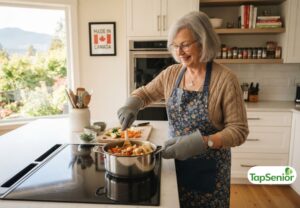
If rugs are necessary, choose only non-slip mats with rubber backing.
Better yet, remove unnecessary rugs completely.
Wear supportive shoes with non-slip soles while cooking instead of socks or slippers without traction.
These small habits significantly reduce the likelihood of dangerous falls.
Improve Kitchen Lighting
Many seniors experience declining eyesight.
Poor lighting increases the chance of cutting fingers, spilling hot liquids, or missing obstacles on the floor.
Improve visibility by using:
Bright LED ceiling lights
Under-cabinet lighting
Task lights over food preparation areas
Night lights for evening visits
Motion-sensor lighting
Natural daylight whenever possible
Keep windows clean and avoid blocking sunlight with heavy curtains.
Good lighting makes cooking easier while reducing eye strain.
Organize Frequently Used Items Within Easy Reach
One common cause of injury is climbing onto stools or chairs to reach high shelves.
Instead, reorganize the kitchen.
Store everyday items between waist and shoulder height.
These include:
Plates
Bowls
Coffee mugs
Cooking utensils
Frequently used spices
Cooking oil
Pots
Pans
Microwave-safe containers
Avoid placing heavy appliances above shoulder level.
Likewise, avoid storing essential items in very low cabinets that require excessive bending.
Easy accessibility reduces unnecessary strain on joints and muscles.

Use Stable Step Stools Only When Absolutely Necessary
Sometimes reaching higher shelves cannot be avoided.
If so, never stand on:
Dining chairs
Rolling chairs
Buckets
Boxes
Countertops
Instead, use a sturdy step stool equipped with:
Handrails
Wide steps
Non-slip feet
Weight capacity appropriate for the user
Ask for assistance whenever lifting or reaching feels unsafe.
Prevent Burns While Cooking
Burn injuries become more serious with age because older skin is thinner and heals more slowly.
Several habits reduce burn risks.
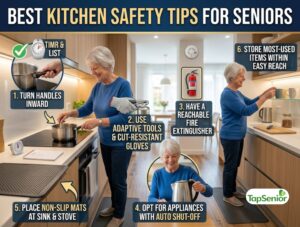
Turn pot handles inward.
Use oven mitts instead of towels.
Avoid loose sleeves that may catch fire.
Open lids away from the face to release steam safely.
Keep children and pets away from the cooking area.
Never leave food unattended while frying.
Place hot dishes on heat-resistant surfaces.
If possible, choose cookware with insulated handles.
These simple precautions greatly improve kitchen safety.
Cook on the Back Burners Whenever Possible
Back burners reduce accidental contact with hot cookware.
They also make it harder for someone walking by to bump into a hot pot.
When using front burners:
Turn handles toward the center.
Avoid allowing handles to extend beyond the edge.
Keep cords from electric appliances away from burners.
Never place paper towels near open flames.

Choose Lightweight Cookware
Heavy cast iron pans may become difficult to lift safely.
Instead, consider:
Lightweight aluminum cookware
Ceramic cookware
Smaller saucepans
Electric kettles
Two-handled pots
Cookware with ergonomic grips
Lighter cookware places less strain on wrists and shoulders while reducing the chance of dropping hot food.
Keep Sharp Knives Properly Stored
Dull knives often require more force than sharp ones, increasing the risk of injury.
Choose quality knives and keep them sharpened.
Store knives safely using:
Knife blocks
Magnetic strips
Protective blade covers
Avoid placing loose knives inside drawers.
Always cut on stable cutting boards equipped with non-slip bases.
Take your time while chopping.
Never attempt to catch a falling knife.
Instead, step back immediately.
Wear Proper Clothing While Cooking
Loose clothing creates unexpected hazards.
Choose:
Short sleeves
Rolled sleeves
Aprons
Closed-toe shoes
Comfortable clothing
Avoid:
Long scarves
Flowing sleeves
Loose jewelry
Open sandals
These choices reduce fire risks while improving mobility.
Install Easy-to-Use Kitchen Appliances
Technology has made kitchens much safer.
Helpful appliances include:
Automatic shut-off kettles
Induction cooktops
Electric pressure cookers
Air fryers
Slow cookers
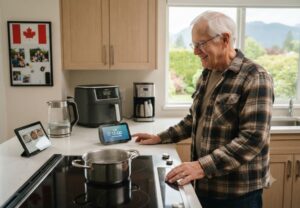
Voice-controlled smart assistants
Automatic coffee makers
Microwave ovens with large displays
Many modern appliances include automatic safety features that prevent overheating.
These features are especially valuable for seniors experiencing mild memory challenges.
Reduce Clutter on Countertops
Crowded workspaces increase accidents.
Keep only frequently used appliances on the counter.
Store unnecessary gadgets inside cabinets.
Create dedicated preparation areas for:
Cutting
Cooking
Serving
Cleaning
Keeping work surfaces clear improves efficiency and reduces confusion.
Keep Emergency Supplies Nearby
Even with excellent safety habits, accidents can still happen.
Every kitchen should contain:
First aid kit
Burn cream
Bandages
Emergency contact numbers
Flashlight
Fire extinguisher
Smoke detector
Carbon monoxide detector
Check expiration dates on first aid supplies regularly.
Replace batteries in detectors twice each year.
Learn How to Prevent Kitchen Fires
Cooking fires are among the most common household emergencies.
Most are preventable.
Never leave cooking unattended.
Stay in the kitchen while frying.
Use timers for baking.
Keep flammable items away from burners.
Avoid storing paper products above the stove.
If grease catches fire:
Turn off the heat immediately.
Cover the pan with a metal lid.
Never pour water onto grease fires.
Use baking soda if appropriate.
Only use a fire extinguisher when it is safe to do so.
Leave the home immediately if the fire spreads.
Call emergency services from outside.
Install Smoke and Carbon Monoxide Detectors
Smoke detectors save lives.
Install detectors:
Inside the kitchen area but not directly above the stove
Near bedrooms
On every floor of the home
Carbon monoxide detectors should also be installed near sleeping areas if gas appliances are present.
Test alarms monthly.
Replace batteries as recommended by the manufacturer.
Practice Safe Food Handling
Kitchen safety also includes preventing foodborne illnesses.
Older adults have weaker immune systems, making food poisoning more dangerous.
Wash hands before cooking.
Clean fruits and vegetables thoroughly.
Keep raw meat separate from ready-to-eat foods.
Use separate cutting boards for meat and produce.
Cook foods to recommended temperatures.
Refrigerate leftovers promptly.
Discard expired products.
Avoid consuming foods with damaged packaging.
Following safe food handling practices protects overall health while reducing unnecessary medical complications.
Label Food Clearly
Many seniors store leftovers for several days.
Always label containers with:
Food name
Preparation date
Expiration date if necessary
Transparent storage containers also help identify contents quickly.
This reduces waste while preventing accidental consumption of spoiled foods.

Maintain Refrigerator Safety
The refrigerator should stay at approximately 40°F (4°C) or below.
The freezer should remain near 0°F (-18°C).
Avoid overcrowding because proper air circulation helps maintain safe temperatures.
Clean spills immediately to prevent mold growth.
Inspect food weekly.
Throw away expired dairy products, leftovers older than several days, and spoiled produce.
A clean refrigerator contributes significantly to a healthier kitchen.
Stay Hydrated While Cooking
Cooking can become physically demanding, especially during warmer months.
Older adults may not always recognize thirst.
Drink water regularly before, during, and after meal preparation.
Avoid standing for extended periods without resting.
If dizziness occurs, stop cooking immediately and sit down.
Hydration improves concentration and reduces fatigue.
Sit Whenever Possible
Standing for long periods may increase pain and fatigue.
Use a sturdy kitchen chair or adjustable stool while:
Peeling vegetables
Mixing ingredients
Preparing salads
Sorting groceries
Reading recipes
Conserving energy makes cooking more enjoyable and sustainable.
Use Ergonomic Kitchen Tools
Many manufacturers now produce kitchen tools designed specifically for seniors.
Examples include:
Easy-grip peelers
Large-handle utensils
Jar openers
Electric can openers
Lightweight mixing bowls
Adaptive scissors
Non-slip cutting boards
These tools reduce strain caused by arthritis and limited hand strength.
Keep Frequently Used Cleaning Supplies Accessible
Cleaning is part of kitchen safety.
Store supplies where they are easy to reach without climbing or bending.
Use non-toxic cleaning products whenever possible.
Immediately wipe grease from stovetops and countertops.
A clean kitchen is generally a safer kitchen.
Be Mindful of Medications Before Cooking
Many older adults take one or more prescription medications each day. While these medicines play an important role in maintaining health, some can affect alertness, balance, coordination, or reaction time. Cooking while feeling drowsy or dizzy increases the risk of burns, cuts, falls, and other kitchen accidents.
If a medication causes sleepiness or lightheadedness, consider preparing meals at a time of day when you feel most alert. Speak with your healthcare provider if side effects interfere with daily activities, and never ignore persistent dizziness while cooking.
Listening to your body is one of the most important kitchen safety tips for seniors.
Create a Safe Kitchen Layout
An organized kitchen supports both safety and efficiency.
Arrange workstations so that frequently used items are close together. Ideally, the refrigerator, sink, and stove should form an easy-to-navigate work triangle with clear walking paths.
Keep pathways free from:
- Grocery bags
- Pet food bowls
- Trash bins
- Electrical cords
- Small furniture
- Decorative items
A clutter-free layout minimizes tripping hazards and makes meal preparation less stressful.
Avoid Carrying Heavy Loads
Transporting large pots filled with boiling water or carrying heavy grocery bags can place unnecessary strain on joints and muscles.
Instead:
Carry smaller loads.
Use a rolling utility cart.
Slide heavy cookware across countertops rather than lifting it whenever possible.
Ask family members or caregivers for assistance with oversized items.
Protecting your back and shoulders helps preserve long-term mobility.
Use Timers for Every Cooking Task
Memory changes become more common with age, making it easy to forget food cooking on the stove or in the oven.
Set timers for:
- Baking
- Boiling
- Roasting
- Simmering
- Microwaving
Many seniors also benefit from smart speakers or smartphone reminders that announce cooking times aloud.
Timers greatly reduce the likelihood of burned food and kitchen fires.
Choose Appliances with Automatic Safety Features
Modern kitchen appliances are designed with safety in mind.
Helpful options include:
Automatic shut-off coffee makers
Induction cooktops
Electric kettles with auto shut-off
Toasters with automatic pop-up functions
Rice cookers
Programmable slow cookers
Air fryers
These appliances reduce fire risks while making cooking easier for older adults.
Store Cleaning Chemicals Safely
Cleaning products should never be stored beside food.
Keep chemicals in their original containers.
Clearly label all products.
Never mix household cleaners, especially bleach and ammonia, as doing so can release dangerous fumes.
Store chemicals in secure cabinets away from children and pets.
Improve Cabinet Accessibility
Traditional cabinets often require excessive bending or stretching.
Simple improvements include:
Pull-out shelves
Lazy Susan organizers
Drawer organizers
Soft-close drawers
Large cabinet handles
Pull-down shelving systems
These upgrades improve accessibility while reducing strain on knees, hips, and shoulders.
Reduce Fatigue During Meal Preparation
Preparing meals can become tiring.
Plan ahead by:
Washing vegetables in advance.
Preparing ingredients before turning on the stove.
Cooking larger meals and freezing portions.
Using pre-cut vegetables when appropriate.
Choosing recipes with fewer complicated steps.
Energy conservation allows seniors to enjoy cooking without becoming exhausted.
Maintain Safe Electrical Practices
Electricity presents another common kitchen hazard.
Avoid plugging multiple high-powered appliances into the same outlet.
Inspect appliance cords regularly.
Replace damaged cords immediately.
Never use electrical appliances near standing water.
Disconnect appliances after use if recommended by the manufacturer.
These simple habits reduce the risk of electrical shock and fires.
Be Careful with Glass Cookware
Glass baking dishes can become extremely hot.
Always use oven mitts.
Avoid placing hot glass directly onto cold or wet surfaces, as sudden temperature changes may cause cracking.
Allow dishes to cool gradually before washing.
Prepare for Emergencies
Every senior should know exactly what to do if an emergency occurs.
Create a written emergency plan that includes:
Emergency phone numbers
Family contacts
Primary healthcare provider
Nearby neighbors
Location of the fire extinguisher
Location of first aid supplies
Practice emergency procedures with caregivers or family members.
Preparation builds confidence.
Kitchen Safety for Seniors Living Alone
Older adults who live independently should take additional precautions.
Inform a family member before beginning extensive cooking projects.
Keep a charged phone nearby.
Consider wearing a medical alert device.
Use smart home monitoring systems if appropriate.
Install video doorbells and security cameras if additional peace of mind is desired.
Living alone does not mean sacrificing safety.
Kitchen Safety for Seniors with Arthritis
Arthritis can make everyday kitchen tasks painful.
Helpful strategies include:
Using lightweight cookware
Choosing utensils with larger handles
Installing lever-style faucets
Using electric can openers
Purchasing jar-opening tools
Selecting ergonomic knives
Avoid repetitive hand movements whenever possible.
Adaptive kitchen equipment can significantly improve comfort.
Kitchen Safety for Seniors with Vision Loss
Reduced vision requires additional safety measures.
Increase lighting throughout the kitchen.
Use contrasting colors on countertops and cutting boards.
Label spices using large print.
Install illuminated light switches.
Choose measuring cups with bold markings.
Keep eyeglasses clean and updated.
Good visibility prevents many common kitchen accidents.
Kitchen Safety for Seniors with Hearing Loss
Hearing loss can make it difficult to notice timers, smoke alarms, or boiling kettles.
Solutions include:
Flashing smoke alarms
Vibrating alert systems
Visual kitchen timers
Smartphone notifications
Voice assistants with visual displays
These technologies improve awareness without relying solely on hearing.
Kitchen Safety for Seniors with Mild Memory Loss
Memory changes do not necessarily prevent safe cooking.
Helpful habits include:
Following written recipes.
Cooking one dish at a time.
Using appliances with automatic shut-off.
Keeping countertops uncluttered.
Avoiding distractions such as television.
Creating a written cooking checklist.
Family members should periodically review kitchen safety practices together.
Fire Extinguisher Basics
Every kitchen should have an easily accessible fire extinguisher.
Learn the PASS method:
Pull the safety pin.
Aim at the base of the fire.
Squeeze the handle.
Sweep from side to side.
Remember that a fire extinguisher is only suitable for small, contained fires.
If the fire grows quickly, evacuate immediately and contact emergency services.
Develop a Kitchen Escape Plan
Every household should have an escape plan.
Identify two exits whenever possible.
Keep doorways clear.
Practice evacuation procedures.
Know where to meet outside.
Do not waste time collecting belongings during a fire.
Quick action saves lives.
Smart Home Technology That Improves Kitchen Safety
Technology continues to make independent living easier.
Useful smart devices include:
Smart smoke detectors
Leak detectors
Voice-controlled assistants
Automatic lighting
Smart plugs
Motion sensors
Video monitoring systems
Medication reminder devices
Remote caregiver monitoring
These innovations support aging in place while giving family members additional reassurance.
Encourage Family Involvement
Kitchen safety is a shared responsibility.
Family members can assist by:
Checking smoke detector batteries.
Organizing cabinets.
Inspecting appliances.
Replacing worn cookware.
Reviewing emergency plans.
Preparing freezer meals.
Providing transportation for grocery shopping.
Even occasional assistance helps maintain independence.
Seasonal Kitchen Safety Tips
Different seasons introduce unique kitchen challenges.
Summer
Stay hydrated.
Avoid overheating while cooking.
Store food properly during picnics.
Watch refrigerator temperatures during power outages.
Winter
Wear shoes with dry soles after entering from snow or rain.
Keep space heaters away from the kitchen.
Prepare emergency food supplies in case of storms.
Holiday Seasons
Avoid overcrowded kitchens.
Cook in stages.
Keep decorations away from heat sources.
Stay focused despite distractions from guests.
Daily Kitchen Safety Checklist
Before cooking, ask yourself:
✔ Is the floor dry?
✔ Are walkways clear?
✔ Is the stove clean?
✔ Do I have proper lighting?
✔ Am I wearing non-slip shoes?
✔ Are oven mitts nearby?
✔ Is my phone accessible?
✔ Do I feel alert today?
✔ Are pot handles turned inward?
✔ Have I set a cooking timer?
Completing this quick mental checklist takes less than one minute and can prevent many accidents.
Warning Signs That Extra Assistance May Be Needed
Sometimes kitchen accidents become more frequent despite best efforts.
Family members should watch for signs such as:
Frequent burns.
Forgotten burners left on.
Spoiled food in the refrigerator.
Difficulty opening containers.
Increased falls.
Confusion while following recipes.
Poor nutrition.
Excessive fatigue after simple cooking tasks.
These signs may indicate that additional support or adaptive equipment would improve safety.
Frequently Asked Questions
What is the biggest kitchen hazard for seniors?
Falls remain one of the leading causes of kitchen-related injuries among older adults. Wet floors, clutter, poor lighting, and improper footwear contribute significantly to these accidents.
What type of stove is safest for seniors?
Induction cooktops are generally considered one of the safest options because they heat cookware directly while the cooking surface remains much cooler than traditional electric or gas stoves.
How often should smoke detector batteries be replaced?
Many experts recommend replacing batteries at least once each year or according to the manufacturer’s instructions. Test alarms every month to ensure they are functioning properly.
Should seniors cook alone?
Many older adults safely cook independently. However, individuals with advanced dementia, significant mobility limitations, severe vision loss, or conditions that affect judgment may benefit from supervision or meal assistance.
What shoes are safest in the kitchen?
Closed-toe shoes with non-slip rubber soles provide the best stability and protection. Avoid walking barefoot, wearing socks alone, or using loose-fitting slippers.
Simple Habits That Make a Big Difference
Many accidents occur not because of one major mistake, but because of several small oversights happening at the same time. Building consistent habits is one of the best ways to create a safer kitchen.
Good daily habits include:
- Washing hands before handling food.
- Cleaning spills immediately.
- Turning appliance handles inward.
- Returning knives to a safe storage area after use.
- Unplugging appliances when appropriate.
- Keeping emergency numbers easily accessible.
- Inspecting food before cooking.
- Taking breaks when feeling tired.
These routines soon become second nature and contribute to a safer cooking environment.
Supporting Independent Living Through Kitchen Safety
One of the greatest benefits of improving kitchen safety is preserving independence. Many seniors take pride in preparing meals for themselves, their spouses, friends, and grandchildren. Cooking supports physical activity, mental engagement, creativity, and emotional well-being.
With thoughtful planning, appropriate home modifications, and practical safety habits, older adults can continue enjoying this important daily activity while minimizing risks.
Families and caregivers should remember that promoting independence does not mean ignoring safety. Instead, it means creating an environment where seniors can confidently perform everyday tasks with fewer hazards and greater peace of mind.
Conclusion
The Best Kitchen Safety Tips for Seniors go far beyond preventing accidents. They help older adults maintain confidence, independence, and a higher quality of life. From improving lighting and organizing cabinets to using adaptive kitchen tools, practicing safe food handling, and embracing modern technology, every small improvement contributes to a safer home.
Whether you are a senior living independently, a caregiver supporting a loved one, or a family member helping someone age in place, taking proactive steps today can prevent injuries tomorrow. Regularly reviewing safety habits, updating kitchen equipment, and staying aware of changing physical needs will ensure that the kitchen remains a welcoming place for preparing nutritious meals and creating lasting memories.
By making kitchen safety for seniors, fall prevention at home, safe cooking practices, home modifications for aging in place, and healthy independent living a priority, older adults can continue enjoying the pleasures of cooking while reducing unnecessary risks. A safer kitchen is not just about preventing accidents it is about empowering seniors to live independently, confidently, and comfortably for years to come.
Bài viết liên quan: