
How Canada’s Universal Health-Care System Works. Have you ever wandered through your grandparents’ attic, basement, or old kitchen and discovered strange objects that looked like they belonged in a museum? Maybe you picked up a heavy metal gadget, turned it over in your hands, and wondered, “What on earth is this?”
For many older adults, these everyday objects were once essential tools that made life easier long before smartphones, microwave ovens, and smart home devices existed. Today, however, younger generations often struggle to recognize them. What was once considered ordinary has gradually become a fascinating piece of history.
Exploring these forgotten household treasures is more than a fun guessing game. Every object tells a story about family traditions, creativity, craftsmanship, and daily life during a different era. Whether it’s an old butter churn, a rotary telephone, or a hand-crank egg beater, these items remind us how people solved everyday problems using simple but ingenious designs.
Many seniors enjoy sharing memories about these household objects because they represent childhood experiences, family gatherings, and life lessons passed from one generation to another. These conversations help preserve history while strengthening connections between grandparents, parents, and grandchildren.
If you’ve ever wondered whether you could identify these vintage treasures, you’re in the right place. Let’s take a nostalgic journey through some of the most recognizable and often forgotten objects that were commonly found in grandparents’ homes.
Along the way, you may discover that these old-fashioned tools were far more practical than they first appear. You might even find yourself wishing some of them would make a comeback.

Why Old Household Items Fascinate Us
There is something magical about old household objects. Unlike today’s disposable products, many vintage tools were built to last for decades. They were often handcrafted, made from cast iron, solid wood, glass, brass, or steel, and designed with durability in mind.
These objects also carry emotional value. They remind us of grandparents who carefully prepared family meals, repaired broken furniture instead of replacing it, and treasured possessions for generations.
Today, vintage household items have become increasingly popular among collectors, antique enthusiasts, interior designers, and history lovers. Even people who never lived during those decades appreciate the craftsmanship behind these everyday essentials.
For seniors, these objects often trigger cherished memories that younger family members have never experienced.
Let’s see how many of these classic items you can recognize.
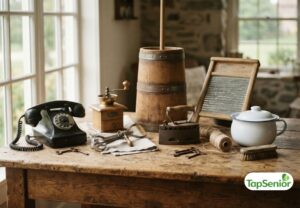
1. Rotary Telephone
Before smartphones fit inside our pockets, families gathered around a single telephone that usually sat on a hallway table or kitchen counter.
The rotary telephone featured a circular dial with numbered finger holes. To make a call, users placed their finger in the appropriate number, rotated the dial until it stopped, then released it before dialing the next digit.
Making a phone call required patience.
There was no caller ID.
No texting.
No voicemail.
No video calls.
If someone wasn’t home, you simply tried again later.
For many seniors, hearing the clicking sound of a rotary dial instantly brings back memories of chatting with friends after school or calling relatives during holidays.
Interestingly, rotary telephones encouraged people to memorize phone numbers, something that has become increasingly rare today.
2. Manual Coffee Grinder
Long before electric coffee grinders became common, coffee lovers relied on hand-operated grinders.
These devices often featured a wooden box with a small drawer underneath and a crank handle on top.
Whole coffee beans were poured into the grinder.
Turning the crank rotated steel burrs that crushed the beans into fresh grounds collected inside the drawer.
Freshly ground coffee offered incredible aroma and flavor.
Many families considered preparing coffee a daily ritual rather than simply pushing a button.
Today, antique coffee grinders remain popular decorative pieces, but many still work perfectly after more than 70 years.
Their longevity is a testament to the quality craftsmanship of the past.

3. Butter Churn
One of the oldest household tools many younger people have never seen is the butter churn.
Before supermarkets sold butter in neatly wrapped packages, families often made it themselves.
Cream was poured into a wooden or glass churn.
A long handle with paddles was repeatedly moved up and down.
After several minutes of hard work, the fat separated from the liquid, creating fresh butter.
Children were often asked to help churn butter as part of daily farm chores.
Making butter wasn’t simply food preparation it was family teamwork.
Today, seeing a butter churn reminds many seniors of rural childhoods filled with fresh milk, homemade bread, and simpler routines.
4. Washboard
Can you imagine doing laundry without electricity?
Before automatic washing machines, families cleaned clothes using washboards.
These boards featured wooden frames with corrugated metal surfaces.
Wet clothing was rubbed repeatedly across the ridges with soap and water.
It required significant physical effort.
Laundry often consumed an entire day each week.
Although washboards are rarely used today, they symbolize perseverance and hard work.
Some musicians even discovered another purpose for them.
In folk and blues music, washboards became unique percussion instruments that are still played today.
5. Hand-Crank Egg Beater
Electric mixers transformed modern kitchens, but generations before them depended on hand-powered egg beaters.
These clever devices contained rotating metal blades connected to gears.
Turning the handle spun the blades rapidly.
Whipping eggs, cream, and batter required steady hands but produced excellent results.
Many grandparents insisted these manual beaters gave them greater control over recipes.
Unlike electric mixers, they were quiet, portable, and never required electricity.
Many antique collectors still use them because they remain remarkably functional.
6. Ice Box
Here’s one object that surprises many younger people.
Before refrigerators became common, families stored food inside an ice box.
An ice box looked similar to a cabinet.
Large blocks of ice were delivered regularly by local ice companies.
The ice cooled the insulated compartments below.
As the ice slowly melted, water drained into a pan that required regular emptying.
Imagine planning meals around how quickly your ice would melt.
Food preservation demanded careful planning.
The arrival of electric refrigerators completely transformed kitchens across North America.
Still, many seniors vividly remember waiting for the ice delivery truck each week.
7. Sad Iron
Despite its unusual name, the “sad iron” has nothing to do with emotions.
The word “sad” originally meant “solid.”
These heavy cast-iron irons were heated directly on wood stoves before being used to press clothing.
Because they cooled quickly, families often heated multiple irons simultaneously.
As one cooled, another took its place.
Ironing required skill.
Too much heat could scorch delicate fabrics.
Too little heat made wrinkles impossible to remove.
Today’s steam irons seem effortless by comparison.
8. Chamber Pot
Indoor plumbing wasn’t always available.
Many homes relied on chamber pots during the night.
Usually made from ceramic or porcelain, these containers were kept beneath the bed for convenience.
While modern bathrooms have made chamber pots obsolete, they remind us how dramatically home comfort has evolved over the last century.
For many seniors, this simple object illustrates just how different everyday life once was.
9. Mechanical Pencil Sharpener
Mounted on classroom walls and home desks, mechanical pencil sharpeners became familiar sights throughout much of the twentieth century.
Insert the pencil.
Turn the crank.
Watch perfect wood shavings spiral into the container below.
Simple.
Reliable.
Effective.
Many people still remember the satisfying sound of sharpening pencils before school assignments.
Unlike inexpensive plastic sharpeners, these sturdy metal models often lasted decades.
Some schools still use the original sharpeners installed more than fifty years ago.
10. Sewing Machine with Foot Pedal
Before electric sewing machines became standard, many families owned treadle sewing machines.
Instead of plugging into a wall outlet, users powered the machine by pumping a large foot pedal connected to belts and gears.
These beautiful machines often featured ornate iron bases and finely crafted wooden cabinets.
Grandmothers used them to sew clothing, repair worn garments, create quilts, and make curtains.
In many households, sewing represented both creativity and financial necessity.
A well-maintained treadle machine could remain operational for generations.
Many are still treasured family heirlooms today.
More Than Old Objects: They Are Family Stories
Every one of these household items represents more than its practical purpose.
They remind us of grandparents who carefully maintained their homes, fixed what was broken, and appreciated quality craftsmanship.
Unlike today’s fast-changing technology, these tools were designed for years even decades of dependable use.
Many seniors enjoy sharing stories about learning to use these items as children.
Those memories often include grandparents teaching valuable lessons about patience, responsibility, and resourcefulness.
Younger family members may initially laugh at these unfamiliar gadgets, but once they hear the stories behind them, curiosity quickly replaces confusion.
These conversations become opportunities to preserve family history while strengthening relationships across generations.
Even something as ordinary as an old coffee grinder can spark hours of storytelling about childhood breakfasts, family traditions, and life before modern conveniences.
The objects may appear simple, but the memories they carry are priceless.
11. Wringer Washing Machine
Long before fully automatic washing machines became standard in homes, many families relied on a wringer washer. This machine featured a large tub for washing clothes and two heavy rollers mounted on top.
After washing each garment, the clothing was carefully fed through the rollers by hand. As the rollers turned, they squeezed out excess water before the clothes were hung outside to dry.
Operating a wringer washer required patience and caution. Fingers could easily become caught in the rollers if the user wasn’t paying close attention. Many grandparents can still recall being warned by their parents to keep their hands away from the wringer.
Although it demanded far more effort than today’s appliances, the wringer washer represented a significant improvement over scrubbing clothes entirely by hand.
For many seniors, laundry day was truly an all-day family activity.
12. Kerosene Lamp
Before electricity reached every neighborhood, the kerosene lamp illuminated homes after sunset.
These lamps typically featured a glass chimney, a metal burner, and a reservoir filled with kerosene. Lighting one required trimming the wick, filling the fuel tank, and carefully adjusting the flame.
Families gathered around the warm glow to eat dinner, read books, sew clothing, or simply spend time together.
Unlike today’s bright LED lighting, kerosene lamps created a soft, calming atmosphere that many people still find comforting.
Collectors often display antique lamps as decorative pieces, while some rural households continue to keep them for emergency power outages.
They remind us that not long ago, light itself was considered a precious resource.
13. Ice Tongs
Can you identify this unusual-looking metal tool?
Ice tongs were essential when homes depended on large blocks of ice instead of electric refrigerators.
The sharp metal claws gripped slippery ice blocks securely, making it easier to carry them from delivery wagons into the kitchen.
Without ice tongs, moving a fifty-pound block of ice would have been nearly impossible.
Today, many younger people mistake these tools for gardening equipment or fireplace accessories.
Their original purpose is often forgotten, making them one of the more interesting conversation pieces found in antique shops.
14. Potato Masher
Although potato mashers are still sold today, older versions were built almost entirely from sturdy metal or hardwood.
Mashed potatoes were and still are a comfort food in many households across North America.
Grandmothers often insisted that hand-mashed potatoes tasted better than anything made with electric appliances.
The process also became part of family dinners, with children taking turns helping prepare the meal.
Sometimes the simplest kitchen tools create the strongest family memories.
15. Tin Cookie Cutter Collection
Opening a kitchen drawer in your grandmother’s house often revealed a colorful collection of cookie cutters shaped like stars, hearts, bells, trees, and animals.
These inexpensive pieces of tin became treasured family heirlooms because they were used year after year during holidays.
Christmas cookies, Thanksgiving treats, and birthday celebrations often began with these familiar shapes spread across the kitchen table.
Many families still use cookie cutters passed down through multiple generations.
The cookies may disappear quickly, but the traditions remain.
16. Cast Iron Skillet
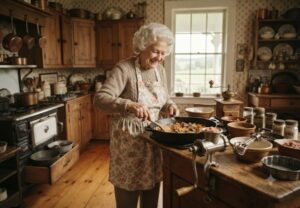
Few kitchen items have earned as much respect as the cast iron skillet.
Properly seasoned, these heavy pans can last for generations while providing exceptional cooking performance.
Grandparents used them to fry chicken, bake cornbread, cook bacon, prepare pancakes, and even make desserts.
Unlike many modern nonstick pans that wear out after a few years, cast iron actually improves with age when cared for correctly.
It’s common to hear someone proudly say they’re cooking with a skillet that once belonged to their great-grandmother.
These remarkable pans symbolize durability, practicality, and family tradition.
17. Hand-Crank Meat Grinder
Before supermarkets sold neatly packaged ground beef, many families prepared their own meat using manual grinders.
Mounted securely to the edge of a table, the grinder featured a crank handle and a series of internal blades.
Chunks of meat were fed into the top while turning the handle forced them through a perforated metal plate.
The result was freshly ground meat ready for hamburgers, meatballs, sausages, or meatloaf.
Many home gardeners also used these grinders for processing vegetables, making relishes, or preparing homemade pet food.
Despite their age, many vintage grinders remain fully functional today.

18. Clothesline and Wooden Clothespins
While clothes dryers offer convenience today, millions of families once relied entirely on sunshine and fresh air.
A backyard clothesline represented an ordinary part of everyday life.
After washing, clothing was hung neatly using simple wooden clothespins.
Sheets fluttered in the breeze.
Fresh towels carried the unmistakable scent of outdoor air.
Children often played between the hanging laundry while adults chatted with neighbors over the fence.
Even today, many seniors say nothing smells quite as clean as sheets dried naturally under the sun.
19. Coal Scuttle
Keeping homes warm during winter once required far more effort than adjusting a thermostat.
Coal-burning stoves and furnaces depended on a constant supply of fuel.
A coal scuttle was a sturdy metal bucket designed for carrying coal from storage into the house.
Many children helped refill stoves before school or before bedtime.
Heating the home required planning, physical work, and teamwork.
The coal scuttle reminds us that even staying warm demanded daily attention.
20. Victrola Record Player
Before streaming music, cassette tapes, CDs, or digital downloads, families gathered around record players.
One of the most iconic was the Victrola.
With its large horn or later enclosed speaker cabinet it filled the home with music that brought families together.
Listening wasn’t background noise.
It was an event.
People carefully selected a record, placed the needle, and sat together to enjoy every song.
Many grandparents fondly remember dancing in the living room, celebrating holidays, or listening to radio broadcasts through these early sound systems.
The crackle of vinyl still evokes nostalgia for countless seniors.
Why These Forgotten Objects Still Matter Today
It would be easy to dismiss these items as outdated relics, but doing so overlooks their deeper significance.
Each object reflects the values of an earlier generation.
People repaired instead of replacing.
They saved instead of wasting.
They invested in quality rather than convenience.
Many of these household tools lasted decades because they were thoughtfully engineered and carefully maintained.
Modern consumers often replace appliances every few years, while some vintage tools continue working after more than a century.
These objects also encourage meaningful conversations between generations.
When grandchildren ask, “What’s this?” grandparents have the opportunity to share stories that textbooks can never teach.
A rotary phone becomes a lesson about communication.
A butter churn becomes a story about farm life.
A treadle sewing machine opens discussions about creativity, resilience, and self-sufficiency.
Those conversations help preserve family history while strengthening emotional bonds.
Exploring family traditions, preserving senior memories, and appreciating vintage home décor are wonderful ways to celebrate the wisdom and experiences of older generations.
Can You Guess Them All?
If you’ve recognized most of these objects, congratulations you probably grew up during a time when many of them were still in everyday use, or you spent plenty of time visiting grandparents who did.
If several of these items were completely unfamiliar, don’t worry. That’s exactly what makes this journey so fascinating.
Every generation has its own technology, habits, and everyday tools. Just as today’s smartphones may puzzle future generations, these vintage household items puzzle many people today.
The important thing isn’t whether you knew every answer.
It’s taking the time to appreciate how previous generations lived, worked, and cared for their families.
Turn It Into a Family Game
One enjoyable activity is to gather old household items or simply photos of them and challenge family members to identify each one.
Grandparents can explain how each object was used.
Parents can share memories from their childhood.
Children can guess the purpose before hearing the real answer.
The game often leads to laughter, surprising discoveries, and unforgettable conversations.
Some families even create memory books featuring photographs of treasured heirlooms alongside the stories behind them.
Others record grandparents sharing personal experiences, preserving those voices for future generations.
These activities ensure that family history remains alive long after the objects themselves have disappeared.
The Beauty of Preserving Everyday History
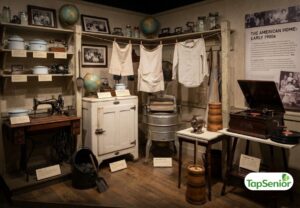
Museums often display famous inventions, historic documents, and valuable artwork, but ordinary household objects tell an equally important story.
They reveal how people cooked meals, washed clothes, communicated, entertained themselves, and cared for one another.
These simple tools remind us that innovation didn’t begin with computers. Every generation found creative ways to solve problems using the materials and technology available at the time.
As older items become increasingly rare, preserving them and the memories attached to them becomes even more valuable.
Whether displayed on a shelf, passed down through the family, or simply remembered through photographs, these objects continue connecting generations.
Final Thoughts
Walking through your grandparent’s home is often like stepping into a living history museum. Every drawer, cabinet, attic, and basement may contain an object that once played an essential role in daily life.
Some items seem mysterious at first glance. Others immediately spark warm memories of holidays, family dinners, summer afternoons, or childhood chores.
The true value of these vintage household objects isn’t measured by their price at an antique shop. Their greatest worth lies in the stories they preserve.
They remind us that previous generations built lives through hard work, patience, creativity, and resilience. They repaired what they owned, cherished family traditions, and created memories that continue to inspire us today.
The next time you visit your grandparents or explore a local antique store pause for a moment before walking past an unfamiliar object.
Ask questions.
Listen carefully.
Every forgotten tool has a story waiting to be told, and every story helps keep our shared history alive.
Perhaps the greatest treasure hidden in your grandparent’s house isn’t the object itself, but the memories that come with it. By sharing those memories with younger generations, we ensure that the wisdom, traditions, and everyday experiences of the past continue to enrich the future.
Bài viết liên quan: