
TapSenior Smart Picks: Best Mobility Aids for Seniors. Growing older should never mean giving up independence. While aging naturally brings changes in balance, strength, flexibility, and endurance, modern mobility solutions make it possible for older adults to continue enjoying active, fulfilling lives. Whether it’s taking a walk through the neighborhood, shopping for groceries, visiting friends, or attending medical appointments, the right mobility aid can provide safety, confidence, and freedom.
Choosing the right mobility device, however, isn’t always easy. Today’s market offers countless products designed for different health conditions, lifestyles, and mobility levels. Some seniors only need a little extra balance while walking, while others require advanced support for longer distances. Understanding the differences between these products can help families make better decisions while avoiding unnecessary expenses.
At TapSenior, we believe that mobility is about much more than simply getting from one place to another. It’s about preserving dignity, maintaining independence, reducing fall risks, encouraging physical activity, and improving overall quality of life. That’s why we’ve created this comprehensive guide featuring our TapSenior Smart Picks for the best mobility aids available today.
Whether you’re shopping for yourself, a parent, grandparent, spouse, or another loved one, this guide will help you understand which mobility aids for seniors are most appropriate for different situations and how they can support healthy aging.

Why Mobility Matters More Than Ever
Mobility plays an essential role in healthy aging. Remaining active benefits nearly every system in the body.
Regular movement helps seniors:
- Maintain muscle strength
- Improve cardiovascular health
- Preserve joint flexibility
- Enhance balance
- Reduce the risk of falls
- Support mental well-being
- Maintain independence
- Stay socially connected
Unfortunately, many seniors begin limiting their activities after experiencing pain, weakness, dizziness, or fear of falling. This often creates a harmful cycle.
Less movement leads to weaker muscles.
Weaker muscles make walking more difficult.
Reduced confidence leads to even less physical activity.
Eventually, independence begins to decline.
The right mobility support for older adults helps interrupt this cycle by restoring confidence and making everyday activities easier.
Common Reasons Seniors Need Mobility Aids
Every person’s mobility journey is different. Some older adults require temporary support after surgery, while others benefit from long-term mobility assistance.
Common reasons include:
Arthritis
Joint pain is one of the leading reasons seniors seek mobility assistance. Osteoarthritis often affects knees, hips, hands, and ankles, making walking painful.
A properly selected walking aid reduces pressure on painful joints while improving stability.
Balance Disorders
Conditions affecting the inner ear, nervous system, or muscles can increase fall risk.
Mobility aids offer additional points of contact with the ground, significantly improving stability.
Muscle Weakness
Natural muscle loss occurs with aging. This condition, known as sarcopenia, reduces strength needed for walking, standing, and climbing stairs.
Supportive mobility devices help compensate while encouraging continued movement.
Stroke Recovery
Many stroke survivors experience weakness on one side of the body.
Specialized walkers, canes, and rollators can dramatically improve mobility during rehabilitation.
Parkinson’s Disease
Parkinson’s disease affects balance, coordination, and gait.
Certain mobility aids are specifically designed to assist with freezing episodes and uneven walking patterns.
Hip or Knee Replacement Recovery
Following orthopedic surgery, temporary walking support often becomes necessary.
The appropriate mobility device allows safer recovery while promoting healing.
General Aging
Even healthy seniors sometimes appreciate added stability during longer walks or outdoor activities.
Using a mobility aid isn’t a sign of weakness.
Instead, it’s a proactive decision that promotes independence.

Benefits of Using the Right Mobility Aid
Many people hesitate to use mobility equipment because they worry it symbolizes aging.
In reality, the opposite is often true.
The right device helps seniors stay active longer.
Benefits include:
Greater Independence
Walking independently allows seniors to continue shopping, visiting family, attending community events, and enjoying hobbies.
Increased Confidence
Fear of falling can prevent many older adults from leaving home.
Mobility aids restore confidence by providing reliable support.
Reduced Fall Risk
Falls remain one of the leading causes of injury among seniors.
Many falls can be prevented with appropriate fall prevention equipment for seniors.
Better Physical Health
The safer seniors feel walking, the more likely they are to remain physically active.
Regular activity helps prevent numerous age-related health problems.
Improved Mental Health
Maintaining mobility also supports emotional well-being.
Active seniors often experience:
- Less anxiety
- Reduced isolation
- Better sleep
- Greater self-esteem
- Improved mood
Understanding Different Types of Mobility Aids
Selecting the best device begins with understanding the available options.
Each mobility aid serves different mobility needs.
Walking Canes
Walking canes remain among the simplest and most affordable mobility solutions.
They’re ideal for seniors who only need minimal assistance with balance.
Canes work best for:
- Mild arthritis
- Minor balance concerns
- Occasional instability
- Recovery from minor injuries
Advantages include:
- Lightweight
- Easy to carry
- Affordable
- Portable
- Suitable for travel
Modern canes are available with:
- Ergonomic handles
- Adjustable height
- Foldable designs
- Quad bases
- Shock absorption
Choosing the correct height is essential for proper posture and comfort.

Quad Canes
Unlike traditional canes, quad canes feature four small feet at the base.
This creates a much larger support area.
Benefits include:
- Greater stability
- Better balance support
- Freestanding capability
- Reduced slipping
Quad canes are especially useful for seniors recovering from stroke or experiencing moderate balance challenges.
Walkers
Walkers provide significantly more support than canes.
They distribute body weight across four contact points.
Traditional walkers work well for seniors with:
- Significant weakness
- Balance problems
- Recent surgery
- Early rehabilitation
Standard walkers offer maximum stability but require lifting during each step.
While highly supportive, they may feel slower for some users.
Two-Wheel Walkers
Two-wheel walkers combine stability with easier movement.
The front wheels glide across the floor while the rear legs provide braking resistance.
Benefits include:
- Less lifting
- Smoother walking
- Improved posture
- Easier indoor mobility
Many physical therapists recommend two-wheel walkers during rehabilitation.
Rollators
Rollators have become one of today’s most popular walking aids for seniors.
Unlike standard walkers, rollators include four wheels.
Most models also feature:
- Comfortable seat
- Storage basket
- Hand brakes
- Adjustable handles
- Backrest
Rollators work especially well for seniors who remain active but tire easily.
Instead of searching for a bench, they can simply stop and sit whenever needed.
Rollators encourage longer walks while reducing fatigue.
Three-Wheel Rollators
Three-wheel rollators provide greater maneuverability in smaller spaces.
Advantages include:
- Lightweight
- Compact
- Easier turning
- Excellent indoor use
However, they typically lack built-in seats and may provide slightly less stability than four-wheel models.
Four-Wheel Rollators
Four-wheel rollators remain the most versatile option.
They’re suitable for:
- Shopping
- Parks
- Community centers
- Sidewalks
- Indoor walking
- Outdoor activities
Many models fold easily for transportation.
For active seniors seeking both independence and comfort, they’re often considered one of the best investments.
Transport Chairs
Unlike wheelchairs, transport chairs require someone else to push.
They’re excellent for:
- Medical appointments
- Airports
- Shopping malls
- Long outings
Because transport chairs are lightweight and fold compactly, families appreciate their convenience.
Manual Wheelchairs
Manual wheelchairs provide greater independence for seniors with more significant mobility limitations.
Some users propel themselves using the large rear wheels.
Others receive assistance from caregivers.
Manual wheelchairs remain practical for:
- Long-term mobility support
- Recovery periods
- Limited walking endurance
- Neurological conditions
Proper fitting greatly improves comfort and reduces pressure injuries.
Power Wheelchairs
Power wheelchairs offer maximum independence for seniors unable to propel manual chairs.
These advanced devices include:
- Joystick controls
- Adjustable seating
- Reclining features
- Long-lasting batteries
- Enhanced comfort
Although more expensive, power wheelchairs dramatically improve independence for many users.

Mobility Scooters
Mobility scooters continue growing in popularity among active older adults.
Unlike wheelchairs, scooters are designed primarily for outdoor mobility.
They’re ideal for:
- Shopping centers
- Parks
- Community events
- Large neighborhoods
- Outdoor recreation
Many scooters travel several miles on a single battery charge.
Features often include:
- Swivel seats
- Adjustable armrests
- Storage baskets
- LED lighting
- Suspension systems
For seniors who enjoy staying socially active, mobility scooters for seniors can be life-changing.
Stair Assistance Devices
Stairs present one of the greatest mobility challenges for aging adults.
Several solutions exist depending on individual needs.
These include:
- Stair lifts
- Portable stair climbers
- Handrail systems
- Transfer aids
Installing appropriate stair equipment can allow seniors to remain safely in multi-story homes for years longer.
Lift Chairs
Although not considered traditional walking aids, lift chairs play an important role in senior mobility.
These motorized recliners gently raise users into a standing position.
Lift chairs benefit seniors with:
- Arthritis
- Hip pain
- Knee pain
- Muscle weakness
- Limited mobility
They reduce strain on joints while promoting independent transfers.
Transfer Aids
Getting safely in and out of bed, vehicles, or chairs often becomes increasingly difficult with age.
Helpful transfer equipment includes:
- Transfer boards
- Bed rails
- Grab poles
- Standing assists
- Transfer belts
These devices improve safety for both seniors and caregivers.
Bathroom Mobility Equipment
The bathroom remains one of the highest-risk locations for falls.
Fortunately, several mobility products improve bathroom safety.
Popular choices include:
- Grab bars
- Shower chairs
- Raised toilet seats
- Toilet safety frames
- Non-slip bath mats
Combining these products significantly reduces accident risks.
Choosing the Right Mobility Aid
No single mobility aid works for everyone.
Selecting the right option depends on several factors.
Important considerations include:
Physical Strength
Can the individual safely lift the device?
Will they use it indoors, outdoors, or both?
Balance
Mild balance concerns may only require a cane.
More serious instability often calls for walkers or rollators.
Endurance
How far can the senior comfortably walk?
Devices with built-in seating become increasingly valuable for longer outings.
Home Environment
Narrow hallways may require compact equipment.
Outdoor use may require larger wheels and better suspension.
Lifestyle
Active seniors benefit from equipment that supports hobbies, travel, shopping, and social engagement.
The best mobility aid isn’t simply the one with the most features.
It’s the one that matches the individual’s daily life, physical abilities, and long-term goals.

Matching the Right Mobility Aid to Specific Health Conditions
One of the biggest mistakes families make is assuming that one mobility device fits every situation. In reality, the best choice depends on the senior’s physical condition, daily activities, and long-term mobility goals. Selecting equipment based on individual needs leads to greater comfort, improved safety, and a higher likelihood that the device will actually be used consistently.
For Seniors with Arthritis
Arthritis can affect the knees, hips, ankles, hands, shoulders, and spine. Pain and stiffness often fluctuate throughout the day, making mobility unpredictable.
Helpful mobility aids include:
- Ergonomic walking canes
- Four-wheel rollators with padded seats
- Lift chairs
- Grab bars
- Shower chairs
These products reduce pressure on painful joints while allowing seniors to remain active without overexerting themselves.
For Seniors Recovering from Surgery
Recovery after hip replacement, knee replacement, or other orthopedic procedures requires temporary support while strength gradually returns.
Recommended options include:
- Standard walkers
- Two-wheel walkers
- Transfer benches
- Raised toilet seats
- Bed assist rails
These devices provide additional stability during the healing process while minimizing the risk of reinjury.
For Seniors with Parkinson’s Disease
Parkinson’s disease often causes slower movements, balance issues, and freezing episodes during walking.
Many specialists recommend:
- Rollators with advanced braking systems
- Walkers designed for neurological conditions
- Lightweight mobility aids that are easy to maneuver
Proper equipment can significantly improve confidence and reduce fall risks.
For Seniors Living with Osteoporosis
Fragile bones make fall prevention especially important.
Helpful equipment includes:
- Quad canes
- Four-wheel rollators
- Grab bars throughout the home
- Non-slip bathroom accessories
Preventing even one serious fall can greatly improve long-term health outcomes.
For Seniors with Heart or Lung Conditions
Conditions such as COPD or heart disease may limit endurance rather than balance.
Mobility aids with built-in seating become especially valuable because they allow seniors to rest whenever needed.
Excellent choices include:
- Rollators
- Transport chairs for longer outings
- Lightweight mobility scooters for community activities
Features to Look for Before Buying a Mobility Aid
Today’s mobility equipment offers far more than basic support. Modern products include innovative features designed to improve comfort, convenience, and safety.
Adjustable Height
A properly fitted device promotes healthy posture and reduces strain on the shoulders, wrists, and back.
Handles should allow the elbows to bend slightly while standing naturally.
Lightweight Construction
Many seniors need to lift their mobility aid into a vehicle or carry it over small obstacles.
Aluminum frames provide excellent durability without unnecessary weight.
Foldable Design
Portable equipment makes travel much easier.
Foldable walkers, rollators, and transport chairs fit conveniently into most vehicle trunks.
Comfortable Hand Grips
Ergonomic handles reduce hand fatigue and improve comfort during extended use.
This feature is especially important for individuals with arthritis.
Large Wheels
Larger wheels perform better on:
- Sidewalks
- Grass
- Gravel
- Uneven pavement
- Outdoor trails
For seniors who enjoy spending time outdoors, wheel size can make a significant difference.
Reliable Braking Systems
Hand brakes provide greater control, particularly when walking downhill or stopping to sit on a rollator seat.
Always test the braking system before purchasing.
Comfortable Seating
Many rollators include padded seats and backrests.
These allow seniors to take breaks during shopping trips, walks, or community events.
A comfortable seat encourages longer periods of physical activity.
Storage Space
Built-in baskets and storage bags make everyday errands much easier.
Seniors can carry:
- Groceries
- Medications
- Water bottles
- Personal belongings
- Small shopping items
Creating a Mobility-Friendly Home
Even the best mobility equipment works better when paired with a safe home environment.
Simple home modifications can dramatically reduce accident risks.
Improve Lighting
Poor visibility increases fall risk.
Install brighter lighting in:
- Hallways
- Staircases
- Bathrooms
- Entryways
- Bedrooms
Night lights provide additional safety after dark.
Remove Tripping Hazards
Loose rugs remain one of the most common causes of falls.
Other hazards include:
- Electrical cords
- Clutter
- Small furniture
- Uneven flooring
Creating clear walking paths benefits everyone in the household.
Install Grab Bars
Grab bars should be installed near:
- Toilets
- Showers
- Bathtubs
- Stairways
Unlike towel bars, grab bars are designed to support body weight safely.
Rearrange Frequently Used Items
Frequently used household items should remain within comfortable reach.
Avoid requiring seniors to climb stools or bend excessively.
Improve Bathroom Safety
Bathrooms deserve special attention because slippery surfaces increase fall risks.
Helpful products include:
- Shower chairs
- Handheld showerheads
- Raised toilet seats
- Non-slip flooring
- Toilet safety rails
Together, these improvements create a much safer daily routine.
Tips for Using Mobility Aids Safely
Even high-quality equipment requires proper use.
Following good safety practices helps maximize the benefits of mobility aids for seniors.
Learn Proper Walking Techniques
Healthcare professionals can demonstrate the safest way to use:
- Canes
- Walkers
- Rollators
- Wheelchairs
Correct technique improves both comfort and stability.
Perform Routine Equipment Checks
Inspect mobility equipment regularly.
Look for:
- Loose screws
- Worn wheels
- Damaged brakes
- Cracked frames
- Torn grips
Small repairs made early help prevent larger safety issues.
Wear Proper Footwear
Supportive shoes improve balance regardless of which mobility aid is used.
Avoid:
- Loose slippers
- High heels
- Worn-out soles
- Shoes without traction
Good footwear works together with mobility equipment to reduce fall risks.
Avoid Carrying Heavy Loads
Heavy bags can affect balance.
Instead, use storage baskets or backpacks designed for mobility devices.
Keep Both Hands Available
When using walkers or rollators, avoid holding multiple objects while walking.
Maintaining proper grip improves stability.
Common Mistakes Families Should Avoid
Helping an older adult choose mobility equipment requires patience and thoughtful planning.
Avoid these common mistakes.
Choosing Based Only on Price
The least expensive option isn’t always the safest.
Quality equipment often provides better durability, comfort, and long-term value.
Buying Without Professional Guidance
Physical therapists and healthcare providers understand gait, balance, posture, and rehabilitation needs.
Their recommendations can prevent costly purchasing mistakes.
Ignoring Future Needs
Mobility often changes gradually.
Choosing slightly more versatile equipment may delay the need for another purchase later.
Incorrect Height Adjustment
Improperly adjusted equipment can create shoulder pain, poor posture, and instability.
Always follow manufacturer recommendations.
Waiting Too Long
Many seniors delay using mobility aids because they associate them with aging.
However, using support early often prevents injuries and preserves independence for years longer.
How Caregivers Can Encourage Mobility
Family members play an essential role in helping older adults remain active.
Rather than doing everything for seniors, caregivers should encourage safe independence whenever possible.
Helpful strategies include:
- Walking together regularly
- Celebrating mobility improvements
- Scheduling outdoor activities
- Visiting parks and community centers
- Supporting regular exercise
- Maintaining realistic goals
Positive encouragement often builds confidence more effectively than constant reminders to “be careful.”
Mobility Is More Than Walking
Mobility affects nearly every aspect of healthy aging.
Greater mobility supports:
- Better physical health
- Improved emotional well-being
- Stronger social connections
- Greater confidence
- Increased independence
- Higher quality of life
Remaining active allows seniors to continue participating in family celebrations, volunteering, hobbies, travel, and community events.
The right independent living products for seniors help make these experiences possible.
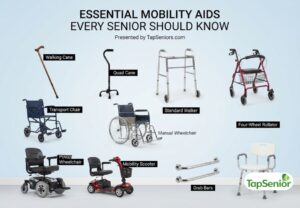
TapSenior Smart Picks: Recommended Categories
At TapSenior, we believe every senior deserves mobility solutions that match their lifestyle rather than limiting it.
Our recommended categories include:
Best for Everyday Walking
A lightweight adjustable walking cane provides reliable support for seniors with mild balance concerns while remaining easy to transport and store.
Best for Active Seniors
A premium four-wheel rollator combines stability, comfort, and convenience. Built-in seating, storage, and hand brakes make it an excellent companion for shopping, walking, and social outings.
Best for Travel
Foldable transport chairs allow caregivers to assist loved ones comfortably during vacations, airport visits, and medical appointments.
Best for Long Distances
Modern mobility scooters provide excellent battery life, comfortable seating, and easy controls, making outdoor activities far more enjoyable.
Best for Home Safety
Bathroom safety equipment, grab bars, and transfer aids help prevent falls while promoting greater confidence during daily routines.
Frequently Asked Questions
When should a senior begin using a mobility aid?
The best time is before falls become frequent. Early use often prevents injuries, preserves independence, and allows seniors to remain active with greater confidence.
Are walkers better than canes?
Not necessarily. Canes work well for mild balance issues, while walkers provide greater stability for individuals who need more comprehensive support. The best choice depends on the individual’s mobility level and medical needs.
Can mobility aids help prevent falls?
Yes. When selected correctly and used properly, fall prevention equipment for seniors significantly improves stability and reduces the likelihood of falls during everyday activities.
Should mobility aids be professionally fitted?
Whenever possible, yes. Healthcare professionals or mobility specialists can recommend the proper height, style, and features based on the senior’s condition and walking pattern.
How often should mobility equipment be replaced?
Replacement depends on usage and wear. Regular inspections help identify worn parts, damaged frames, or declining performance that may affect safety.
Final Thoughts
Growing older does not mean giving up the freedom to live an active and meaningful life. With thoughtful planning, the right support, and appropriate equipment, older adults can continue enjoying everyday activities with greater confidence and peace of mind.
The best mobility aids for seniors are not simply medical devices they are tools that help preserve independence, encourage movement, and improve overall quality of life. Whether it’s a simple walking cane, a versatile rollator, a comfortable transport chair, or an advanced mobility scooter, each solution serves an important purpose in helping seniors stay connected to the people and activities they love.
At TapSenior, we understand that every senior’s journey is unique. That’s why our TapSenior Smart Picks focus on products that combine safety, comfort, durability, and ease of use. By selecting the right mobility support for older adults, families can help reduce fall risks, support healthier aging, and empower loved ones to remain active for years to come.
Investing in the right mobility solution today is more than a purchase it’s an investment in confidence, independence, and a brighter, more active future. Whether you’re exploring walking aids for seniors, independent living products for seniors, or reliable fall prevention equipment for seniors, taking the time to choose wisely can make a lasting difference in everyday life.
Bài viết liên quan: