
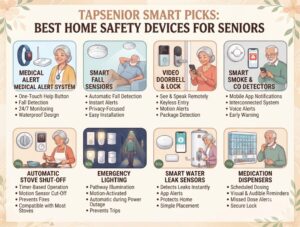
TapSenior Smart Picks: Best Home Safety Devices for Seniors. Growing older should never mean giving up independence. In fact, with the right planning and the right technology, many older adults can continue living comfortably and confidently in their own homes for many years. As more seniors choose to age in place, families are increasingly looking for practical ways to make everyday living safer without sacrificing comfort or dignity. One of the most effective ways to achieve this is by investing in home safety devices for seniors that reduce risks, improve accessibility, and provide peace of mind for everyone involved.
Every year, millions of seniors experience falls, medication mistakes, kitchen accidents, or emergencies that could have been prevented with simple safety solutions. While no device can eliminate every risk, today’s technology offers remarkable tools that help detect emergencies, prevent accidents, and support healthy independent living. From smart fall detection systems to bathroom safety equipment and home monitoring devices, modern solutions are becoming more affordable, easier to install, and more user-friendly than ever before.
At TapSenior, we believe that aging safely begins at home. The goal isn’t to transform a house into a hospital it’s to create a welcoming environment where seniors feel secure while maintaining their routines and independence. Whether you’re a senior planning ahead, an adult child caring for aging parents, or a caregiver looking for practical recommendations, choosing the right senior home safety products can make a significant difference in everyday life.
This guide highlights the best home safety devices for seniors, explaining how they work, who benefits most from them, and what features you should consider before making a purchase. By understanding the options available today, families can make informed decisions that promote confidence, reduce caregiver stress, and help seniors enjoy the comfort of home for years to come.
Why Home Safety Matters More Than Ever
Aging naturally brings changes in strength, balance, vision, hearing, and memory. Even healthy seniors may notice slower reaction times or decreased mobility. These changes increase the likelihood of accidents, particularly inside the home where older adults spend most of their time.
According to health organizations worldwide, falls remain one of the leading causes of injury among older adults. However, falls are only one part of the picture. Home safety also involves preventing fires, avoiding medication errors, improving nighttime visibility, and ensuring help is available during emergencies.
Creating a safer home environment provides several important benefits:
- Reduces fall-related injuries
- Encourages independent living
- Gives family members greater peace of mind
- Helps seniors remain in familiar surroundings longer
- Supports physical and emotional well-being
- May reduce long-term healthcare costs
Instead of waiting for an accident to happen, proactive planning allows seniors to continue enjoying daily life with greater confidence.
How to Choose the Right Home Safety Devices
Not every senior requires the same equipment. Someone recovering from surgery may need different support than an active retiree living independently. Before purchasing any home safety equipment for elderly adults, consider several important factors.
Current Mobility
Ask questions such as:
- Does the senior use a cane or walker?
- Have they experienced falls before?
- Do they struggle with stairs?
- Is getting in and out of bed difficult?
Mobility limitations often determine which safety devices should be prioritized.
Medical Conditions
Conditions including arthritis, Parkinson’s disease, osteoporosis, dementia, diabetes, or vision impairment may require specialized safety solutions.
Home Layout
A two-story home presents different challenges than a small apartment. Bathrooms, staircases, kitchens, and entrances often require individualized safety improvements.
Ease of Use
Technology should simplify life rather than complicate it. Seniors benefit most from devices featuring:
- Large buttons
- Bright displays
- Loud alerts
- Simple installation
- Voice assistance
- Automatic operation whenever possible
Reliability
Safety equipment should function consistently every day. Look for products with long battery life, backup power options, and dependable customer support.
1. Medical Alert Systems
Among all home safety devices for seniors, medical alert systems remain one of the most valuable investments.
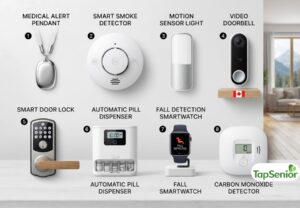
These systems allow seniors to immediately request help by pressing a wearable emergency button. Many modern devices also include automatic fall detection that contacts emergency services even if the user cannot press the button.
Benefits
- Immediate emergency assistance
- Faster response times
- Increased confidence when living alone
- Peace of mind for families
- Works day and night
Today’s systems often include:
- GPS tracking
- Waterproof pendants
- Cellular connectivity
- Mobile applications for caregivers
- Two-way communication
Medical alert systems are particularly beneficial for seniors with previous falls, heart conditions, balance issues, or those living alone.
2. Smart Fall Detection Devices
Falls can happen suddenly and without warning. Smart fall detection devices use sensors and artificial intelligence to recognize unusual movements and automatically alert caregivers or emergency responders.
Unlike traditional emergency buttons, these devices don’t rely on the senior remembering to activate them.
Common forms include:
- Smart watches
- Wearable pendants
- Motion sensors
- Ceiling-mounted sensors
- AI-powered monitoring systems
Some systems can even distinguish between sitting quickly and an actual fall, reducing false alarms.
For seniors who value independence but have a higher fall risk, these devices provide an excellent additional layer of protection.
3. Bathroom Safety Equipment
Bathrooms remain one of the most dangerous rooms in any home due to slippery surfaces and limited space.
Installing bathroom safety products for seniors significantly reduces fall risks while making personal hygiene easier and safer.
Essential bathroom safety devices include:
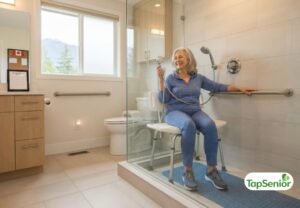
Grab Bars
Properly installed grab bars provide stability when:
- Standing up
- Sitting down
- Entering the bathtub
- Using the shower
- Moving around wet floors
Grab bars should always be securely anchored into wall studs rather than attached with suction cups alone.
Shower Chairs
Shower chairs allow seniors to bathe comfortably without standing for long periods.
Benefits include:
- Improved stability
- Reduced fatigue
- Safer bathing
- Greater confidence
Raised Toilet Seats
A raised toilet seat minimizes the effort required to sit and stand.
This is especially useful for seniors experiencing:
- Arthritis
- Hip replacement recovery
- Knee pain
- Muscle weakness
Non-Slip Mats
Water creates extremely slippery surfaces.
High-quality non-slip mats reduce slipping both inside and outside the shower.
4. Motion Sensor Lighting
Good lighting prevents countless accidents.
Unfortunately, many seniors wake during the night to use the bathroom, increasing the risk of falls in dark hallways.
Installing motion sensor lights offers several advantages:
- Automatic illumination
- Hands-free operation
- Lower electricity consumption
- Better nighttime visibility
- Increased confidence
Ideal locations include:
- Bedrooms
- Hallways
- Staircases
- Bathrooms
- Entryways
- Garages
Some battery-powered models require no wiring, making installation simple.
5. Smart Smoke and Carbon Monoxide Detectors
Traditional smoke detectors remain essential, but today’s smart detectors provide even greater protection.
Modern smart smoke detectors can:
- Send smartphone notifications
- Differentiate smoke from cooking steam
- Detect carbon monoxide
- Monitor battery health
- Alert multiple family members simultaneously
This is particularly valuable if adult children live in another city and want immediate awareness of emergencies.
Carbon monoxide detection deserves equal attention because the gas is odorless, colorless, and potentially deadly.
Installing detectors on every level of the home dramatically improves overall safety.
6. Video Doorbells
Older adults are sometimes targeted by scammers or unwanted visitors.
A smart video doorbell helps seniors identify visitors before opening the door.
Key features include:
- Live video
- Motion detection
- Smartphone alerts
- Two-way communication
- Night vision
- Video recording
This technology also allows family members to remotely check on deliveries or unexpected visitors.
For seniors living alone, a video doorbell offers both convenience and increased security.
7. Smart Door Locks
Remembering keys becomes more difficult with age.
Smart locks eliminate many common concerns by allowing:
- Keyless entry
- Temporary caregiver access
- Remote locking
- Automatic locking
- Access history
Adult children can ensure doors remain locked even if parents forget.
Temporary digital codes can also be provided to:
- Home healthcare workers
- Housekeepers
- Maintenance personnel
- Family members
This eliminates the need for hiding spare keys outside.
8. Bed Exit Alarms
Nighttime falls often occur when seniors attempt to get out of bed without assistance.
Bed exit alarms detect movement and notify caregivers before the senior begins walking.
These systems are particularly useful for:
- Dementia patients
- Memory care
- Recovery after surgery
- High fall-risk individuals
Some models also activate gentle floor lighting, helping seniors safely navigate the room.
9. Medication Management Devices
Medication mistakes remain surprisingly common among older adults.
Missed doses, duplicate medications, or incorrect timing can lead to serious health complications.
Modern automatic medication dispensers simplify medication management through:
- Locked compartments
- Scheduled reminders
- Audible alarms
- Flashing lights
- Caregiver notifications
- Automatic dispensing
Some advanced devices even notify caregivers if medications were not taken on time.
These systems are especially beneficial for seniors managing multiple prescriptions each day.
10. Smart Home Voice Assistants
Voice-controlled technology has become one of the easiest ways for seniors to interact with their homes.
Instead of walking across the room or searching for a phone, seniors can simply speak commands.
Popular voice assistant capabilities include:
- Calling family members
- Setting medication reminders
- Turning lights on and off
- Playing music
- Checking weather forecasts
- Reading the news
- Controlling smart home devices
- Creating shopping lists
For seniors with limited mobility, voice assistants reduce unnecessary movement while improving convenience.
Many caregivers also integrate voice assistants into broader smart home safety systems to automate lighting, security, and daily reminders.
The Benefits of Building a Complete Senior Home Safety System
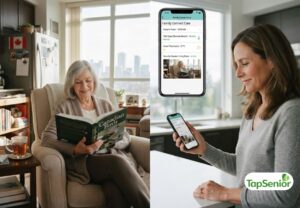
While each safety device provides value on its own, the greatest protection comes from combining multiple solutions into a comprehensive home safety system for seniors. Rather than relying on a single product, families can create layers of protection that address different types of risks throughout the home.
For example, a senior might wear a medical alert device during the day, rely on motion sensor lighting at night, use grab bars in the bathroom, and have smart smoke detectors monitoring the home around the clock. Together, these devices work as a coordinated safety network that reduces hazards while preserving independence.
Another important advantage of combining devices is that caregivers can stay connected without being physically present all the time. Smart technology now allows family members to receive notifications about emergencies, monitor environmental conditions, and even check whether daily routines are being followed all without invading the senior’s privacy.
The goal is not to replace human care but to support it. Technology works best when paired with regular communication, home maintenance, healthy habits, and a supportive caregiving network.
In the next section, we’ll explore additional must-have home safety devices for seniors, discuss room-by-room safety recommendations, compare smart and traditional safety equipment, explain common buying mistakes to avoid, and provide practical tips for creating one of the safest possible living environments for older adults.
11. Home Security Cameras
Indoor security cameras are no longer just for protecting property—they can also provide reassurance for families caring for aging loved ones.
Modern indoor security cameras for seniors offer features such as:
- Live video streaming
- Motion detection
- Night vision
- Two-way communication
- Activity alerts
- Cloud video storage
These cameras can be placed in common areas such as living rooms or entryways (while respecting privacy by avoiding bedrooms and bathrooms). Caregivers can check in remotely if they notice unusual inactivity or receive an alert.
For seniors living independently, security cameras can also discourage theft and provide valuable evidence if an incident occurs.
12. Smart Water Leak Detectors
Water damage can quickly become a serious hazard, especially if a senior cannot easily detect or respond to a leaking appliance.
Smart leak detectors are designed to identify water where it shouldn’t be and immediately send alerts.
Common installation locations include:
- Under sinks
- Behind washing machines
- Near water heaters
- Around toilets
- Basement floors
Early detection helps prevent:
- Slippery floors
- Mold growth
- Structural damage
- Expensive repairs
For older adults with mobility limitations, preventing water-related hazards is just as important as preventing falls.
13. Stove Safety Devices
Cooking remains one of the most enjoyable daily activities for many seniors, but it also introduces risks—particularly for individuals with memory challenges.
Automatic stove shut-off devices help reduce fire hazards by:
- Turning off unattended burners
- Detecting unusual heat levels
- Monitoring cooking duration
- Sending caregiver alerts
These systems are especially beneficial for seniors living with mild cognitive impairment or early-stage dementia.
Rather than limiting independence, stove safety devices allow many older adults to continue preparing meals with greater confidence.
14. Smart Thermostats
Temperature regulation becomes increasingly important with age.
Extreme heat or cold can negatively affect seniors, particularly those with heart disease or chronic health conditions.
A smart thermostat offers several benefits:
- Automatic temperature adjustment
- Remote caregiver monitoring
- Energy savings
- Easy scheduling
- Voice control compatibility
Maintaining a comfortable indoor temperature supports both safety and overall well-being throughout the year.
15. Automatic Night Lights
Simple improvements often produce significant safety benefits.
Automatic night lights gently illuminate pathways without requiring seniors to search for light switches.
Ideal locations include:
- Bedrooms
- Bathrooms
- Hallways
- Staircases
- Kitchen pathways
LED models consume very little electricity while greatly reducing nighttime fall risks.
16. Emergency Flashlights
Power outages can be especially stressful for older adults.
Rechargeable emergency flashlights automatically activate when electricity fails, making them invaluable during storms or unexpected outages.
Some models also include:
- Emergency radios
- USB charging ports
- SOS flashing lights
- Long-lasting batteries
Keeping several emergency lights throughout the home ensures seniors never have to navigate in complete darkness.
Room-by-Room Home Safety Recommendations
Every room presents unique safety challenges. Taking a room-by-room approach ensures no area is overlooked.
Living Room
The living room should encourage relaxation while minimizing hazards.
Recommended improvements include:
- Removing loose rugs
- Securing electrical cords
- Installing brighter lighting
- Choosing stable furniture
- Keeping frequently used items within easy reach
- Using chairs with supportive armrests
Creating clear walking paths makes daily movement safer and more comfortable.
Kitchen
The kitchen combines heat, sharp objects, and slippery surfaces, making organization essential.
Helpful kitchen safety products for seniors include:
- Automatic stove shut-off systems
- Non-slip flooring
- Easy-grip utensils
- Pull-out shelves
- Fire extinguishers
- Smoke detectors
Keeping heavy cookware on lower shelves also reduces unnecessary reaching and lifting.
Bathroom
Bathrooms deserve special attention because they account for many household falls.
Essential upgrades include:
- Grab bars
- Walk-in showers
- Shower chairs
- Raised toilet seats
- Handheld shower heads
- Anti-slip flooring
Good ventilation also reduces moisture buildup that can create slippery surfaces.
Bedroom
The bedroom should support restful sleep while remaining easy to navigate.
Recommended features include:
- Bedside lighting
- Motion sensor lights
- Bed exit alarms
- Accessible storage
- Stable bedside tables
- Telephone or emergency button within reach
Avoid clutter around the bed to reduce nighttime tripping hazards.
Stairways
If the home includes stairs, they should receive immediate attention.
Important improvements include:
- Strong handrails on both sides
- Bright overhead lighting
- Non-slip stair treads
- Contrasting stair edges
- Motion sensor lighting
For seniors with significant mobility limitations, stair lifts may also be worth considering.
Smart Home Integration for Senior Safety
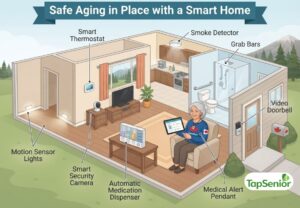
One of the biggest advantages of today’s technology is that many smart home devices for seniors can communicate with each other.
For example:
A motion sensor detects nighttime movement.
The hallway lights automatically turn on.
The bathroom light activates.
A caregiver receives a notification if unusual activity occurs.
Meanwhile, the thermostat maintains a comfortable temperature, smoke detectors remain active, and emergency contacts are ready if needed.
This level of integration creates a seamless living environment that requires very little daily effort from the senior.
Traditional Safety Devices vs Smart Technology
Many families wonder whether they should choose traditional equipment or invest in newer smart devices.
The answer depends on individual needs.
Traditional devices offer:
- Lower cost
- Simple operation
- No internet required
- Proven reliability
Smart devices offer:
- Remote monitoring
- Automatic alerts
- Caregiver connectivity
- Smartphone integration
- Data tracking
- Greater convenience
For many households, combining both approaches provides the best overall protection.
For example, sturdy grab bars never require batteries, while a smart fall detection system adds an additional layer of emergency support.
Common Mistakes When Buying Home Safety Devices
Choosing the wrong products can waste money and create unnecessary frustration.
Avoid these common mistakes.
Buying Too Much Technology
More features aren’t always better.
Some seniors prefer straightforward devices with large buttons rather than complicated touchscreens.
Choose technology that matches the user’s comfort level.
Ignoring Ease of Installation
Some products require professional installation.
Others can be installed in minutes.
Always consider installation requirements before purchasing.
Forgetting Battery Maintenance
Safety devices only work when powered.
Create a schedule for checking:
- Smoke detector batteries
- Medical alert devices
- Flashlights
- Remote controls
- Motion sensors
Many smart devices now provide automatic low-battery notifications.
Focusing Only on Emergencies
Safety isn’t only about responding to accidents.
Preventing accidents should always remain the primary goal.
Good lighting, organized furniture, and clutter-free walkways often prevent more injuries than emergency equipment alone.
Creating a Senior-Friendly Home Environment
Technology is only one part of successful aging in place.
Families should also consider everyday habits that improve safety.
Examples include:
- Wearing supportive non-slip footwear
- Keeping frequently used items within reach
- Exercising regularly to improve balance
- Scheduling vision and hearing exams
- Staying physically active
- Drinking enough water
- Reviewing medications with healthcare providers
Small lifestyle improvements often complement home safety devices for seniors, creating a much safer living environment overall.
How Caregivers Benefit from Home Safety Devices
Safety devices aren’t only designed for seniors.
They also reduce stress for caregivers.
Family members often worry about:
- Falls
- Missed medications
- Fires
- Wandering
- Medical emergencies
- Forgotten appointments
Modern caregiver monitoring tools provide reassurance by offering timely notifications and emergency communication.
Instead of constantly wondering whether everything is okay, caregivers gain confidence knowing they will be alerted if something unusual occurs.
This peace of mind is invaluable, particularly for adult children living in another city or balancing caregiving with work and family responsibilities.
Building a Long-Term Home Safety Plan
Creating a safer home shouldn’t happen all at once.
Instead, families can gradually improve safety over time.
A practical approach might include:
Step 1: Install smoke detectors and carbon monoxide detectors.
Step 2: Improve bathroom safety.
Step 3: Add better lighting throughout the home.
Step 4: Introduce a medical alert system.
Step 5: Upgrade to smart home safety devices where appropriate.
Step 6: Review the home annually as health needs change.
This gradual approach keeps costs manageable while ensuring continuous improvements.
Why Prevention Is Always Better Than Recovery
Recovering from a serious fall or injury can take months and may permanently affect a senior’s independence.
By comparison, many preventive safety devices cost far less than emergency medical care, rehabilitation, or long-term assisted living.
Investing in fall prevention products, senior safety equipment, and smart home technology for aging in place is ultimately an investment in quality of life.
The greatest benefit isn’t simply avoiding accidents it’s preserving confidence.
When seniors feel secure in their homes, they are more likely to remain active, socially engaged, and independent.
Final Thoughts
Choosing the best home safety devices for seniors is about much more than purchasing technology. It’s about creating an environment where older adults can continue living independently while feeling safe, comfortable, and supported every day.
No single product can address every challenge of aging, but a thoughtful combination of medical alert systems, fall detection devices, bathroom safety equipment, motion sensor lighting, smart smoke detectors, security devices, medication management tools, and other home safety solutions for seniors can dramatically reduce everyday risks.
At TapSenior, we believe every senior deserves the opportunity to age in place with dignity, confidence, and peace of mind. By taking proactive steps today and choosing reliable senior home safety products, families can help protect the people they love while supporting their independence for years to come.
Whether you’re preparing your own home, helping an aging parent, or supporting someone in your community, remember that creating a safer living environment doesn’t require dramatic renovations. Often, a series of thoughtful improvements and carefully selected home safety devices for seniors can make all the difference turning an ordinary house into a place where older adults can continue to thrive, stay connected, and enjoy the comfort of home for many years ahead.
Bài viết liên quan: