
Smart Home Technology for Seniors. As more older adults choose to remain in their own homes rather than move into assisted living facilities, technology has become an essential part of supporting safe and independent aging. Smart Home Technology for Seniors is transforming the way older adults manage everyday activities, communicate with loved ones, monitor their health, and maintain confidence while living alone. From voice-controlled assistants and automated lighting to medication reminders and fall detection systems, today’s smart home devices are designed to simplify daily routines while reducing many of the risks associated with aging.
Families are also discovering that smart home solutions provide peace of mind without sacrificing independence. Instead of relying on constant supervision, caregivers can receive important notifications, remotely check on loved ones, or respond quickly during emergencies. Advances in artificial intelligence, wireless sensors, and connected devices have made these systems more affordable and easier to use than ever before. Whether someone is aging in place, recovering from surgery, or simply looking for additional convenience, smart home technology offers practical solutions that improve quality of life.
Throughout this guide, you’ll learn how smart home devices for seniors, aging in place technology, medical alert systems, fall prevention solutions, remote health monitoring, and voice-controlled home assistants work together to create a safer and more comfortable home environment. We’ll also explore how families can choose the right technology based on individual needs, budgets, and lifestyles.
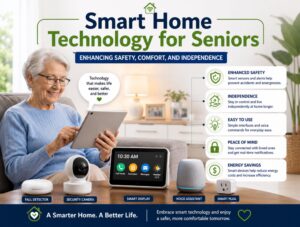
What Is Smart Home Technology?
Smart home technology refers to electronic devices connected through the internet or a local network that can communicate with one another and be controlled remotely or automatically. Many devices can also respond to voice commands, scheduled routines, or environmental conditions.
For seniors, these technologies are not about having the latest gadgets. Instead, they provide meaningful support for everyday living.
Examples include:
- Smart lights that automatically turn on at night.
- Smart locks that eliminate the need for physical keys.
- Voice assistants that answer questions and control appliances.
- Medication dispensers that remind users when to take prescriptions.
- Motion sensors that notify caregivers if unusual activity occurs.
- Video doorbells that allow seniors to see visitors without opening the door.
- Smart thermostats that maintain comfortable indoor temperatures automatically.
Unlike traditional home automation systems that required professional installation and expensive equipment, many modern smart home products can be installed within minutes and controlled using simple smartphone apps or voice commands.
Why Smart Home Technology Matters More as We Age
Growing older often brings gradual changes in mobility, hearing, vision, memory, and balance. These changes do not necessarily prevent someone from living independently, but they can make everyday tasks more challenging.
Simple activities like turning off the stove, remembering medications, locking the front door, or getting up during the night become potential safety concerns.
Smart home technology helps reduce these risks by assisting with daily routines instead of replacing personal independence.
Research continues to suggest that technology-assisted aging can improve confidence, reduce caregiver stress, and support longer periods of independent living. Rather than making older adults feel monitored, well-designed systems allow them to remain in control while providing additional layers of safety.
This balance between independence and support is one of the greatest strengths of modern smart homes.

Major Benefits of Smart Home Technology for Seniors
Improved Safety Around the Home
Safety is usually the first reason families begin exploring smart home devices.
Falls remain one of the leading causes of injury among older adults. Poor lighting, slippery floors, forgotten appliances, and delayed emergency responses all contribute to accidents.
Smart home technology addresses many of these issues.
Motion-activated lights automatically illuminate hallways, bathrooms, and staircases.
Door sensors alert family members if someone leaves the house unexpectedly.
Smart smoke detectors send alerts to caregivers even if the senior cannot hear the alarm.
Leak detectors help prevent water damage that could create slippery floors.
Smart plugs automatically turn off appliances after scheduled periods, reducing fire hazards.
Each of these improvements works quietly in the background without requiring daily effort from the older adult.
Greater Independence
Many seniors worry that accepting help means losing independence.
In reality, technology often has the opposite effect.
Voice assistants allow people to control lights, televisions, fans, curtains, and thermostats without standing up.
Automated reminders help manage medications without relying on family members.
Digital calendars announce appointments.
Smart shopping lists simplify grocery planning.
These conveniences reduce dependence on others while allowing seniors to continue making their own decisions.
Peace of Mind for Family Members
Family caregivers often spend much of their day wondering whether their loved one is safe.
Did Mom remember her medication?
Did Dad lock the front door?
Has Grandma gotten out of bed today?
Connected devices can provide helpful updates without constant phone calls.
Caregivers may receive notifications if:
- A medication reminder is missed.
- No movement has been detected for several hours.
- Doors remain open unusually long.
- Smoke or carbon monoxide is detected.
- Water leaks occur.
- Emergency buttons are activated.
These alerts help families respond quickly when assistance is actually needed.
Better Daily Organization
Memory changes become more common with age.
Fortunately, smart devices can act as personal assistants throughout the day.
Voice assistants can remind seniors to:
- Take medications.
- Drink water.
- Attend appointments.
- Feed pets.
- Exercise.
- Call family members.
- Watch favorite television programs.
These reminders reduce stress while supporting healthy routines.
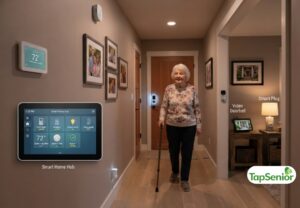
Essential Smart Home Devices That Improve Safety
Smart Lighting Systems
Lighting plays an important role in fall prevention.
Instead of searching for light switches in dark hallways, smart bulbs can automatically activate when motion is detected.
Many systems also adjust brightness based on the time of day.
Warm lighting in the evening encourages relaxation.
Brighter lighting during the day improves visibility.
Some systems even simulate natural daylight to support healthy sleep patterns.
Automatic lighting is particularly useful for nighttime bathroom trips when many falls occur.
Smart Door Locks
Traditional keys can become difficult to manage for seniors with arthritis or reduced hand strength.
Smart locks allow doors to be opened using:
- Voice commands
- Smartphone apps
- Keypads
- Fingerprints
- Temporary access codes
Family members can enter during emergencies without hiding spare keys outside.
Caregivers can also receive alerts when doors are opened or left unlocked.
Video Doorbells
Many scams target older adults by knocking on doors unexpectedly.
Video doorbells allow seniors to safely see and speak with visitors before opening the door.
These systems also record activity outside the home, helping identify suspicious behavior.
Family members may also receive live video notifications when visitors arrive.
Smart Smoke and Carbon Monoxide Detectors
Traditional alarms only sound inside the home.
Smart detectors immediately send alerts to smartphones if smoke or dangerous gas is detected.
Some systems even identify the specific room where the problem originated.
This quicker communication can significantly reduce emergency response times.
Smart Health Monitoring Devices
Health management is another area where technology has advanced dramatically.
Many smart devices now collect useful information that helps seniors and healthcare providers monitor changes over time.
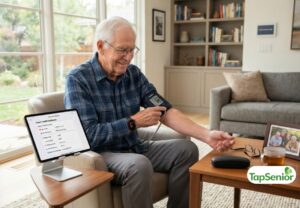
Smart Blood Pressure Monitors
Connected blood pressure monitors automatically store readings.
Instead of writing numbers in a notebook, data is saved digitally and can often be shared with physicians.
This makes it easier to identify long-term trends.
Smart Weight Scales
Unexpected weight gain or weight loss may indicate developing health concerns.
Smart scales track changes automatically while displaying easy-to-understand reports.
Some models also estimate body composition and hydration levels.
Wearable Health Devices
Fitness watches and wearable sensors monitor:
- Heart rate
- Physical activity
- Sleep quality
- Blood oxygen levels
- Walking patterns
Certain devices can even detect falls and automatically contact emergency services if the wearer becomes unresponsive.
Medication Management Systems
Missing medications or taking incorrect doses remains a common challenge.
Smart medication dispensers solve this problem by organizing pills and providing reminders through sounds, lights, or voice prompts.
Some advanced models lock unused compartments, reducing accidental overdoses.
Caregivers may also receive notifications if doses are missed.
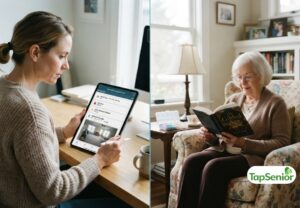
Voice Assistants Make Daily Living Easier
Voice-controlled assistants have become one of the most valuable technologies for older adults because they require almost no technical experience.
Instead of navigating complicated menus, users simply speak naturally.
Popular voice assistants can help with:
- Weather forecasts
- News updates
- Music
- Audiobooks
- Phone calls
- Video calls
- Timers
- Shopping lists
- Medication reminders
- Smart home controls
Someone with arthritis or limited mobility can simply say:
“Turn off the living room lights.”
“Increase the temperature.”
“Call my daughter.”
“Remind me to take my medication at 8 PM.”
This hands-free interaction makes technology accessible even for people unfamiliar with computers.
Choosing the Right Smart Home Technology
Not every senior needs a fully automated home.
The best approach is to begin with the challenges that affect everyday life.
Ask practical questions such as:
Does the person frequently forget medications?
Have there been previous falls?
Is mobility becoming more limited?
Do family members live far away?
Is hearing or vision declining?
Starting with one or two helpful devices often leads to greater comfort and confidence before adding more technology later.
Ease of use should always take priority over having the largest number of features.
Devices with simple interfaces, large buttons, clear voice guidance, and reliable customer support tend to provide the best long-term experience for older adults.
Families should also consider compatibility between devices. Choosing products that work together through a single app or voice assistant can make the entire system much easier to manage.
Smart Home Devices That Simplify Everyday Living
While safety is often the primary reason families invest in smart home technology, convenience is another major benefit. Many routine tasks become more difficult as people age, especially when mobility, vision, or dexterity changes. Fortunately, modern smart devices can reduce physical effort and make daily living more comfortable without taking away independence.
Smart Thermostats
Maintaining a comfortable indoor temperature is essential for older adults. Seniors are generally more sensitive to extreme heat and cold, and forgetting to adjust the thermostat can affect both comfort and health.
A smart thermostat learns daily routines and automatically adjusts temperatures throughout the day. For example, it can warm the home before the senior wakes up, lower the temperature while they are away, and maintain an ideal sleeping environment at night.
Many systems also allow caregivers to adjust the temperature remotely if they notice dangerous weather conditions.
Benefits include:
- Improved comfort throughout the year
- Lower energy costs
- Reduced need to manually adjust settings
- Better indoor air quality when paired with smart HVAC systems
Robot Vacuum Cleaners
Housekeeping can become physically demanding over time. Vacuuming often requires bending, lifting, and pushing heavy equipment.
Robot vacuum cleaners operate automatically according to a schedule. They navigate around furniture, return to their charging stations when finished, and many models can even empty their own dust containers.
Keeping floors clean also contributes to fall prevention for seniors, as dust, pet hair, and small debris are less likely to create slipping hazards.
Smart Kitchen Appliances
The kitchen is one of the most common locations for household accidents.
Fortunately, many modern appliances now include intelligent safety features.
Examples include:
- Smart ovens that automatically shut off after cooking
- Refrigerators that alert users when the door remains open
- Coffee makers that can be scheduled in advance
- Smart microwaves with voice controls
- Water leak sensors installed beneath sinks
- Smart plugs that automatically disconnect unused appliances
These features reduce fire risks while making meal preparation easier.
Smart Window Shades
Opening heavy curtains several times each day can be difficult for someone with arthritis or shoulder pain.
Motorized shades can open automatically in the morning and close at sunset. They also help regulate indoor temperatures and reduce glare for seniors with sensitive vision.
Voice assistants make operation even simpler.
A user can simply say:
“Open the living room blinds.”
or
“Close the bedroom shades.”
Smart Home Technology for Seniors Living with Memory Loss
Many older adults experience mild cognitive impairment or early-stage dementia. Although technology cannot stop cognitive decline, it can help create a safer environment and support daily routines.
Families should remember that technology works best when combined with compassionate caregiving rather than replacing personal interaction.
Medication Reminders
One of the biggest concerns for individuals with memory challenges is remembering prescriptions.
Smart medication dispensers provide:
- Audible reminders
- Flashing lights
- Locked medication compartments
- Automatic dosage tracking
- Notifications to caregivers when doses are missed
This significantly reduces medication errors.
Daily Routine Assistance
Voice assistants can provide gentle reminders throughout the day.
Examples include:
“Good morning. It’s time for breakfast.”
“Don’t forget your doctor’s appointment at 2 PM.”
“It’s time to water your plants.”
“Please remember to lock the front door before bedtime.”
These reminders create consistent routines that support confidence and independence.
GPS Tracking for Wandering Prevention
For individuals with dementia who may wander from home, wearable GPS devices offer an additional layer of protection.
Family members can receive alerts if their loved one leaves a designated safe area.
Many devices also include emergency call buttons that connect users directly with caregivers.
These systems should always be introduced respectfully and with the senior’s dignity in mind whenever possible.
Smart Home Technology Supports Family Caregivers
Caregiving is rewarding, but it can also be physically and emotionally demanding.
Technology allows caregivers to focus more on meaningful interactions instead of constantly worrying about routine safety checks.
Remote Monitoring Without Being Intrusive
Today’s monitoring systems do not necessarily rely on cameras.
Many use discreet sensors that monitor:
- Motion
- Door activity
- Temperature
- Appliance usage
- Water leaks
- Medication adherence
Instead of watching someone continuously, caregivers receive notifications only when unusual activity occurs.
For example:
If no movement is detected during the morning, a caregiver may receive an alert suggesting a wellness check.
If the front door opens late at night, family members can verify whether everything is okay.
This approach respects privacy while improving safety.
Video Calling
Social isolation affects millions of older adults.
Smart displays allow seniors to make video calls using only their voice.
Regular conversations with children, grandchildren, friends, and healthcare providers support emotional well-being and reduce loneliness.
Many healthcare providers also offer virtual appointments, making routine follow-up visits much easier.
Building a Smart Home on Any Budget
One common misconception is that smart homes require thousands of dollars.
In reality, families can build an effective system gradually.
Starter Budget
A modest investment can include:
- Voice assistant
- Smart light bulbs
- Smart plugs
- Video doorbell
These products immediately improve convenience and security.
Mid-Level Budget
Families can expand by adding:
- Smart thermostat
- Smart locks
- Indoor motion sensors
- Medication reminders
- Smoke detectors
- Leak detectors
This creates a well-rounded safety system.
Comprehensive Smart Home
For seniors with greater healthcare needs, a more advanced system may include:
- Remote health monitoring devices
- Fall detection wearables
- Smart security cameras in appropriate locations
- Automated medication dispensers
- Smart hospital beds
- Environmental monitoring sensors
- Professional emergency response integration
The key is selecting devices that solve real problems rather than purchasing technology simply because it is available.
Tips for Introducing Technology to Older Adults
Some seniors feel intimidated by new technology.
Patience makes a tremendous difference.
Helpful strategies include:
Start with one device at a time.
Choose products with large text and simple controls.
Demonstrate the same task several times.
Allow plenty of hands-on practice.
Create written instructions using large fonts.
Avoid introducing multiple new devices simultaneously.
Celebrate small successes.
When seniors experience immediate benefits, they often become much more confident using additional technology.
Common Mistakes to Avoid
Technology should make life easier, not more complicated.
Families sometimes make purchasing decisions based on advertisements rather than actual needs.
Avoid these common mistakes.
Buying Too Many Devices at Once
Adding numerous smart devices simultaneously can overwhelm both seniors and caregivers.
Instead, introduce one or two products that address the most important concerns first.
Ignoring Internet Reliability
Most smart home devices depend on a stable internet connection.
Before purchasing equipment, ensure that Wi-Fi coverage reaches every important area of the home.
Forgetting About Backup Power
Power outages can temporarily disable certain smart devices.
Battery backups for medical equipment, internet routers, and emergency communication devices provide additional security.
Choosing Complicated Products
Some technology offers countless advanced features but requires difficult setup procedures.
For older adults, simplicity often provides a much better long-term experience.
Neglecting Privacy Settings
Smart devices collect information to function effectively.
Families should review privacy settings carefully, create strong passwords, enable two-factor authentication when available, and keep software updated to reduce cybersecurity risks.
Frequently Asked Questions
Is smart home technology difficult for seniors to learn?
Most modern devices are designed with ease of use in mind. Voice assistants, large-button interfaces, and automated routines allow many seniors to begin using smart home technology with minimal training. Starting with one simple device often builds confidence for using additional products later.
Can smart home devices replace caregivers?
No. Smart home technology is designed to support caregivers, not replace them. These tools improve safety, provide reminders, and simplify communication, but they cannot replace the emotional support, companionship, and professional care that many older adults require.
Are smart home systems expensive?
They can fit a wide range of budgets. Many families begin with affordable devices such as smart speakers, lighting, or video doorbells and gradually expand the system over time as needs evolve.
Do smart devices work during power outages?
Some devices include battery backups, while others may stop functioning until power is restored. For seniors who rely on connected medical or safety equipment, backup power solutions and emergency plans are highly recommended.
Which smart home devices are most useful for older adults?
The answer depends on individual needs, but many families find the greatest value in voice-controlled home assistants, medical alert systems, smart lighting, smart door locks, fall detection devices, remote health monitoring tools, and medication reminder systems.
The Future of Smart Home Technology for Seniors
Technology continues to evolve rapidly, and future innovations are expected to provide even greater support for older adults.
Artificial intelligence may soon identify subtle changes in movement patterns that indicate an increased risk of falls. Smart sensors could detect early signs of illness by monitoring sleep, activity levels, or changes in daily routines. Voice assistants will likely become more conversational, enabling natural interactions that feel less like using technology and more like speaking with a helpful companion.
Homes may also become increasingly interconnected. Lighting, climate control, security, healthcare devices, and communication systems will work together seamlessly to create environments that automatically adapt to the resident’s needs. These advancements have the potential to extend independent living while easing the burden on family caregivers.
Although innovation is exciting, the true value of smart home technology lies in its ability to enhance dignity, confidence, and quality of life. The most successful systems are those that remain simple, reliable, and focused on solving everyday challenges.
Conclusion
Growing older does not mean giving up independence. With thoughtful planning and the right tools, Smart Home Technology for Seniors can create a living environment that is safer, more comfortable, and better suited to changing needs. From intelligent lighting and automated locks to wearable health devices and voice assistants, today’s technology empowers older adults to manage daily routines with greater confidence while providing reassurance to family members.
The best smart home is not the one with the most devices. It is the one that addresses the individual’s lifestyle, health concerns, and personal preferences. By starting small and expanding gradually, families can build a connected home that supports aging in place without overwhelming the user.
As technology continues to improve, it will play an increasingly important role in helping older adults remain active, connected, and independent for years to come.
Discover More Resources at TapSeniors
At TapSeniors, we are committed to helping older adults and their families make informed decisions about healthy, independent aging. Whether you’re exploring aging in place, learning about senior home safety, searching for caregiver resources, or looking for practical advice on independent living for seniors, our growing library of expert articles is here to support you.
Explore more guides on TapSeniors to learn how simple lifestyle changes and modern technology can make everyday life safer, healthier, and more enjoyable for seniors and the people who care for them.
Bài viết liên quan: