
Bathroom Safety Ideas for Seniors. The bathroom is one of the most frequently used rooms in every home, but it is also one of the most dangerous places for older adults. Slippery floors, hard surfaces, poor lighting, and limited space can quickly turn an ordinary daily routine into a serious accident. According to many health organizations, bathroom falls are among the leading causes of injuries, fractures, and hospital visits for seniors. Fortunately, many of these accidents can be prevented with thoughtful planning, simple home improvements, and safe daily habits. Whether an older adult lives independently, with family, or receives assistance from caregivers, creating a safer bathroom environment significantly reduces risks while supporting confidence and independence. This comprehensive guide explores practical Bathroom Safety for Seniors, effective Fall Prevention for Seniors, helpful Senior Home Safety Tips, accessible bathroom modifications, and easy habits that make everyday bathing, grooming, and toileting much safer.

Why Bathroom Safety Matters for Seniors
A bathroom combines several risk factors in one small area. Water creates slippery surfaces, stepping in and out of bathtubs requires balance, and standing for extended periods may lead to dizziness or fatigue.
As people age, natural physical changes increase these risks. Seniors often experience:
- Reduced muscle strength
- Slower reaction time
- Poor balance
- Vision changes
- Arthritis
- Osteoporosis
- Limited mobility
- Medication side effects
Even a minor slip can lead to serious injuries, including:
- Hip fractures
- Broken wrists
- Head injuries
- Back injuries
- Shoulder injuries
- Long-term mobility loss
For many older adults, recovering from a fall takes months and may permanently affect independence.
Investing in Bathroom Safety for Seniors is not simply about preventing accidents. It also helps older adults continue living safely at home while maintaining dignity and confidence.
Understanding Common Bathroom Hazards
Before making improvements, it helps to identify common dangers.
Wet Floors
Water splashes from showers, sinks, or bathtubs create slippery surfaces that increase fall risks.
Even small puddles can become dangerous, especially on tile flooring.
Bathtub Entry
Stepping over the high edge of a bathtub requires balance, flexibility, and strength.
Many falls happen while entering or exiting the tub.
Poor Lighting
Bathrooms used during the night often have insufficient lighting.
Dark corners make obstacles harder to see.
Loose Rugs
Decorative rugs may slide unexpectedly.
Unless secured properly, they become tripping hazards.
Low Toilets
Many standard toilets sit too low for older adults with knee, hip, or back problems.
Standing up becomes difficult and increases fall risks.
Limited Space
Small bathrooms make it difficult to use walkers or canes.
Crowded spaces reduce mobility.
Clutter
Cleaning products, laundry baskets, waste bins, cords, and personal care items left on the floor create unnecessary obstacles.
Recognizing these hazards is the first step toward effective Home Safety for Seniors.
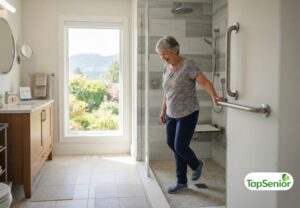
Start with Better Flooring
The floor plays one of the biggest roles in bathroom safety.
Choose Slip Resistant Flooring
If remodeling the bathroom, consider flooring materials designed to reduce slipping.
Popular options include:
- Textured vinyl
- Slip-resistant ceramic tile
- Rubber flooring
- Matte porcelain tile
Avoid highly polished tiles that become extremely slippery when wet.
Keep Floors Dry
Encourage wiping up water immediately after showers or sink use.
Place absorbent towels near shower exits to catch dripping water.
Install Non Slip Mats
Rubber-backed non-slip mats provide extra traction.
Choose mats specifically designed for bathrooms.
Avoid lightweight decorative rugs without non-slip backing.
These simple improvements greatly support Fall Prevention for Seniors.
Install Grab Bars in Key Locations
Grab bars are among the most valuable bathroom safety upgrades.
Unlike towel bars, grab bars are engineered to support body weight.
Recommended installation areas include:
Beside the Toilet
Provides support when sitting down or standing.
Inside the Shower
Helps maintain balance while bathing.
Near Bathtub Entry
Supports safe entry and exit.
Along Bathroom Walls
Offers stability while walking across the room.
Choose professionally installed grab bars anchored directly into wall studs whenever possible.
Avoid suction-cup grab bars as permanent safety solutions because they may lose suction unexpectedly.
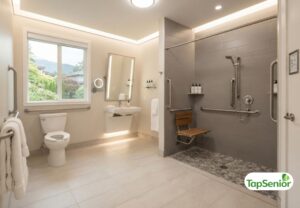
Upgrade to a Walk-In Shower
Traditional bathtubs require stepping over a high edge.
Walk-in showers eliminate this obstacle.
Benefits include:
- Easier access
- Reduced fall risk
- More room for mobility aids
- Simpler caregiver assistance
- Faster entry and exit
Adding a low-threshold shower significantly improves accessibility.
Many modern designs also include built-in seating and handheld showerheads.
These upgrades support Accessible Bathroom Design while improving independence.
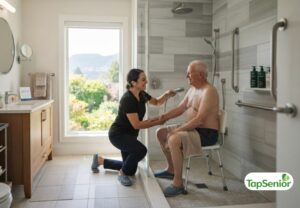
Add a Shower Chair
Standing during an entire shower may be difficult for seniors with:
- Arthritis
- Weakness
- Balance disorders
- Heart conditions
- Fatigue
A shower chair allows comfortable seated bathing.
Features to look for include:
- Non-slip rubber feet
- Adjustable height
- Drainage holes
- Lightweight frame
- Comfortable seat
Always place shower chairs on stable, level surfaces.
Use a Handheld Showerhead
Handheld showerheads offer much greater flexibility than fixed showerheads.
Advantages include:
- Easier seated bathing
- Better reach
- Reduced twisting
- Less bending
- Improved caregiver assistance
Many adjustable models also provide gentle spray settings for sensitive skin.
Improve Bathroom Lighting
Vision naturally changes with age.
Good lighting prevents accidents by improving visibility.
Consider adding:
- Bright LED ceiling lights
- Vanity lighting
- Night lights
- Motion sensor lights
- Illuminated light switches
Motion sensor lights are particularly useful during nighttime bathroom visits.
Seniors no longer need to search for switches in the dark.
Good lighting remains one of the easiest Senior Home Safety Tips to implement.
Raise the Toilet Height
Low toilets force seniors to bend deeply before sitting.
Standing back up requires significant leg strength.
Raised toilets or elevated toilet seats reduce strain on:
- Knees
- Hips
- Lower back
Comfort-height toilets closely match standard chair height, making transfers easier.
Adding grab bars beside the toilet creates even greater stability.
Organize Frequently Used Items
Bathroom organization contributes directly to safety.
Keep daily items within easy reach.
Examples include:
- Toothbrush
- Soap
- Shampoo
- Towels
- Medications
- Toilet paper
Avoid storing essentials on high shelves or low cabinets requiring excessive bending or reaching.
Simple organization reduces unnecessary movements that increase fall risk.
Eliminate Bathroom Clutter
Many accidents occur because seniors trip over objects.
Keep floors clear by removing:
- Laundry baskets
- Extension cords
- Waste bins
- Loose towels
- Cleaning supplies
- Personal items
Store supplies neatly inside cabinets whenever possible.
The more open the walking path, the safer the bathroom becomes.
Install Anti-Scald Devices
Older adults have thinner, more sensitive skin.
Hot water burns occur faster than many people realize.
Anti-scald devices automatically regulate water temperature.
They help prevent accidental burns while bathing or washing hands.
Many experts recommend setting household water heaters around 120°F (49°C).
This temperature balances comfort and safety.
Improve Bathroom Ventilation
Bathrooms often become humid after showers.
Moisture contributes to:
- Mold
- Mildew
- Slippery surfaces
- Respiratory irritation
Install an effective exhaust fan.
Open windows when weather allows.
Dry surfaces quickly after bathing.
Cleaner, drier bathrooms remain much safer.
Encourage Safe Bathing Habits
Bathroom safety involves both equipment and behavior.
Healthy habits reduce accident risks significantly.
Recommended practices include:
Always test water temperature before entering.
Use grab bars every time.
Avoid rushing.
Dry feet thoroughly before walking.
Wear non-slip slippers when leaving the shower.
Sit while drying off if balance feels unstable.
These habits gradually become part of everyday routines.
Wear Proper Footwear
Many seniors walk barefoot inside bathrooms.
Unfortunately, wet feet increase slipping risks.
Instead, choose:
- Rubber-soled slippers
- Waterproof non-slip footwear
- Secure-fitting shower sandals
Avoid:
- Loose slippers
- Socks on wet floors
- High heels
- Smooth-soled shoes
Proper footwear provides better grip on slippery surfaces.
Consider Automatic Faucets
Twisting faucet handles may be painful for seniors with arthritis.
Touchless or lever-style faucets simplify handwashing.
Benefits include:
- Easier operation
- Improved hygiene
- Reduced hand strain
- Less water waste
Small upgrades like these improve comfort while supporting accessibility.
Install Easy-to-Reach Storage
Cabinets positioned too high create unnecessary reaching.
Low storage may require kneeling.
Instead:
Store heavy items between waist and shoulder height.
Frequently used products should remain easily accessible.
Install pull-out shelves if possible.
This minimizes awkward body positions.
Support Seniors with Mobility Devices
Walkers, canes, and wheelchairs require sufficient bathroom space.
If renovating, consider:
- Wider doorways
- Barrier-free showers
- Open floor plans
- Turning space
- Reinforced walls for future grab bars
Planning ahead ensures the bathroom remains safe as mobility needs change over time.
Prevent Nighttime Falls
Many bathroom accidents happen overnight.
Sleepiness combined with darkness increases risk.
Helpful ideas include:
Install motion sensor lighting.
Keep walking paths free from obstacles.
Place non-slip flooring from bedroom to bathroom.
Wear supportive slippers before standing.
Avoid rushing after waking.
Nighttime preparation significantly reduces fall-related injuries.
Medication Awareness
Some medications may cause:
- Dizziness
- Fatigue
- Blurred vision
- Low blood pressure
- Balance problems
If these symptoms occur, consult a healthcare provider.
Bathroom safety strategies become even more important for seniors taking multiple medications.
Caregivers should monitor whether medications increase fall risk.
Stay Hydrated Without Fear
Some seniors intentionally drink less water because they worry about frequent bathroom trips.
Unfortunately, dehydration increases risks of:
- Weakness
- Dizziness
- Confusion
- Urinary tract infections
Instead of limiting fluids, improve bathroom accessibility.
Safe bathrooms encourage healthy hydration.
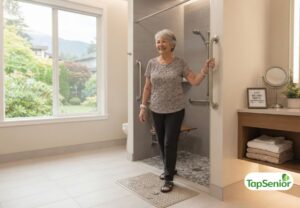
Encourage Regular Exercise
Strong muscles help prevent falls.
Exercises improving balance include:
- Walking
- Tai Chi
- Chair yoga
- Leg strengthening
- Balance training
- Stretching
Better physical fitness complements bathroom modifications.
Together they provide comprehensive Fall Prevention for Seniors strategies.
Involve Family Members and Caregivers
Bathroom safety should never be the responsibility of seniors alone.
Family members can help by:
Inspecting grab bars regularly.
Checking flooring conditions.
Replacing worn non-slip mats.
Improving lighting.
Keeping pathways clear.
Monitoring changes in mobility.
Professional caregivers should also observe bathroom routines and recommend adjustments when necessary.
Bathroom Safety Checklist
A simple checklist makes it easier to identify improvements.
Ask the following questions:
- Are grab bars securely installed?
- Is the floor slip resistant?
- Are rugs secured?
- Is lighting bright enough?
- Is the toilet easy to use?
- Are towels within reach?
- Is clutter removed?
- Are emergency contacts accessible?
- Is the shower equipped with seating?
- Are water temperatures safe?
Review this checklist regularly, especially after health changes or mobility declines.
Creating a Bathroom That Supports Independent Living
Independence is deeply important for most older adults. A well-designed bathroom helps seniors continue completing personal care tasks with confidence while reducing the need for constant assistance. Even modest upgrades, such as installing grab bars, improving lighting, replacing slippery rugs, and organizing frequently used items, can make a remarkable difference in daily safety and comfort.
Rather than waiting until after an accident occurs, proactive planning allows families to create an environment that supports aging in place. Combining thoughtful home modifications with healthy habits and regular physical activity creates a safer bathroom that promotes dignity, confidence, and long-term well-being.
Smart Bathroom Technology That Improves Senior Safety
Technology has become an important part of aging safely at home. Modern smart home devices can make bathrooms safer without requiring major renovations. While technology should never replace good safety habits, it can provide an extra layer of protection for seniors and peace of mind for family members.
Motion-Activated Lighting
One of the simplest upgrades is installing motion-activated lights. These lights automatically turn on when someone enters the bathroom and turn off after the room is empty.
Benefits include:
- No searching for light switches in the dark
- Better visibility during nighttime bathroom visits
- Reduced risk of tripping
- Lower electricity usage
Motion lighting works especially well in hallways leading to the bathroom.
Emergency Call Buttons
An emergency alert button allows seniors to request immediate assistance if they fall or experience a medical emergency.
Popular options include:
- Wearable emergency pendants
- Waterproof wristbands
- Wall-mounted emergency buttons
- Voice-activated emergency systems
Many emergency systems connect directly to family members or emergency response centers.
Smart Water Leak Sensors
Water leaks often create slippery floors before anyone notices them.
Leak detection sensors send alerts when water is detected around:
- Toilets
- Bathtubs
- Showers
- Sinks
- Washing machines
Quick repairs prevent both falls and expensive water damage.
Voice-Controlled Smart Assistants
Voice assistants can make everyday bathroom routines easier.
Examples include:
- Setting medication reminders
- Calling family members
- Playing calming music
- Reading weather updates
- Contacting emergency services
For seniors with mobility limitations, voice commands reduce unnecessary movement.
Bathroom Remodeling Ideas for Aging in Place
Many older adults prefer remaining in their own homes rather than moving into assisted living communities. This concept is known as aging in place.
A bathroom designed for aging in place focuses on safety, comfort, and accessibility.
Important remodeling ideas include:
Widen the Doorway
Standard bathroom doors may not accommodate walkers or wheelchairs.
A wider doorway allows:
- Easier wheelchair access
- Better maneuverability
- Improved caregiver assistance
Install Curbless Showers
Barrier-free showers eliminate the step into traditional shower stalls.
Advantages include:
- Wheelchair accessibility
- Reduced tripping hazards
- Easier transfers
- Modern appearance
Curbless showers have become one of the most popular Bathroom Safety for Seniors upgrades.
Reinforce Bathroom Walls
Even if grab bars are not immediately needed, reinforcing bathroom walls during remodeling allows them to be installed later without extensive renovations.
Planning ahead saves money and improves long-term safety.
Choose Easy-to-Clean Materials
Older adults should not need to scrub slippery surfaces excessively.
Consider:
- Mold-resistant grout
- Quartz countertops
- Acrylic shower walls
- Low-maintenance flooring
These materials reduce cleaning effort while maintaining a hygienic environment.
Budget-Friendly Bathroom Safety Improvements
Not every family has the budget for a complete bathroom renovation. Fortunately, many affordable changes can still make a significant difference.
Low-cost improvements include:
- Installing LED night lights
- Adding non-slip bath mats
- Using shower chairs
- Replacing slippery rugs
- Organizing bathroom storage
- Installing handheld showerheads
- Adding adhesive anti-slip strips
- Improving towel placement
- Installing lever faucet handles
Many of these improvements can be completed within a single afternoon.
Bathroom Safety Tips for Seniors with Arthritis
Arthritis affects millions of older adults and often makes bathroom activities more difficult.
Simple adjustments can reduce pain and improve independence.
Helpful ideas include:
Using large pump soap dispensers instead of squeezing bottles.
Installing lever-style faucet handles.
Choosing lightweight towels.
Using electric toothbrushes.
Installing raised toilet seats.
Using long-handled bathing sponges.
Adding padded toilet seat cushions if recommended by healthcare providers.
Reducing painful movements encourages consistent personal hygiene.
Bathroom Safety for Seniors with Limited Vision
Vision changes are common as people age.
Older adults with reduced eyesight benefit from additional safety measures.
Suggestions include:
Using bright contrasting colors for towels and grab bars.
Adding illuminated light switches.
Removing patterned rugs that may hide obstacles.
Keeping countertops organized.
Marking hot and cold faucet controls clearly.
Using large-print labels on medications.
Maintaining excellent lighting throughout the bathroom.
Clear visual contrast improves navigation.
Bathroom Safety for Seniors Living with Dementia
Dementia presents unique safety challenges.
Caregivers should create bathrooms that are easy to understand while minimizing confusion.
Helpful strategies include:
Keeping bathroom layouts consistent.
Using simple labels.
Removing unnecessary decorations.
Locking hazardous cleaning products.
Maintaining consistent lighting.
Using contrasting toilet seats that are easier to recognize.
Installing temperature-controlled faucets.
Providing gentle reminders during bathing routines.
A calm, familiar environment often reduces anxiety.
Helping Seniors Maintain Privacy While Staying Safe
Many older adults value privacy during personal care.
Families can support both safety and dignity.
Ideas include:
Knocking before entering.
Offering assistance only when requested whenever appropriate.
Installing emergency alert systems instead of constant supervision.
Using adaptive equipment that promotes independence.
Encouraging seniors to participate in safety decisions.
Respectful support improves emotional well-being while reducing accident risks.
Seasonal Bathroom Safety Considerations
Bathroom safety changes throughout the year.
Winter
Cold weather may increase stiffness and reduce mobility.
Suggestions include:
Keeping bathrooms comfortably warm.
Using heated towel racks if available.
Preventing condensation on floors.
Ensuring nighttime lighting functions properly.
Summer
Hot weather increases dehydration risks.
Encourage:
Adequate hydration.
Good ventilation.
Air circulation.
Monitoring dizziness caused by heat.
Comfortable temperatures improve balance and reduce fatigue.
Cleaning Products and Bathroom Safety
Cleaning supplies should always be stored safely.
Recommendations include:
Keeping chemicals in original containers.
Locking hazardous products away if cognitive impairment exists.
Avoiding mixing household cleaners.
Ensuring good ventilation during cleaning.
Using non-toxic products whenever possible.
Never leave cleaning buckets or supplies on the floor where they become tripping hazards.
The Importance of Regular Bathroom Safety Inspections
Bathrooms should be inspected regularly.
Monthly inspections may include checking:
Grab bars for looseness.
Non-slip mats for wear.
Lighting brightness.
Water leaks.
Loose flooring.
Toilet stability.
Shower chair condition.
Smoke and carbon monoxide detector batteries elsewhere in the home.
Preventive maintenance is always less expensive than recovering from injuries.
Caregiver Tips for Assisting with Bathroom Safety
Family caregivers play an essential role in helping older adults remain safe.
Helpful caregiving practices include:
Observing changes in mobility.
Watching for signs of dizziness.
Encouraging slow movements.
Ensuring medications are taken correctly.
Keeping emergency phone numbers nearby.
Respecting personal dignity.
Scheduling bathroom visits for seniors with memory impairment.
Recognizing early warning signs often prevents serious accidents.
Common Bathroom Safety Mistakes
Many accidents occur because of small oversights.
Common mistakes include:
Ignoring loose rugs.
Using towel bars instead of grab bars.
Leaving water on the floor.
Poor lighting.
Cluttered walkways.
Using unstable plastic stools.
Ignoring medication side effects.
Postponing needed home modifications.
Believing “it won’t happen to me.”
Correcting these issues dramatically improves Fall Prevention for Seniors.
Creating a Personalized Bathroom Safety Plan
Every senior has unique needs.
A personalized plan should consider:
Current mobility.
Medical conditions.
Vision.
Hearing.
Balance.
Medication use.
Home layout.
Caregiver availability.
Future mobility changes.
Families should review this plan annually or after major health events.
Questions to Ask During a Bathroom Safety Assessment
Whether conducted by family members, occupational therapists, or home safety specialists, a bathroom assessment should answer questions such as:
Can the senior enter the shower safely?
Can they stand without assistance?
Is reaching toiletries comfortable?
Are emergency contacts easily accessible?
Is there enough room for mobility aids?
Are grab bars correctly positioned?
Could lighting be improved?
Are medications causing dizziness?
Does the senior feel confident using the bathroom alone?
The answers help prioritize improvements.
Frequently Asked Questions
What is the biggest bathroom safety risk for seniors?
Slippery floors remain the leading cause of bathroom falls. Wet surfaces combined with reduced balance create significant injury risks.
Are grab bars really necessary?
Yes. Properly installed grab bars provide stable support during transfers, bathing, and walking. They are among the most effective bathroom safety improvements available.
How often should bathroom safety equipment be checked?
Experts recommend inspecting grab bars, shower chairs, lighting, and non-slip mats at least once every month.
Should seniors replace bathtubs with walk-in showers?
If mobility has declined, a walk-in shower often provides safer access and reduces fall risks. However, every situation should be evaluated individually.
What type of flooring is safest?
Slip-resistant vinyl, textured tile, rubber flooring, and matte porcelain generally provide better traction than glossy ceramic tile.
Can small bathrooms still be made safe?
Absolutely. Even without major remodeling, better lighting, grab bars, non-slip mats, organized storage, and clutter removal greatly improve safety.
Is a raised toilet seat worth installing?
For seniors with arthritis, joint pain, or muscle weakness, raised toilet seats make sitting and standing significantly easier while reducing strain.
Should family members supervise every bathroom visit?
Not necessarily. The goal is to maximize independence while minimizing risk. Adaptive equipment and thoughtful modifications often allow seniors to use the bathroom safely without constant supervision.
Final Thoughts
Bathroom safety is not simply about preventing falls. It is about preserving independence, protecting health, and allowing older adults to continue living comfortably in the homes they love. Every improvement, whether it is installing a grab bar, replacing a slippery rug, adding brighter lighting, or upgrading to a walk-in shower, contributes to a safer and more supportive environment.
Families should remember that there is no single solution that works for everyone. The most effective approach combines practical home modifications, healthy daily habits, regular physical activity, routine safety inspections, and open communication between seniors, caregivers, and healthcare professionals. By taking proactive steps today, it is possible to reduce the likelihood of injuries while promoting confidence and peace of mind.
Creating a safer bathroom does not always require a major renovation or a large financial investment. Many affordable improvements can be completed quickly and provide immediate benefits. As mobility, vision, or health needs change over time, the bathroom should evolve as well. Regularly reviewing safety measures ensures that the space continues to meet the changing needs of older adults.
Ultimately, Bathroom Safety for Seniors is an essential part of successful aging in place. When combined with Fall Prevention for Seniors, thoughtful Senior Home Safety Tips, and an Accessible Bathroom Design, older adults can enjoy greater independence, dignity, and quality of life for years to come. A safe bathroom is more than just a functional space. It is an investment in health, confidence, and the ability to maintain an active, fulfilling lifestyle at home.
Bài viết liên quan: