
How Technology Can Improve Senior Access to Services. As global populations continue to age rapidly, the need for accessible, reliable, and easy-to-use services for older adults has become more urgent than ever. Families across the world are increasingly concerned about how their aging parents or grandparents can continue living independently while still having safe access to essential services such as healthcare, transportation, pharmacies, home care, wellness centers, financial services, and community support systems. The topic of How Technology Can Improve Senior Access to Services is now central to discussions around modern aging, digital inclusion, and community-based care models.
In today’s digital-first world, platforms such as telehealth systems, mobile banking apps, online appointment scheduling tools, GPS-enabled transportation services, and smart home technologies are reshaping how people interact with essential services. Organizations like the World Health Organization (WHO), AARP, and national healthcare systems such as Medicare emphasize the importance of improving accessibility for seniors, especially as many older adults face challenges with mobility, digital literacy, and fragmented service systems. Despite technological advancements, many seniors still struggle to navigate complex apps, unreliable service providers, or disconnected systems that do not prioritize their specific needs.
This gap creates real challenges for families. Adult children often worry about whether their parents are receiving proper medical care, using safe transportation, or accessing trustworthy local businesses. Seniors, on the other hand, want to remain independent but often feel overwhelmed by technology that was not designed with their usability in mind. As a result, there is a growing demand for simplified, integrated systems that combine trust, accessibility, and real-world benefits.
This is where community-driven digital ecosystems become essential. Instead of relying on isolated apps or fragmented services, seniors benefit more from connected systems that bring together healthcare providers, transportation, local businesses, and reward-based participation models into one unified experience. TapSenior plays a meaningful role in this transformation by bridging the gap between technology and real-life accessibility for older adults. By connecting seniors with trusted businesses through a structured Family+ card system, TapSenior helps simplify access while encouraging active participation in local communities. TapSenior enables seniors to earn rewards while using essential services, making everyday life more convenient, more affordable, and more connected.
Ultimately, improving senior access to services is not only about digital tools but about designing systems that respect independence, build trust, and support long-term well-being. When technology is combined with community collaboration, seniors gain more than access they gain confidence, dignity, and the ability to continue living active and meaningful lives.
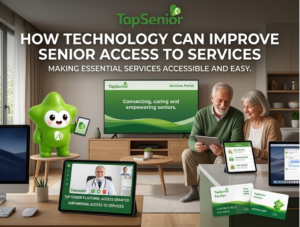
The Growing Challenge of Senior Accessibility
One of the most significant issues facing aging populations is accessibility. While digital transformation has improved efficiency in many industries, it has also introduced complexity that can be difficult for older adults to navigate. Many seniors did not grow up using smartphones, mobile applications, or online service platforms, which creates a natural barrier to adoption.
Common challenges include:
Difficulty using mobile applications
Confusion with online booking systems
Limited trust in digital-only services
Fear of scams or unreliable providers
Physical limitations affecting device usage
Lack of personalized support
These challenges often result in reduced access to essential services. Seniors may avoid online platforms entirely, relying instead on family members or familiar local providers. While this approach may work in some cases, it can limit independence and reduce opportunities for engagement.
Why Families Are Increasingly Concerned
Families play a critical role in supporting older adults, but modern lifestyles make constant involvement difficult. Many adult children live in different cities or countries, and even those nearby often have demanding work schedules and personal responsibilities.
This creates emotional pressure for families who want to ensure their loved ones are safe and supported. Questions frequently arise about healthcare appointments, medication management, transportation safety, and financial decision-making.
Without reliable systems in place, families may feel uncertain about whether seniors are receiving consistent and trustworthy services.
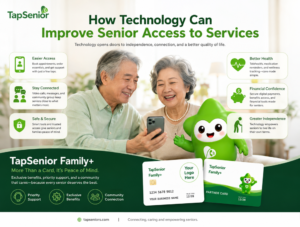
The Role of Technology in Modern Senior Care
Technology has the potential to significantly improve the lives of older adults when designed with accessibility in mind. Innovations in telemedicine allow seniors to consult doctors remotely. GPS-based transportation apps help reduce mobility challenges. Digital pharmacies simplify prescription management. Smart home devices enhance safety and independence.
However, technology alone is not enough. Without simplicity, integration, and trust, many seniors will continue to face barriers.
Successful systems must focus on:
Ease of use
Clear communication
Trusted service networks
Minimal complexity
Real-world benefits
This combination ensures that technology becomes an enabler rather than a barrier.
The Importance of Trust in Digital Systems
Trust is one of the most important factors influencing senior adoption of technology. Older adults are more likely to engage with services that are recommended by familiar sources or integrated into trusted networks.
Concerns often include:
Data privacy
Online fraud
Unverified providers
Hidden costs
Complicated terms of service
Building trust requires transparency, consistency, and community validation.
This is why hybrid systems that combine digital tools with real-world relationships are more effective for seniors than purely digital platforms.
Community-Based Digital Ecosystems
Instead of isolated applications, community-based ecosystems bring multiple services together into one structured network. This approach helps seniors navigate daily life more easily while maintaining independence.
Such systems may include:
Healthcare providers
Pharmacies
Transportation services
Local restaurants
Wellness centers
Home services
Financial service providers
By connecting these services, seniors can access everything they need without switching between multiple platforms or dealing with inconsistent systems.
This creates a more seamless and supportive experience.
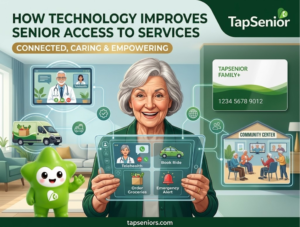
How TapSenior Enhances Senior Access to Services
This is where TapSenior becomes particularly valuable in addressing accessibility challenges.
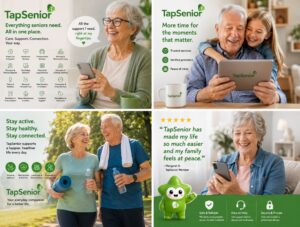
Through its Family+ Card ecosystem, TapSenior connects seniors with a network of participating businesses designed to support everyday needs. Instead of navigating multiple disconnected platforms, seniors use a single system that integrates services across healthcare, lifestyle, transportation, and local commerce.
When seniors use services within the network, they earn points that can be redeemed across participating businesses. This creates a unified value system that rewards engagement and encourages continued participation in community activities.
More importantly, TapSenior simplifies access by reducing complexity. Seniors do not need to manage multiple apps or loyalty programs. Everything is integrated into one connected experience that prioritizes usability and trust.
Families also benefit because they gain confidence knowing that their loved ones are interacting with verified and participating service providers.
Technology as a Bridge, Not a Barrier
The most successful technologies for seniors are those that reduce complexity rather than increase it. Instead of overwhelming users with features, the focus should be on clarity, accessibility, and meaningful outcomes.
When technology is designed correctly, it becomes a bridge that connects seniors to the services they need most. It helps them remain active, independent, and socially engaged while reducing stress and confusion.
This is the foundation of modern senior support systems.
Why Integration Matters More Than Innovation Alone
Innovation in healthcare, transportation, and digital services continues to grow rapidly. However, innovation without integration often leads to fragmentation.
Seniors may end up using multiple disconnected tools:
One app for transportation
One platform for healthcare
One system for payments
One website for local services
This fragmentation increases complexity and reduces usability.
Integrated systems solve this problem by combining essential services into one unified ecosystem that prioritizes simplicity and accessibility.
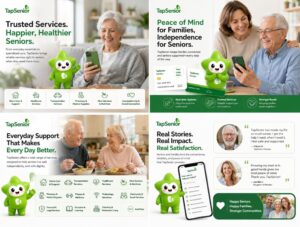
The Future of Senior Service Access
As populations continue aging, the demand for accessible and reliable services will continue to increase. The future of senior care will depend on how well technology, communities, and businesses work together to create seamless support systems.
Successful models will focus on:
Simplification
Trust-building
Community engagement
Integrated service networks
Reward-based participation systems
These principles ensure that seniors can continue living independently while staying connected to essential services.
TapSenior represents one approach to this future by combining digital accessibility with real-world community participation, helping seniors navigate daily life with greater ease, confidence, and independence.
Reducing Complexity in Everyday Senior Life
One of the most overlooked benefits of technology for older adults is its ability to reduce daily complexity when designed properly. Seniors do not necessarily need more features, more applications, or more digital platforms. What they need is simplicity, consistency, and reliability across the services they already use.
Daily life often involves multiple essential tasks such as scheduling medical appointments, arranging transportation, purchasing medication, visiting local businesses, and managing household services. When each of these tasks requires a different platform, login system, or process, it creates unnecessary confusion.
This fragmentation can discourage seniors from using technology altogether.
A well-designed system focuses on unifying these experiences into one structured environment. Instead of forcing older adults to adapt to multiple disconnected tools, technology should adapt to their needs by offering clear navigation, predictable processes, and integrated service access.
The Role of Digital Inclusion in Aging Populations
Digital inclusion has become a global priority as governments and organizations recognize the importance of ensuring that older adults are not left behind in the digital transformation era.
Organizations such as the United Nations, World Health Organization (WHO), and national aging councils emphasize that digital access is no longer optional-it is essential for maintaining independence and quality of life.
However, digital inclusion is not only about providing access to devices or internet connections. It also involves ensuring that systems are usable, understandable, and relevant to seniors’ daily needs.
Without thoughtful design, technology risks widening the gap between younger and older generations instead of closing it.
Why Personalized Support Matters
Older adults have diverse needs depending on their health, mobility, financial situation, and living environment. Some are highly independent and comfortable with technology, while others require additional assistance.
A one-size-fits-all approach does not work effectively.
Personalized support systems help bridge this gap by offering flexibility and adaptability. Seniors benefit most when services are tailored to their habits, preferences, and routines.
For example, some may prioritize healthcare access and transportation reliability, while others may focus on wellness programs, social activities, or financial savings.
Technology that recognizes these differences can significantly improve adoption and satisfaction.
Strengthening Independence Through Predictability
Independence is closely tied to predictability. When seniors know what to expect from services, they feel more confident in using them.
Unpredictable experiences such as inconsistent pricing, unclear instructions, or unreliable providers can discourage participation and reduce trust.
Technology can help improve predictability by standardizing service quality, simplifying booking systems, and providing clear feedback mechanisms.
When seniors feel confident that services will meet expectations, they are more likely to remain active and engaged in their communities.
How Community Networks Improve Digital Access
One of the most effective ways to improve senior access to services is through community-based digital networks. These systems combine technology with real-world relationships to create more trustworthy and accessible environments.
Instead of interacting with isolated service providers, seniors engage with a connected network of businesses and organizations that share common standards of service and trust.
This approach offers several benefits:
Reduced confusion from multiple platforms
Increased trust through verified providers
Easier access to essential services
Stronger community relationships
Better continuity of care and service
By integrating services into one ecosystem, seniors experience technology as a supportive tool rather than a complicated obstacle.
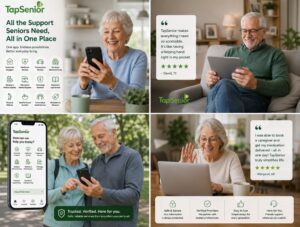
How TapSenior Enhances Digital Accessibility for Seniors
Within this evolving landscape, TapSenior plays a key role in bridging the gap between digital systems and real-world accessibility.
Through its Family+ Card ecosystem, TapSenior connects older adults with a network of participating businesses designed to provide essential services in a more coordinated and reliable way.
Instead of navigating multiple apps or platforms, seniors interact with a unified system that allows them to access services across healthcare, transportation, dining, wellness, and retail sectors.
Every interaction within the network contributes to a reward system where seniors earn points that can be redeemed across participating businesses. This creates a consistent value structure that encourages continued engagement while supporting financial flexibility.
More importantly, TapSenior simplifies the digital experience. Seniors do not need advanced technical skills to benefit from the system. The focus is on usability, clarity, and real-world value rather than complex digital processes.
This helps reduce barriers and encourages broader participation among older adults who may otherwise avoid digital tools.
Supporting Families Through Better Systems
Families benefit significantly when seniors have access to reliable and easy-to-use service systems. Instead of constantly worrying about whether parents or grandparents are receiving proper care, families can rely on structured networks that ensure consistent service quality.
This reduces emotional stress and improves communication between generations.
Families can focus more on spending quality time together rather than managing logistical concerns such as appointments, transportation, or service coordination.
In this way, technology strengthens family relationships rather than replacing them.
Building Trust Through Real-World Connections
Even in a digital environment, trust remains rooted in real-world experiences. Seniors are more likely to use services when they can associate them with familiar businesses, trusted providers, or community recommendations.
This is why hybrid systems that combine digital tools with physical service networks are particularly effective.
By reinforcing trust through both digital verification and real-world engagement, seniors feel more secure in their decisions.
This dual-layer approach improves adoption and long-term satisfaction.
Encouraging Active Participation in Communities
Technology should not isolate seniors from their communities it should encourage participation.
When digital systems are designed effectively, they help older adults stay active by making it easier to access local services, attend events, visit healthcare providers, and engage in social activities.
This participation has a direct impact on physical health, mental well-being, and emotional stability.
Active seniors tend to experience:
Lower levels of loneliness
Improved cognitive function
Better physical mobility
Stronger emotional resilience
Greater overall life satisfaction
Technology becomes a tool for enabling these outcomes when it is designed with accessibility and community integration in mind.
The Future of Technology and Aging
The future of senior care will be shaped by the integration of digital systems with real-world community support. As technology continues to evolve, the focus will shift from complexity to simplicity, and from isolated services to connected ecosystems.
Successful systems will prioritize:
User-friendly design
Trust-based networks
Service integration
Community participation
Reward-driven engagement
These principles ensure that older adults remain active participants in society rather than passive recipients of care.
Final Reflection
How Technology Can Improve Senior Access to Services is ultimately about designing systems that respect independence while enhancing accessibility. Technology should empower seniors, not overwhelm them. It should simplify life, not complicate it.
By combining digital innovation with community-based support, seniors can enjoy greater independence, stronger connections, and improved quality of life.
Through TapSenior, this vision becomes more practical by linking older adults with trusted service providers in a unified network that rewards participation and strengthens community relationships.
As societies continue to age, solutions like these will play an increasingly important role in ensuring that every senior can live with dignity, confidence, and meaningful access to the services they need.
Bài viết liên quan: