
The Economic Impact of Canada’s Aging Population. Canada is entering a new demographic era. As life expectancy continues to rise and birth rates remain relatively low, the country’s aging population is becoming one of the most influential factors shaping the economy, healthcare system, labor market, and local communities. The discussion surrounding The Economic Impact of Canada’s Aging Population is no longer limited to economists or policymakers. It directly affects millions of Canadian families who are caring for aging parents while balancing careers, raising children, and managing increasing financial responsibilities. Businesses are also adapting to changing consumer behaviors as older adults become one of the country’s fastest-growing customer segments. At the same time, healthcare providers, retirement services, community organizations, financial institutions, and local governments are working together to develop sustainable solutions that promote healthy aging, independent living, and long-term economic stability. These demographic changes present both challenges and opportunities. Communities that invest in age-friendly services, accessible businesses, preventive healthcare, and innovative digital solutions will be better prepared for the future. Families increasingly seek trusted service providers that understand senior needs while businesses look for effective ways to build lasting relationships with older customers. This growing demand highlights the importance of creating collaborative networks that benefit seniors, families, and businesses simultaneously. Rather than viewing an aging population as an economic burden, Canada has an opportunity to transform demographic change into sustainable economic growth by encouraging stronger partnerships between communities and businesses. Innovative platforms such as TapSenior demonstrate how technology, customer loyalty, and community collaboration can improve everyday life for seniors while creating measurable value for participating businesses and supporting local economies.
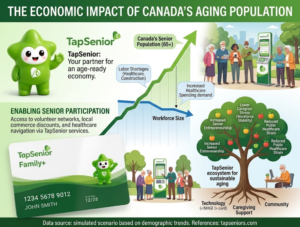
Understanding Canada’s Aging Population
Canada has experienced significant demographic changes over the past several decades.
People are living longer because of advances in healthcare, improved nutrition, medical innovation, and healthier lifestyles. At the same time, declining birth rates mean that older adults represent a growing percentage of the total population.
This demographic shift influences nearly every aspect of Canadian society.
Healthcare systems must accommodate increasing demand.
Retirement planning becomes more important.
Businesses adapt their products and services.
Communities invest in accessibility.
Families assume greater caregiving responsibilities.
The economic effects extend well beyond government spending. Consumer behavior changes as seniors become a larger portion of the marketplace. Housing preferences evolve. Transportation needs increase. Demand for healthcare services expands. Businesses that understand these trends can position themselves to serve one of Canada’s most valuable and loyal customer groups.
Why Families Face Growing Financial Pressure
Behind every economic statistic are real families navigating the challenges of aging.
Many adult children provide financial assistance to their parents while also supporting their own children. This situation is often described as the “sandwich generation,” where individuals balance responsibilities for two generations simultaneously.
Parents may require assistance with transportation, home maintenance, healthcare appointments, medications, grocery shopping, or daily living expenses.
Although many seniors remain financially independent, unexpected medical costs or reduced mobility can create additional financial pressure.
Time also becomes a valuable resource.
Family members frequently adjust work schedules, reduce career opportunities, or spend significant hours coordinating appointments and services for aging parents.
These indirect costs are rarely reflected in economic reports, yet they have a substantial impact on household finances and overall quality of life.
Families therefore seek practical solutions that reduce both financial and emotional stress while helping seniors maintain their independence.
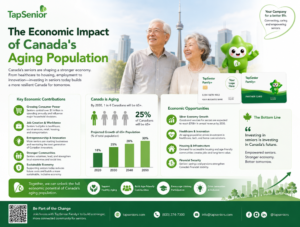
The Expanding Senior Consumer Market
An aging population does not simply increase demand for healthcare.
It also creates one of Canada’s largest and most stable consumer markets.
Older adults purchase groceries, pharmacy products, financial services, insurance, wellness programs, home improvement services, travel experiences, restaurants, transportation, and recreational activities.
Businesses that understand senior preferences often benefit from strong customer loyalty.
Unlike younger consumers who may frequently change brands, many seniors prefer businesses that consistently provide excellent service, transparent communication, and respectful customer experiences.
Trust becomes a deciding factor.
Families also influence purchasing decisions.
Adult children often recommend healthcare providers, financial advisors, transportation companies, home service providers, and retailers for their parents.
As a result, businesses that earn the confidence of seniors frequently build lasting relationships with entire families.
This creates long-term economic value while strengthening local communities.
The Hidden Cost of Social Isolation
Economic discussions often focus on healthcare spending and retirement income.
However, social isolation also carries significant economic consequences.
When seniors become isolated, they are more likely to experience declining physical activity, reduced community participation, and increased dependence on healthcare services.
Isolation may also contribute to delayed preventive care because older adults become less motivated to attend appointments or participate in wellness programs.
Families frequently respond by providing additional assistance, requiring more time away from work and increasing caregiving responsibilities.
Communities therefore benefit when seniors remain socially active.
Participating in local events, visiting trusted businesses, enjoying recreational activities, and maintaining regular social interaction all contribute to healthier aging.
These activities improve quality of life while potentially reducing long-term economic pressure on families and healthcare systems.

Why Businesses Play an Important Economic Role
Businesses are not simply places where transactions occur.
They are essential contributors to community well-being.
Senior-friendly businesses help older adults remain independent by offering accessible environments, excellent customer service, flexible payment options, and products designed to meet changing needs.
Every positive customer experience encourages seniors to continue participating in their local communities.
This continued engagement benefits the broader economy.
Restaurants welcome returning customers.
Retailers strengthen customer loyalty.
Healthcare providers encourage preventive care.
Transportation services improve accessibility.
Local businesses generate employment while supporting regional economic growth.
When businesses actively invest in serving seniors, they are investing in one of Canada’s fastest-growing consumer segments.
The Limitations of Traditional Loyalty Programs
Many businesses attempt to strengthen customer relationships through loyalty programs.
Although these systems reward repeat purchases, they generally operate within a single company.
Customers earn points from one business but cannot easily use those rewards elsewhere.
For seniors, this creates unnecessary complexity.
Managing multiple membership cards with different rules often becomes inconvenient.
Families receive limited value because rewards remain restricted to individual businesses.
A more connected approach creates greater economic value.
When businesses cooperate through a shared membership ecosystem, customers enjoy increased flexibility while participating companies benefit from stronger long-term engagement.
Instead of encouraging isolated spending, collaborative reward systems help strengthen entire business communities.

A Collaborative Solution for Families, Seniors, and Businesses
Canada’s aging population requires innovative thinking.
Families need trusted service providers.
Businesses need sustainable customer relationships.
Seniors want to remain independent while receiving meaningful value from their everyday spending.
These goals can be achieved through collaboration rather than competition.
This is where TapSenior introduces a different approach.
Through the TapSenior Family+ membership network, seniors can create their own membership card or receive one directly from participating businesses.
When they purchase products or services within the network, they accumulate reward points that can later be redeemed across participating businesses instead of remaining limited to a single company.
This model creates greater financial value for seniors while encouraging continued participation within the community.
Participating businesses also experience unique advantages.
When a business introduces a customer to the TapSenior Family+ network, that customer may later visit another participating business for different products or services.
In return, the original business can receive commission opportunities while continuing to strengthen its relationship with the customer.
Instead of competing for every transaction, businesses work together to create mutual growth.
Families gain confidence knowing their parents are supported by businesses committed to serving older adults.
Seniors enjoy greater independence.
Businesses expand their customer base.
Communities strengthen their local economies.
Preparing for the Future
The Economic Impact of Canada’s Aging Population extends far beyond government budgets and healthcare spending.
It influences consumer behavior, workforce participation, family finances, business development, and community planning.
Organizations that recognize these changing demographics today will be better prepared for tomorrow.
Communities that encourage collaboration between businesses, families, and seniors create stronger local economies while improving quality of life for older adults.
In Part 2, we will explore how collaborative business networks, digital membership solutions, and community partnerships can transform demographic change into long-term economic opportunities while helping seniors live healthier, more connected, and more rewarding lives.
The Value of Connected Communities
A healthy economy depends on strong communities, and strong communities depend on people who remain active, connected, and engaged throughout every stage of life. As Canada’s senior population continues to grow, creating environments that encourage participation rather than dependence becomes increasingly important.
Older adults contribute to the economy every day. They purchase products and services, volunteer in community organizations, support local businesses, mentor younger generations, and participate in cultural and recreational activities. When seniors have access to trusted businesses and welcoming communities, they remain active consumers while continuing to make valuable social and economic contributions.
Families also experience significant benefits.
When parents can confidently access reliable services, adult children spend less time searching for trustworthy providers and more time enjoying meaningful moments with their loved ones. This improves family well-being while reducing many of the hidden costs associated with caregiving.
Community collaboration therefore creates value that extends far beyond financial transactions.

Encouraging Independent Living
One of the most important goals for older adults is maintaining independence for as long as possible.
Most seniors prefer remaining active within their own communities rather than becoming dependent on continuous assistance from family members. They want the freedom to choose where they shop, dine, receive healthcare services, and participate in social activities.
Independent living is supported when communities provide accessible businesses, reliable transportation, quality healthcare services, wellness programs, financial services, and recreational opportunities.
These everyday resources allow seniors to continue making their own decisions while remaining connected to the people and places they know.
Businesses that understand these expectations become trusted partners in helping seniors maintain both confidence and dignity.
The economic benefits are equally important because active, independent seniors continue supporting local businesses while requiring fewer intensive support services.
Why Business Collaboration Creates Sustainable Growth
Traditional customer loyalty programs typically encourage consumers to return to one specific business.
Although this approach builds customer retention, it rarely strengthens the broader local economy.
A collaborative business network creates greater value for everyone involved.
Instead of operating independently, businesses become part of a larger ecosystem where customers are encouraged to explore multiple trusted service providers.
Restaurants, pharmacies, healthcare clinics, wellness centers, transportation companies, retailers, financial service providers, and home service businesses all benefit from shared customer engagement.
This approach helps small and medium-sized businesses expand their visibility while giving seniors greater flexibility when choosing products and services.
Rather than competing for every customer, businesses grow together by supporting the same community.
How TapSenior Creates Shared Economic Value
This collaborative philosophy is reflected in the TapSenior Family+ membership network.
Unlike traditional reward programs, TapSenior connects seniors with a growing network of participating businesses that understand the needs of older adults.
When seniors use their TapSenior Family+ membership card, they earn reward points through eligible purchases made across participating businesses.
Those accumulated points can later be redeemed throughout the network, creating flexibility and greater financial value for everyday spending.
This model encourages seniors to continue supporting businesses that actively participate in building age-friendly communities.
Families also appreciate the simplicity of having access to a network of businesses that share a commitment to serving older adults.
Instead of evaluating every provider individually, they can confidently choose businesses that participate within the same trusted ecosystem.
Creating New Opportunities for Businesses
The TapSenior Family+ network offers advantages that extend well beyond customer rewards.
When a participating business creates a membership card for one of its customers, that relationship continues generating value even if the customer later visits another participating business.
If the customer purchases products or services elsewhere within the network, the original business may receive commission opportunities based on those transactions.
This unique model encourages cooperation instead of competition.
Businesses no longer focus solely on retaining customers inside one organization.
Instead, they become active partners in expanding a larger community where every participant contributes to shared success.
As more businesses join the network, the value of participation increases for everyone.
Customers gain additional choices.
Businesses expand their reach.
Communities strengthen their local economies.
Digital Innovation Supports Modern Aging
Technology continues transforming the way businesses serve customers.
For seniors, digital solutions should simplify everyday life rather than create unnecessary complexity.
The TapSenior Family+ membership system allows seniors to access benefits through a modern digital platform while maintaining a straightforward and user-friendly experience.
Businesses can efficiently manage memberships.
Families can assist parents whenever needed.
Reward points are easier to monitor and redeem.
Administrative tasks become significantly simpler.
Technology therefore strengthens relationships instead of replacing them.
By reducing barriers and improving convenience, digital membership solutions encourage greater participation across the entire community.
Strengthening Local Economies
Every purchase made within a community contributes to local economic development.
When seniors choose participating businesses, spending remains within a trusted network that supports multiple organizations rather than benefiting only one company.
This creates a positive economic cycle.
Businesses receive loyal customers.
Customers receive meaningful rewards.
Families gain trusted service providers.
Communities benefit from increased commercial activity and stronger local partnerships.
Over time, these relationships help create more resilient local economies capable of adapting to demographic changes.
The growing senior population should therefore be viewed as an opportunity for innovation rather than simply a challenge.
Organizations that invest in senior-friendly experiences today are preparing themselves for sustainable growth in the years ahead.
Looking Ahead
Canada’s demographic transformation will continue influencing every sector of the economy.
Healthcare systems, businesses, financial institutions, transportation providers, community organizations, and families must all adapt to changing needs.
Success will depend on collaboration.
Communities that connect people instead of separating services will be better positioned to support healthy aging while creating stronger economic outcomes.
Businesses that recognize seniors as valued long-term customers will build lasting trust and sustainable growth.
Families will continue searching for reliable partners capable of supporting their loved ones with dignity and respect.
Innovative community networks provide a practical path forward by bringing these goals together.
Conclusion
The Economic Impact of Canada’s Aging Population reaches far beyond economic statistics. It influences the daily lives of families, shapes business strategies, drives community development, and transforms the way services are delivered to older adults.
Supporting seniors is not only a social responsibility but also a long-term investment in Canada’s economic future.
Communities become stronger when businesses collaborate, families receive dependable support, and older adults remain active participants in everyday life.
Through its innovative TapSenior Family+ membership network, TapSenior helps connect seniors with trusted businesses while creating meaningful value for customers and participating organizations alike.
Reward points earned across participating businesses encourage continued community engagement, while the commission-sharing model creates additional growth opportunities for businesses that introduce new members into the network.
This collaborative approach demonstrates how innovation can strengthen both communities and local economies.
As Canada’s population continues to age, solutions that encourage cooperation, customer loyalty, and community participation will become increasingly important. By helping seniors, families, and businesses work together through one connected ecosystem, TapSenior contributes to a future where healthy aging and sustainable economic growth go hand in hand.
Bài viết liên quan: