
What is Ageism? Voices of Senior Citizens & their Advocates. Growing older is a natural part of life, yet millions of older adults continue to face unfair treatment simply because of their age. This form of discrimination, known as ageism, often appears in subtle ways that many people fail to recognize. It can happen during everyday conversations, while shopping, in healthcare settings, at work, or even within families. Unfortunately, stereotypes that portray seniors as weak, dependent, forgetful, or incapable continue to shape how society interacts with older adults. These assumptions ignore the tremendous value, knowledge, experience, and contributions that seniors bring to their families and communities. Understanding ageism against older adults, recognizing the importance of respecting senior citizens, promoting healthy aging, supporting senior advocacy, and encouraging inclusive communities for older adults are essential steps toward creating a society where every person is treated with dignity regardless of age. The voices of seniors themselves, along with those of advocates who work on their behalf, remind us that aging should never diminish a person’s worth. Instead, growing older should be viewed as another meaningful stage of life filled with opportunities, wisdom, and continued participation in society.
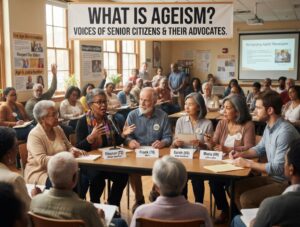
Understanding Ageism
Ageism refers to prejudice, discrimination, or stereotyping based on a person’s age. While discrimination can affect people at different stages of life, ageism most commonly impacts older adults.
Unlike many other forms of discrimination, ageism often goes unnoticed because many behaviors have become normalized over generations. People may believe they are being kind or protective while unintentionally treating seniors as less capable.
Ageism exists on several levels:
- Individual attitudes
- Workplace discrimination
- Healthcare bias
- Social stereotypes
- Public policies
- Media representation
Sometimes ageism is obvious.
An employer may refuse to hire someone because they are considered “too old.”
A doctor may dismiss legitimate symptoms as “just part of getting older.”
Financial institutions may assume an older customer cannot understand technology.
Other times, ageism is much more subtle.
People may speak only to an older person’s adult child instead of speaking directly to the senior. They may use overly simplistic language or assume an older adult cannot make decisions independently.
Although these actions may not be intentionally harmful, they communicate an unfortunate message:
“Your opinion matters less because of your age.”
The Everyday Experiences of Older Adults
One of the most powerful messages from senior citizens is that ageism often appears during ordinary daily activities.
Imagine visiting your neighborhood grocery store.
You have shopped there for years.
The employees know you.
Yet when you arrive with your adult daughter, every question is directed toward her instead of you.
“What would she like?”
“Can she use this?”
“Does she need help?”
The older adult becomes almost invisible in the conversation.
This experience may seem minor, but when repeated hundreds of times over many years, it can affect confidence, independence, and emotional well-being.
Many seniors learn to ignore these situations because they happen so frequently.
However, ignoring ageism does not make it acceptable.
Small acts of exclusion accumulate over time and reinforce harmful assumptions about aging.

Why Society Often Associates Aging with Decline
One of the greatest challenges in addressing ageism is changing how people think about aging.
Many cultures automatically connect aging with:
- Illness
- Disability
- Memory loss
- Dependence
- Loneliness
- Reduced productivity
While some older adults experience health challenges, these conditions do not define every senior.
Many individuals remain:
- Physically active
- Mentally engaged
- Professionally productive
- Socially connected
- Financially independent
- Community leaders
Unfortunately, positive examples often receive less attention than negative stories.
News reports frequently highlight rising healthcare costs associated with aging populations.
Articles may focus on long-term care shortages or increasing medical expenses.
Rarely do headlines emphasize the enormous contributions older adults continue to make every day.
This imbalance shapes public perception.
Instead of viewing seniors as active citizens, society may begin to see them primarily as recipients of services.
Seniors Continue Contributing Every Day
One of the most damaging myths about aging is the belief that older adults stop contributing once they retire.
Nothing could be further from the truth.
Across every community, seniors continue making meaningful contributions through countless activities.
Many older adults volunteer thousands of hours each year.
They mentor younger generations.
They care for grandchildren.
They support local charities.
They organize community events.
They participate in religious organizations.
They help neighbors.
Some continue working full-time.
Others operate businesses.
Many serve on nonprofit boards.
Others teach, write, coach, consult, or create art.
Even retirees who no longer receive employment income continue contributing economically.
They pay taxes.
They purchase goods and services.
They support local businesses.
They invest in communities.
Their experience helps strengthen families and organizations alike.
Viewing seniors only as consumers of healthcare or social services ignores the full picture of their economic and social impact.
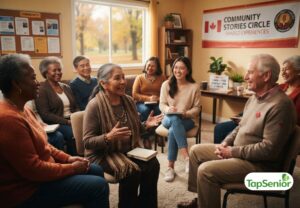
The Hidden Cost of Ageist Stereotypes
Negative stereotypes influence much more than public opinion.
They shape policies.
They affect hiring decisions.
They influence healthcare.
They even affect how seniors think about themselves.
Researchers have found that when older adults repeatedly hear negative messages about aging, those beliefs can become internalized.
This is known as self-directed ageism.
An older adult may begin thinking:
“I’m too old to learn.”
“I’m too old to travel.”
“I’m too old to exercise.”
“I’m too old to start something new.”
These beliefs often become self-fulfilling.
Instead of pursuing opportunities, individuals limit themselves based on stereotypes rather than actual ability.
In contrast, positive beliefs about aging encourage healthier lifestyles, stronger mental health, greater independence, and higher life satisfaction.
Media’s Role in Shaping Attitudes
Television, advertising, movies, and social media significantly influence perceptions of aging.
Unfortunately, older adults remain underrepresented in many forms of media.
When seniors do appear, they are often portrayed as:
- Forgetful
- Slow
- Technologically incapable
- Lonely
- Frail
- Outdated
While these characteristics may describe some individuals, they certainly do not represent an entire generation.
Advertising often reinforces another powerful message:
Looking older is undesirable.
Countless products promise to:
- Eliminate wrinkles
- Hide gray hair
- Reverse aging
- Restore youth
These marketing campaigns sometimes suggest that aging itself is a problem requiring correction.
The result is a culture that fears growing older instead of embracing it.
Healthy aging does not mean pretending to stay young forever.
It means living well at every stage of life.
Why Aging Should Never Be a Source of Shame
One of the most thoughtful perspectives shared by senior advocates is that aging is universal.
Every person who is fortunate enough to live a long life will eventually become older.
Unlike many other characteristics, age changes continuously throughout life.
Yet society often celebrates youth while treating aging as something embarrassing.
People may feel pressure to hide gray hair.
They may avoid discussing their age.
Some fear retirement because they worry about becoming invisible.
Others hesitate to ask for assistance because they do not want to appear old.
There is nothing shameful about growing older.
Aging reflects years of experience, relationships, achievements, resilience, and learning.
Instead of fearing aging, communities should celebrate longevity and recognize the wisdom that accompanies it.
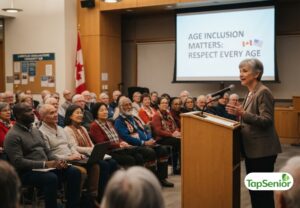
Asking for Help Is Not Weakness
Another misconception associated with aging is that needing support represents failure.
In reality, everyone needs help at different stages of life.
Children depend on parents.
Students rely on teachers.
Workers depend on colleagues.
Parents seek assistance from family.
Older adults may occasionally require transportation, home modifications, healthcare, or caregiving support.
Accepting assistance does not reduce a person’s dignity.
Rather, it enables greater independence.
For example, an older adult who uses transportation assistance may continue attending medical appointments independently.
Someone receiving home support may remain safely in their own home for many years.
Accessible services promote autonomy rather than dependence.
Communities should focus on providing practical support while respecting personal choice.
The Importance of Listening to Older Adults
One of the simplest ways to combat ageism is by listening.
Too often, decisions affecting seniors are made without including seniors themselves.
Healthcare providers.
Policy makers.
Businesses.
Families.
Community organizations.
Everyone benefits when older adults have meaningful opportunities to share their perspectives.
Listening demonstrates respect.
It also leads to better decisions because seniors understand their own needs better than anyone else.
Whether discussing transportation, healthcare, housing, technology, or community programs, older adults deserve an active voice.
True inclusion begins with conversation.
Ageism in Healthcare
Healthcare is one of the areas where ageism can have the most serious consequences. While many healthcare professionals provide compassionate and individualized care, unconscious bias toward older adults can sometimes influence medical decisions.
For example, an older patient may report persistent pain or fatigue only to hear that these symptoms are “just part of getting older.” While aging does bring natural physical changes, many symptoms deserve proper evaluation rather than being dismissed because of a person’s age.
Ageism in healthcare may appear when:
- Medical concerns are minimized without thorough investigation.
- Treatment options are limited based solely on age.
- Healthcare providers speak to family members instead of the patient.
- Preventive care is overlooked because someone is considered “too old.”
- Mental health concerns are mistaken for normal aging.
Every older adult deserves care that is based on their overall health, personal goals, and individual circumstances rather than assumptions about age.
Providing person-centered senior care helps ensure that older adults receive appropriate treatment while maintaining their dignity and independence.

Ageism in the Workplace
Although many people continue working well into their sixties, seventies, or beyond, age discrimination remains a challenge in many workplaces.
Older employees may be viewed as less adaptable, less innovative, or unwilling to learn new technology. These stereotypes ignore reality.
Many experienced professionals continue to:
- Learn new digital skills.
- Lead successful teams.
- Mentor younger employees.
- Solve complex problems through decades of experience.
- Build strong relationships with clients.
Organizations that embrace age diversity often benefit from a workforce that combines fresh perspectives with valuable institutional knowledge.
Hiring, promotions, and professional development should always focus on skills, performance, and potential rather than age.
Creating age-inclusive workplaces benefits employees, employers, and customers alike.
The Emotional Impact of Ageism
The effects of ageism extend far beyond inconvenience.
Repeated experiences of being ignored, underestimated, or excluded can gradually affect an older person’s emotional well-being.
Some common emotional consequences include:
- Reduced confidence.
- Social withdrawal.
- Increased loneliness.
- Anxiety.
- Depression.
- Loss of self-esteem.
When society repeatedly communicates that older adults are less valuable, some individuals begin believing those messages.
Conversely, communities that celebrate older adults help build confidence, encourage participation, and improve quality of life.
Simple acts of respect making eye contact, listening carefully, and involving seniors in conversations—can have a meaningful impact.
Families Play an Important Role
Families are often the first place where ageism can either be challenged or reinforced.
Even with good intentions, family members may unintentionally limit an older loved one’s independence.
Examples include:
- Making decisions without asking their opinion.
- Assuming they cannot understand technology.
- Speaking on their behalf.
- Discouraging activities they are capable of doing safely.
Supporting independence does not mean ignoring legitimate safety concerns.
Instead, it means encouraging older adults to remain involved in decisions about their own lives whenever possible.
Families can promote respect by:
- Asking rather than assuming.
- Encouraging lifelong learning.
- Supporting hobbies and interests.
- Including seniors in family discussions.
- Recognizing their life experiences and wisdom.
Strong family relationships help older adults feel valued, respected, and connected.
Communities Can Help Eliminate Ageism
Creating age-friendly communities requires action from everyone.
Local governments, businesses, healthcare providers, schools, nonprofit organizations, and community leaders all have a role to play.
Communities can support older adults by:
- Improving accessibility in public spaces.
- Expanding transportation options.
- Offering lifelong learning opportunities.
- Encouraging intergenerational activities.
- Providing volunteer opportunities.
- Supporting caregivers.
- Promoting social participation.
These initiatives do more than improve services they help reshape attitudes toward aging.
When people of different generations interact regularly, stereotypes begin to disappear.
Children who grow up knowing active, engaged older adults are more likely to develop positive attitudes about aging throughout their lives.

Why Senior Advocacy Matters
Many of the improvements in policies and services for older adults have been made possible because dedicated advocates refused to accept discrimination as inevitable.
Senior advocacy involves speaking up for the rights, dignity, and well-being of older adults.
Advocates work to improve:
- Healthcare access.
- Housing.
- Transportation.
- Financial security.
- Legal protections.
- Social inclusion.
- Long-term care.
- Community services.
Advocacy also helps educate the public about misconceptions surrounding aging.
By sharing the real experiences of seniors, advocates encourage empathy, understanding, and meaningful change.
Every individual can become an advocate by challenging ageist comments, supporting inclusive policies, and treating older adults with the respect they deserve.
Challenging Common Myths About Aging
Changing public attitudes begins by replacing myths with facts.
Myth: Older adults cannot learn new things.
Reality: People continue learning throughout life. Many seniors successfully master smartphones, computers, online banking, languages, and new hobbies.
Myth: Retirement means the end of productivity.
Reality: Many retirees contribute through volunteering, consulting, caregiving, mentoring, and community leadership.
Myth: All seniors are lonely.
Reality: While some older adults experience isolation, many maintain rich friendships, participate in clubs, travel, volunteer, and enjoy active social lives.
Myth: Older adults resist technology.
Reality: Technology adoption among seniors continues to grow. Many use video calls, online shopping, digital health tools, and social media to stay connected.
Myth: Aging always means poor health.
Reality: Although health needs may change with age, many older adults remain healthy, active, and independent for decades.
Recognizing these realities helps replace fear with understanding.
Building a More Respectful Future
As populations continue to age around the world, creating inclusive societies becomes increasingly important.
This means designing policies and environments that allow people to thrive at every stage of life.
Respect for older adults should be reflected in:
- Public policy.
- Healthcare.
- Employment.
- Education.
- Media representation.
- Community planning.
- Everyday interactions.
The goal is not simply to eliminate discrimination but to recognize aging as an important and valuable part of the human experience.
When seniors are empowered to participate fully in society, everyone benefits.
Communities become stronger.
Families become more connected.
Workplaces become more diverse.
Future generations gain role models whose experiences cannot be replaced.
Practical Ways Everyone Can Reduce Ageism
You do not need to be a policymaker or healthcare professional to make a difference.
Small everyday actions can help change attitudes toward aging.
Here are a few practical ideas:
- Speak directly to older adults rather than through someone accompanying them.
- Avoid making assumptions based solely on age.
- Use respectful language.
- Encourage independence whenever possible.
- Include seniors in conversations and decisions.
- Learn from older adults’ experiences.
- Challenge age-based stereotypes when you hear them.
- Support businesses and organizations that promote inclusion.
- Volunteer with programs serving older adults.
- Celebrate the achievements of seniors in your community.
Respect begins with recognizing that every individual deserves to be seen as a unique person rather than a stereotype.
Looking Ahead
One of the most compelling truths about ageism is that it is the only form of discrimination that nearly everyone will experience if they live long enough.
This reality should encourage empathy rather than division.
The attitudes we hold toward older adults today help shape the world we ourselves may one day live in.
Building a society that values older adults is an investment in everyone’s future.
By embracing positive aging, promoting respect for senior citizens, strengthening senior advocacy, supporting healthy aging, and encouraging age-friendly communities, we can replace outdated stereotypes with appreciation, inclusion, and opportunity.
Growing older should never mean becoming invisible.
It should mean carrying forward a lifetime of knowledge, resilience, compassion, and experience that continues to enrich families, workplaces, and communities.
Frequently Asked Questions (FAQs)
What is ageism?
Ageism is prejudice, stereotyping, or discrimination against individuals based on their age. It most commonly affects older adults and can occur in healthcare, employment, media, public services, and everyday interactions.
What are examples of ageism?
Examples include speaking to a family member instead of the older adult, assuming seniors cannot use technology, denying employment opportunities because of age, or dismissing medical concerns as “just aging.”
Why is ageism harmful?
Ageism can reduce confidence, increase loneliness, contribute to poorer physical and mental health outcomes, and limit opportunities for older adults to participate fully in society.
How can communities reduce ageism?
Communities can reduce ageism by promoting age-inclusive policies, improving accessibility, encouraging intergenerational activities, providing educational opportunities, and ensuring older adults have a voice in decision-making.
Why is senior advocacy important?
Senior advocacy helps protect the rights of older adults, improves access to services, influences public policy, raises awareness about discrimination, and promotes dignity, independence, and inclusion throughout the aging process.
Final Thoughts
Ageism is often subtle, but its effects are real. Whether it appears in casual conversations, healthcare settings, workplaces, media, or public policy, discrimination based on age diminishes the dignity and potential of older adults. The voices of seniors remind us that they are not defined by stereotypes or limitations but by decades of experience, resilience, and continued contributions to society.
As individuals, families, organizations, and governments, we all share responsibility for creating a culture where aging is respected rather than feared. By supporting older adult inclusion, encouraging healthy aging initiatives, strengthening senior advocacy programs, promoting age-friendly communities, and recognizing the lifelong value of every individual, we can ensure that growing older is viewed not as a burden but as a meaningful and respected stage of life.
Bài viết liên quan: