
Why the Future of Senior Care Depends on Community Networks. Population aging is transforming societies across the world. Countries including Canada, the United States, Australia, Japan, the United Kingdom, Germany, Singapore, and South Korea are experiencing unprecedented growth in the number of older adults who wish to remain active, healthy, and independent for as long as possible. Organizations such as the World Health Organization (WHO), healthcare providers, local communities, caregivers, senior living organizations, family members, and businesses are all searching for better ways to support aging populations. While medical care remains essential, experts increasingly recognize that the future of senior care extends far beyond hospitals and clinics. Daily access to trusted businesses, community services, wellness programs, transportation, nutrition, social engagement, and family support plays an equally important role in helping seniors enjoy a higher quality of life. This growing reality explains Why the Future of Senior Care Depends on Community Networks. Families today are not only looking for healthcare providers; they are looking for connected ecosystems that simplify everyday living, encourage independence, and reduce isolation. As more seniors prefer aging in place instead of relocating to long-term care facilities, communities need practical solutions that bring businesses, families, caregivers, and older adults together. Instead of relying on disconnected services, the next generation of senior care requires partnerships where every participant benefits. This is exactly where TapSenior introduces a fresh approach by connecting businesses and senior customers through a shared community network that rewards engagement, strengthens relationships, and creates long-term value for everyone involved.
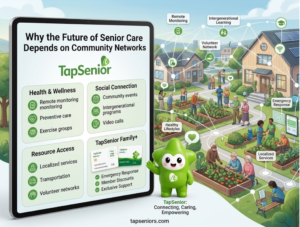
The New Reality Facing Modern Families
Growing older should never mean becoming disconnected from society. Unfortunately, many families discover that supporting an aging parent involves much more than arranging occasional doctor visits.
Parents who once managed every aspect of daily life independently may gradually need assistance with shopping, dining, transportation, wellness services, rehabilitation, home maintenance, financial planning, or simply finding trustworthy businesses they can rely on.
Adult children often face difficult questions.
How can they make sure their parents continue participating in community life?
How can they encourage healthy lifestyles without being physically present every day?
How can they reduce financial pressure while ensuring access to quality services?
These challenges become even greater when family members live in different cities or countries.
Traditional senior care systems usually focus on healthcare after problems appear. Families, however, need support long before emergencies occur.
They need everyday solutions.
They need reliable businesses.
They need trusted relationships.
Most importantly, they need a connected community.
Why Individual Services Are No Longer Enough
Many excellent businesses already serve older adults.
A pharmacy provides medications.
A restaurant offers nutritious meals.
A dental clinic delivers oral care.
A fitness center promotes active lifestyles.
A transportation company helps seniors attend appointments.
A grocery store supplies healthy food.
Each business performs its own role well.
The problem is that these services often operate independently.
A senior who regularly visits one business receives little or no benefit when visiting another.
Businesses rarely collaborate.
Customer loyalty remains limited to individual companies instead of extending throughout an entire community.
Families are forced to coordinate multiple services without a unified support system.
This fragmented experience creates unnecessary complexity for seniors who simply want convenient, trusted access to products and services.
Community Networks Create Stronger Support Systems
The strongest communities are built on relationships rather than transactions.
When businesses work together instead of competing in isolation, everyone benefits.
Older adults gain access to trusted providers.
Families gain confidence.
Businesses gain loyal customers.
Communities become more connected.
This network effect is increasingly important because senior care involves countless daily interactions beyond healthcare.
A senior might visit a café in the morning, attend physical therapy in the afternoon, purchase groceries in the evening, and enjoy recreational activities on the weekend.
Each interaction contributes to overall well-being.
Imagine if every trusted business became part of one supportive ecosystem.
Instead of isolated experiences, seniors would enjoy continuity throughout their daily lives.
That continuity creates confidence.
Confidence encourages participation.
Participation supports healthier aging.
The Emotional Importance of Belonging
Loneliness is one of the greatest hidden challenges affecting older adults.
Retirement changes daily routines.
Friends relocate.
Mobility becomes more difficult.
Children establish their own families.
Even seniors who remain physically healthy may experience social isolation.
Community networks help address this challenge by creating regular opportunities for meaningful interaction.
Visiting familiar businesses.
Recognizing friendly staff.
Participating in local events.
Meeting other seniors.
Feeling welcomed.
These simple experiences strengthen emotional well-being.
Older adults do not merely need services.
They need places where they feel recognized, respected, and valued.
Communities that encourage these relationships naturally improve quality of life.
Financial Value Also Matters
Many families carefully manage retirement budgets.
Healthcare expenses often increase with age.
Daily living costs continue rising.
Families appreciate programs that help stretch every dollar without sacrificing quality.
Community-based reward systems can provide meaningful long-term value.
Instead of receiving benefits from only one business, seniors can accumulate value while participating throughout an entire network.
This approach encourages smart spending while rewarding customer loyalty across multiple service providers.
Rather than focusing only on discounts, it promotes ongoing engagement within the local community.
This creates a sustainable cycle where both businesses and customers continue benefiting over time.

Businesses Become Partners in Healthy Aging
Businesses serving seniors already contribute to healthier communities.
Medical clinics improve health.
Restaurants encourage nutrition.
Fitness centers promote mobility.
Optical centers improve vision.
Dental professionals preserve oral health.
Transportation providers increase accessibility.
Home service companies improve safety.
When these organizations collaborate, their collective impact becomes significantly greater.
Instead of viewing themselves as separate businesses, they become contributors to a broader community mission.
Supporting older adults becomes both a social responsibility and a business opportunity.
Customer loyalty grows naturally when businesses demonstrate long-term commitment to improving people’s lives.
Families Need Simplicity
One of the biggest frustrations families experience is managing multiple providers across different locations.
Keeping track of appointments.
Finding trusted businesses.
Managing expenses.
Comparing service quality.
Helping parents remember where to go.
These responsibilities quickly become overwhelming.
Community networks simplify decision-making.
Families know participating businesses share common goals.
They know parents continue receiving benefits wherever they choose to shop or access services.
This consistency reduces uncertainty while increasing confidence.
When families trust the community around their loved ones, caregiving becomes less stressful.

Independence Should Be Encouraged, Not Replaced
Many seniors fear losing independence more than growing older itself.
They want to make their own decisions.
Choose their own restaurants.
Visit their favorite stores.
Remain socially active.
Maintain financial control.
Good senior care should strengthen independence rather than replace it.
Community networks empower seniors by providing more choices while rewarding active participation.
Instead of depending entirely on family members, older adults remain engaged with their neighborhoods and local businesses.
Maintaining independence also supports emotional well-being.
People who continue making everyday decisions often experience greater confidence and satisfaction.
Technology Can Connect Communities
Digital technology has transformed banking, transportation, education, and shopping.
Senior care is beginning the same transformation.
Technology should not replace human relationships.
Instead, it should strengthen them.
Simple digital tools can connect seniors with businesses, caregivers, families, and community organizations in practical ways.
Accessible platforms reduce barriers while encouraging participation.
When designed thoughtfully, technology becomes invisible.
The focus remains on people.
The best solutions combine digital convenience with genuine human connection.
This philosophy is becoming increasingly important as communities seek scalable ways to support aging populations.
A Better Model for the Future
This changing landscape explains Why the Future of Senior Care Depends on Community Networks.
Future success will not depend solely on hospitals, governments, or individual organizations.
It will depend on collaboration.
Businesses serving older adults cannot work independently forever.
Families cannot manage every responsibility alone.
Healthcare providers cannot address every aspect of healthy aging.
Communities need connected ecosystems where every participant contributes to improving senior well-being.
That vision requires innovation built around cooperation rather than competition.
One practical example is TapSenior, which connects senior customers with participating businesses through the TapSenior Family+ Card. Instead of treating every purchase or service as an isolated transaction, the system encourages long-term relationships across an expanding business network. Seniors can accumulate rewards while accessing products and services from participating businesses, creating additional value from everyday activities. At the same time, businesses benefit from increased customer loyalty, referral opportunities, and collaboration with other organizations serving the same community.
Rather than focusing only on selling products, this model encourages businesses to become active contributors to healthier, stronger, and more connected communities. Families gain confidence knowing their loved ones are engaging with trusted businesses that are part of a broader support ecosystem instead of navigating fragmented services on their own.
Building a Circle of Trust Around Every Senior
Growing older should never mean navigating life alone. Every senior deserves a reliable circle of support that extends beyond family members and healthcare professionals. While children and caregivers often provide love and assistance, they cannot always be available for every shopping trip, appointment, meal, or daily need.
This is where community networks become invaluable.
Imagine an older adult who regularly visits a local pharmacy, enjoys lunch at a favorite restaurant, schedules wellness appointments, shops for groceries, and participates in recreational activities. If these businesses operate independently, each interaction ends when the transaction is complete.
However, when these businesses become part of a connected network, every interaction contributes to a larger relationship.
The senior feels recognized.
Businesses understand the value of long-term customer relationships.
Families know their loved ones are engaging with trusted organizations.
Everyone becomes part of a shared community rather than isolated service providers.
This collaborative approach transforms ordinary business interactions into meaningful support that continues throughout everyday life.
Supporting Aging in Place Through Local Communities
One of the strongest preferences among today’s older adults is remaining in their own homes for as long as possible.
Home represents independence.
Home represents memories.
Home represents comfort and familiarity.
Families also recognize the emotional and financial advantages of helping parents remain safely in their communities whenever possible.
Yet aging in place requires much more than accessible housing.
Seniors need dependable businesses nearby.
They need transportation.
They need health and wellness services.
They need social opportunities.
They need everyday conveniences that encourage active living.
Community networks help make this possible.
Rather than requiring seniors to search for trustworthy providers repeatedly, participating businesses become part of an interconnected support system that encourages confidence, consistency, and long-term engagement.
The stronger the community network becomes, the easier it is for seniors to continue living independently while maintaining meaningful connections with people around them.

Rewarding Everyday Participation
Healthy aging is built on consistent habits rather than occasional events.
Buying nutritious food.
Attending wellness appointments.
Enjoying social outings.
Participating in recreational activities.
Supporting local businesses.
Everyday decisions shape long-term health outcomes.
Many traditional loyalty programs reward customers within a single company.
Community-based reward systems expand this concept by recognizing participation across multiple businesses.
Instead of limiting benefits to one location, seniors continue earning value while engaging with different participating organizations.
This creates an incentive to remain active within the community instead of becoming isolated.
Families also appreciate knowing that routine activities continue generating additional value over time.
Rather than simply spending money, seniors receive recognition for remaining connected with trusted businesses.
Why Businesses Benefit From Collaboration
Businesses often invest significant resources attracting new customers.
Advertising.
Marketing campaigns.
Promotional discounts.
Referral programs.
Yet one of the most valuable sources of sustainable growth comes from loyal customers who return regularly and recommend businesses to others.
Community networks naturally strengthen this loyalty.
When businesses collaborate rather than compete independently, everyone gains access to broader customer relationships.
A customer introduced through one participating business may later discover several others within the same network.
Instead of losing customers to unrelated competitors, businesses help one another grow.
This cooperative approach creates mutual success.
Each participating organization contributes to strengthening the overall community while simultaneously expanding its own opportunities.
The result is a healthier local economy supported by long-term customer relationships.
Creating Shared Value for Families
Families often worry about balancing quality care with rising living costs.
They want their parents to enjoy active lifestyles without unnecessary financial pressure.
They also want confidence that every service provider genuinely values older adults.
Community networks create shared value because benefits extend beyond individual purchases.
When seniors remain engaged with participating businesses, they continue accumulating rewards that can later help reduce costs across the network.
This flexible approach provides practical advantages while encouraging continued participation in community life.
Children appreciate knowing their parents receive additional value from activities they already enjoy.
Instead of focusing solely on expenses, families begin seeing everyday participation as an investment in healthier, more connected living.
A Practical Example of Connected Communities
Consider a retired couple living independently.
During the week they visit a neighborhood café, purchase groceries, schedule health screenings, enjoy personal wellness services, and occasionally attend community events.
Without a connected system, every visit remains separate.
Rewards are limited.
Relationships remain isolated.
Long-term engagement becomes difficult.
Now imagine the same couple participating within one connected business network.
Every participating business recognizes the same membership.
Every purchase contributes to future value.
Every interaction strengthens relationships across the community.
The experience becomes much more than shopping.
It becomes belonging.
This is the kind of practical innovation that communities increasingly need as populations continue aging.
How TapSenior Strengthens Community Networks
A connected community requires more than technology alone.
It requires trust.
It requires cooperation.
It requires incentives that encourage everyone to participate.
This is the philosophy behind TapSenior.
Through the TapSenior Family+ Card, older adults can create their own membership or receive one directly from participating businesses.
As seniors purchase products or use services within the network, they accumulate reward points that can later be redeemed across participating businesses instead of remaining limited to one location.
This creates meaningful flexibility for senior customers.
Businesses also receive important advantages.
When one participating business introduces a customer into the network, that relationship continues creating opportunities even when the customer later visits other participating businesses.
Rather than competing for isolated transactions, businesses become long-term partners contributing to one another’s success.
This collaborative model encourages stronger customer loyalty while helping local businesses expand through shared relationships.
Most importantly, seniors remain at the center of the entire ecosystem.
Every participant benefits when older adults continue living active, connected lives.
Looking Beyond Healthcare
The future of senior care is not defined solely by hospitals, prescriptions, or medical treatments.
Health begins long before illness appears.
It begins with healthy meals.
Safe transportation.
Social interaction.
Daily movement.
Trusted relationships.
Financial confidence.
Community participation.
When these elements work together, seniors experience better overall well-being.
Community networks recognize that quality of life depends on everyday experiences as much as clinical care.
The most successful communities will be those that help seniors remain engaged, respected, and supported throughout every stage of aging.
Why the Future of Senior Care Depends on Community Networks
The answer becomes increasingly clear.
Communities are stronger when businesses cooperate.
Families feel more confident when trusted services are connected.
Older adults remain independent when they have convenient access to reliable businesses.
Everyone benefits when participation creates lasting value.
This is why TapSenior represents more than a customer rewards platform.
It introduces a new way of thinking about senior care.
Instead of viewing older adults only as healthcare patients, the model recognizes them as active community members whose everyday choices deserve encouragement and recognition.
By connecting businesses, families, and seniors through one collaborative ecosystem, communities can build stronger relationships while creating meaningful benefits for everyone involved.
As populations continue aging across the world, the organizations that succeed will be those that understand one important truth.
The future of senior care will not be built by one business.
It will not be built by one hospital.
It will not be built by one caregiver.
It will be built by connected communities working together every day.
That is precisely Why the Future of Senior Care Depends on Community Networks.
Conclusion
Every family hopes their loved ones can enjoy later life with dignity, independence, and meaningful social connections. Achieving this vision requires more than excellent healthcare. It requires neighborhoods where businesses, service providers, families, and seniors support one another through lasting relationships.
Community networks make those relationships possible. They encourage active lifestyles, strengthen local economies, reward customer loyalty, and help seniors remain engaged with the people and businesses they trust most.
As societies continue adapting to an aging population, collaborative ecosystems will become increasingly important. Solutions that unite businesses instead of separating them create greater value for everyone involved.
By connecting senior customers with participating businesses through a shared rewards network, TapSenior demonstrates how cooperation can improve everyday life for older adults while helping businesses build stronger customer relationships. This approach supports healthier communities, encourages independence, and offers a practical model for the future.
When families, businesses, and seniors move forward together, community becomes more than a place to live.
It becomes the foundation for aging with confidence, purpose, and connection.
Bài viết liên quan: