
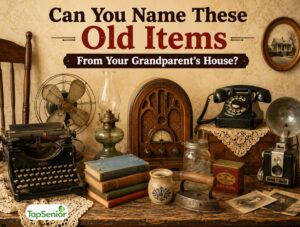
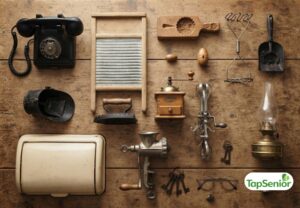
Can You Name These Old Items From Your Grandparent’s House?. Have you ever walked into your grandparents’ home and noticed shelves filled with curious objects that seemed mysterious at first glance? Perhaps there was a heavy iron sitting by the laundry room, a hand-cranked kitchen gadget tucked into a cabinet, or a beautifully crafted wooden tool whose purpose was no longer obvious. While younger generations may see these items as antiques, many older adults instantly recognize them because they were once part of everyday life.
Across Canada, countless seniors grew up in homes where daily chores required skill, patience, and practical tools rather than electricity or digital technology. Every object had a purpose, every household task took effort, and many family memories were built around these familiar possessions. Today, these vintage household items have become valuable reminders of simpler times, preserving stories that connect generations.
Recognizing old household objects is more than a fun guessing game. It also stimulates brain health, encourages meaningful conversations, and helps preserve family history. Looking at familiar objects often triggers long-term memories, making this type of activity especially enjoyable for older adults. Families, caregivers, and friends can use these nostalgic moments to encourage storytelling, strengthen emotional connections, and promote healthy aging through conversation.
For seniors living independently or choosing aging in place, reminiscing about familiar objects can be a relaxing and rewarding activity. Sharing memories about everyday life decades ago helps maintain cognitive engagement while reminding older adults of the experiences that shaped their lives. Whether it’s discussing old kitchen gadgets, farming tools, or laundry equipment, these conversations often lead to laughter, learning, and unforgettable family moments.
In this article, we’ll explore some fascinating household items that many grandparents used every day. See how many you can identify before reading the explanation. You may be surprised by how much these forgotten objects reveal about history, innovation, and daily life. Along the way, you’ll discover interesting facts that can spark conversations with loved ones and support memory care, senior wellness, and lifelong learning.
Why Do Old Household Items Matter?
Modern homes are filled with electronic devices that perform tasks almost instantly. Washing machines clean clothes automatically, electric mixers prepare meals within minutes, and smartphones replace dozens of traditional tools.
A century ago, life looked very different.
Most household tasks required physical effort, creativity, and specialized equipment. Families repaired items instead of replacing them, and many tools lasted for generations.
These objects tell stories about how people lived before modern conveniences became common. Every scratch, dent, and worn handle reflects years of everyday use.
For seniors, these items are not museum artifacts.
They are reminders of childhood.
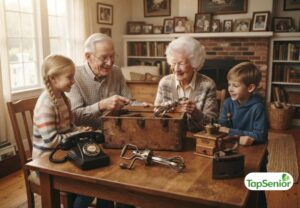
They recall helping parents prepare meals, working on family farms, washing clothes by hand, or gathering around the kitchen table.
These memories often remain vivid because they are connected to daily routines repeated thousands of times throughout life.
That makes vintage household items excellent conversation starters between generations.
Grandchildren learn history directly from those who experienced it, while older adults enjoy sharing meaningful stories.
Why Nostalgia Is Good for Older Adults
Research has shown that reminiscing can positively affect emotional well-being and cognitive function.
Looking at familiar objects encourages older adults to recall names, places, routines, and people connected with those experiences.
This process activates areas of the brain involved in long-term memory.
Activities centered around nostalgia can also:
Improve social interaction.
Encourage storytelling.
Reduce feelings of loneliness.
Promote confidence by allowing seniors to share their expertise.
Strengthen family relationships.
Support brain health through gentle cognitive stimulation.
For caregivers, using vintage household items as conversation prompts is one of the easiest ways to create enjoyable interactions.
Now let’s see how many of these classic objects you can recognize.
Item #1: The Cast Iron Sad Iron
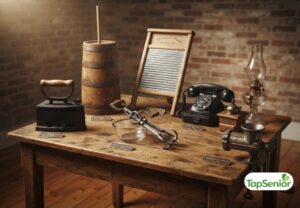
At first glance, this heavy piece of iron may look like a doorstop or decorative object.
Can you guess what it was used for?
The answer is clothing.
Long before electric irons existed, families heated these solid cast iron tools directly on a wood stove or over hot coals.
Once hot enough, the iron was carefully carried using a cloth-covered handle and pressed onto clothing to remove wrinkles.
The name “sad iron” doesn’t refer to sadness.
Instead, “sad” meant solid or heavy in older English.
Many weighed between five and ten pounds.
Laundry day required enormous effort.
As one iron cooled, another was heated on the stove.
Women often rotated several irons throughout the day.
Imagine ironing an entire family’s clothes using nothing but heated metal.
It was exhausting work.
Yet for generations, this was completely normal.
Memory Question
Did your grandparents ever tell you about ironing clothes before electricity became common?
Item #2: The Butter Churn
This tall wooden container with a long handle often confuses younger people.
Many assume it’s a decorative barrel.
In reality, it was used to make fresh butter.
Cream was poured inside the churn.
A wooden paddle attached to a long stick was repeatedly moved up and down.
After many minutes of hard work, the cream separated into butter and buttermilk.
Making butter was often a family activity.
Children frequently helped by taking turns churning.
Fresh homemade butter became a staple on tables across rural Canada.
Although supermarkets now offer endless varieties, many older adults still remember the rich taste of homemade butter made from fresh cream.
Fun Fact
Depending on the temperature and cream quality, making butter could take anywhere from fifteen minutes to over an hour.
Item #3: The Hand-Crank Egg Beater
Before electric mixers transformed kitchens, cooks relied on this clever invention.
The hand-crank egg beater featured rotating metal blades powered by turning a side handle.
Although simple by today’s standards, it represented a major improvement over mixing ingredients by hand.
Families used it to prepare:
Cake batter
Mashed potatoes
Whipped cream
Pancake mix
Cookies
Many older adults still remember hearing the rhythmic clicking sound as someone rapidly turned the crank while preparing Sunday desserts.
Even today, vintage hand mixers remain popular among collectors because they continue working without electricity.
Memory Question
Do you remember helping bake cookies using one of these mixers?
Item #4: The Washboard
Before automatic washing machines, cleaning clothes demanded serious physical effort.
The washboard consisted of a wooden frame with a corrugated metal surface.
Clothing was soaked in soapy water before being rubbed vigorously across the ridges.
The friction removed dirt and stains.
Laundry could take an entire day.
Families often washed clothing outdoors during warmer months.
During Canadian winters, laundry became even more challenging.
Some households boiled clothes first before scrubbing them clean.
Children frequently helped rinse garments and hang them outside to dry.
For many seniors, the washboard represents determination and teamwork.
Everyone contributed to household chores.
Interesting Fact
Washboard music later became popular in folk and jazz bands, where musicians played the ridged surface as a percussion instrument.
Item #5: The Manual Coffee Grinder
Coffee lovers may recognize this charming wooden box with a small drawer.
Before electric coffee grinders, coffee beans were ground by hand.
Whole beans were poured into the top.
Turning a metal crank crushed them between adjustable burrs.
Fresh grounds collected inside the tiny drawer below.
Grinding coffee each morning became part of the daily routine in countless homes.
The aroma filled kitchens long before the coffee was brewed.
Many families believed freshly ground beans produced a richer flavor than pre-ground coffee.
Today, antique coffee grinders are highly collectible because they combine beauty with practical craftsmanship.
Conversation Starter
Does anyone in your family still own an old coffee grinder?
Item #6: The Rotary Telephone
Younger generations often find rotary phones fascinating.
Instead of tapping a screen or pressing buttons, users placed a finger inside a numbered hole and rotated the dial until it stopped.
Each number required a separate turn.
Dialing an entire phone number could take nearly a minute.
Accidentally dialing the wrong digit meant starting all over again.
Despite this inconvenience, rotary phones were incredibly durable.
Many lasted for decades.
For seniors, hearing the familiar ring of a rotary telephone often brings back memories of conversations with relatives, exciting news, and family celebrations.
These phones remind us how communication has evolved over the past century.
Did You Know?
Some rotary telephones from the 1950s remain fully functional today.
Item #7: The Icebox
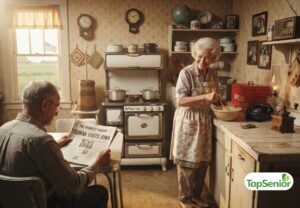
Before refrigerators became common, families used iceboxes to keep food cold.
An icebox looked much like a cabinet.
Inside, a large block of ice cooled the storage compartments below.
Ice deliveries were once a regular service in many Canadian communities.
The “ice man” delivered heavy blocks that homeowners placed inside the insulated compartment.
As the ice slowly melted, water drained into a removable tray.
Although less convenient than modern refrigerators, iceboxes significantly extended food freshness.
For many grandparents, waiting for the weekly ice delivery was simply part of everyday life.
Children sometimes looked forward to seeing the delivery wagon arrive.
Memory Challenge
Can you imagine planning meals based on how quickly the ice would melt?
Item #8: The Manual Meat Grinder
Mounted securely to the edge of a kitchen table, this cast iron tool transformed chunks of meat into ground meat by turning a sturdy crank.
Families commonly used it to prepare:
Hamburgers
Sausages
Meatloaf
Stuffing
Homemade recipes varied from household to household, and grinding meat at home allowed families to control ingredients and reduce waste.
Nothing went unused.
Many older adults remember helping feed pieces of meat into the grinder while another family member turned the handle.
Although electric grinders now complete the task within seconds, manual versions remain surprisingly effective.
Some families still use them today for traditional recipes passed down through generations.
Fun Fact
Many antique meat grinders are over one hundred years old and continue functioning perfectly because they were built from durable cast iron.
Why These Objects Continue to Fascinate Us
The appeal of these vintage household items extends far beyond their practical use. They represent a time when everyday life moved at a slower pace, and people relied more on craftsmanship, patience, and cooperation than on technology. Every object required hands-on effort, whether it was preparing meals, washing clothes, ironing garments, or preserving food. As a result, these tools became closely tied to family traditions and personal memories.
For older adults, recognizing these items often sparks conversations that might otherwise never happen. A simple question like, “Do you remember using one of these?” can lead to stories about childhood, parents, siblings, neighbors, holidays, or life on the family farm. These shared memories strengthen relationships while encouraging mental engagement, making nostalgia a valuable part of memory care and senior wellness.
Families can make these moments even more enjoyable by turning them into friendly guessing games. Show a photograph of an old object, ask everyone to identify it, and invite older relatives to explain how it was used. Not only does this preserve family history, but it also gives seniors an opportunity to pass along knowledge that cannot be found in textbooks.
Item #9: The Kerosene Lamp
Before electricity reached every community, evenings were illuminated by the warm glow of kerosene lamps.
These lamps featured a glass chimney surrounding a wick that absorbed kerosene from a small reservoir. Lighting the wick produced a steady flame that brightened kitchens, bedrooms, and living rooms after sunset.
Families often gathered around a single lamp to read, sew, play games, or enjoy conversation. The gentle light created an atmosphere that many seniors still remember fondly.
Of course, using kerosene lamps required care. The chimney needed regular cleaning to remove soot, and the wick had to be trimmed to prevent excessive smoke.
Although electric lighting eventually replaced them, kerosene lamps remain treasured decorative pieces and reminders of a slower pace of life.
Memory Question
Did your grandparents ever tell stories about life before electricity arrived in their neighborhood?
Item #10: The Wash Wringer
Imagine washing an entire family’s clothing by hand and then trying to squeeze out every drop of water.
That challenge inspired the invention of the wash wringer.
Mounted on top of a wash tub, the device contained two thick rollers positioned closely together.
After washing clothes, people turned a hand crank to feed wet garments through the rollers.
The pressure forced out much of the water before the clothes were hung outside to dry.
While incredibly useful, wringers required caution.
Loose sleeves or fingers could become caught between the rollers if users weren’t paying attention.
Many older adults vividly remember helping with laundry while parents carefully operated the wringer.

Item #11: The Bread Box
Long before plastic storage containers became common, kitchens often included a beautifully crafted bread box.
Usually made from wood or metal, bread boxes helped keep homemade bread fresh for several days.
Proper air circulation prevented bread from drying out too quickly while also reducing excess moisture that encouraged mold growth.
Since many families baked bread at home every week, having a dedicated storage container made perfect sense.
Today, bread boxes have become popular again among people who enjoy homemade baking and vintage kitchen décor.
Fun Fact
Fresh homemade bread was often baked once or twice each week, making the bread box one of the busiest items in the kitchen.
Item #12: The Manual Can Opener
Opening canned food wasn’t always as simple as pressing a button.
Early can openers required considerable strength and patience.
Some resembled sharp metal keys, while later versions used rotating cutting wheels powered by hand.
Canned food became increasingly important during the twentieth century because it allowed families to preserve vegetables, fruits, soups, and meats for long periods.
For many seniors, learning to use a manual can opener was one of the first kitchen skills taught by parents.
Although electric can openers are common today, manual versions remain reliable backup tools found in countless Canadian homes.
Item #13: The Potato Masher
Simple, durable, and remarkably effective, the potato masher has remained largely unchanged for generations.
Consisting of a sturdy handle attached to a flat metal plate or wire frame, it transformed boiled potatoes into creamy mashed potatoes with repeated downward pressure.
Family dinners often featured homemade mashed potatoes prepared entirely by hand.
Many grandparents insisted that hand-mashed potatoes tasted better than those made with electric appliances because the texture remained light and fluffy.
Beyond potatoes, mashers were also used for squash, carrots, turnips, and other vegetables harvested from home gardens.
Conversation Starter
What’s your family’s favorite comfort food that includes mashed potatoes?
Item #14: The Coal Scuttle
Heating homes during Canadian winters once required much more than adjusting a thermostat.
Families using coal-burning stoves needed a sturdy metal container known as a coal scuttle.
This bucket stored coal indoors and allowed homeowners to carry fuel safely from outdoor storage to the stove.
Keeping the fire burning throughout cold winter nights was essential for warmth, cooking, and even heating water.
Children often helped carry small amounts of coal, learning responsibility from an early age.
Although central heating has made coal scuttles obsolete in most homes, they remain symbols of resilience and preparation during harsh Canadian winters.
Item #15: The Sock Darner
Before inexpensive clothing became widely available, repairing garments was far more common than replacing them.
The sock darner was a smooth wooden or ceramic egg-shaped tool placed inside a worn sock while holes were carefully stitched closed.
This simple device kept fabric stretched tightly, making repairs easier and more durable.
Many households regularly repaired socks, sweaters, gloves, and children’s clothing.
Nothing was wasted if it could still be fixed.
For seniors who lived through periods of economic hardship, repairing clothing wasn’t simply a hobby.
It was an important life skill.
Fun Fact
Some beautifully carved wooden sock darners have become valuable collectibles because of their craftsmanship.
Item #16: The Butter Mold
Homemade butter often wasn’t served directly from the churn.
Instead, families pressed it into decorative wooden butter molds.
These molds featured carved designs including flowers, leaves, stars, or family initials.
The finished butter looked elegant enough for special dinners and holiday celebrations.
Presentation mattered even in everyday life.
Many rural families took pride in serving beautifully shaped butter alongside fresh bread.
Today, antique butter molds offer a glimpse into the artistry that once accompanied ordinary household tasks.
Why Older Adults Often Remember These Objects Instantly
One of the remarkable characteristics of human memory is that experiences repeated over many years become deeply embedded in the brain. Household routines such as baking bread, washing clothes, polishing shoes, or preparing meals were performed almost every day. Because these activities were repeated thousands of times, the tools associated with them became unforgettable.
This is one reason why older adults can often describe these objects in vivid detail. They may remember the sound of a hand-crank mixer, the smell of fresh bread cooling in the kitchen, or the warmth of a wood-burning stove on a winter morning. These sensory memories are often connected to emotions, family traditions, and meaningful life events, making them easier to recall even decades later.
For families and caregivers, discussing familiar household items can encourage storytelling without feeling like a formal memory exercise. Instead of asking direct questions about the past, simply showing an old photograph or object may naturally inspire conversations that flow from one memory to another. This approach supports brain health while creating enjoyable experiences for everyone involved.
Turning Old Objects Into Fun Family Activities
Vintage household items offer wonderful opportunities to bring generations together. Whether you have inherited antiques or simply find pictures online, they can become the centerpiece of engaging family activities.
Here are a few ideas:
Invite grandparents to identify each object before anyone else guesses.
Ask older relatives how the item was used and whether they ever owned one.
Encourage children to compare the antique version with its modern equivalent.
Create a family scrapbook featuring photographs and stories about old household tools.
Visit a local museum or historical village where many of these objects are displayed.
These activities encourage conversation, laughter, and shared learning while helping preserve family history for future generations.
Why Preserving These Memories Matters
Technology continues to change at an incredible pace. Many objects that were once essential have disappeared within a single generation.
Without conversations between younger and older family members, much of this everyday history could easily be forgotten.
Every vintage household item represents more than a practical tool.
It reflects the values of its time.
Patience.
Resourcefulness.
Craftsmanship.
Hard work.
Community.
These qualities shaped generations of Canadians and continue to inspire families today.
Listening to older adults describe how they lived provides valuable insight into resilience and problem-solving. It also reminds younger generations that comfort and convenience were earned through decades of innovation.
Preserving these memories honors not only the objects themselves but also the people who used them.
How Nostalgia Supports Healthy Aging
Nostalgia is far more than simply remembering the past. Research suggests that reminiscing can provide meaningful emotional and cognitive benefits for many older adults. Looking at familiar household objects often encourages seniors to recall names, places, routines, and important life events that remain deeply stored in long-term memory.
For those choosing aging in place, nostalgic activities can easily become part of everyday life. Family members might spend an afternoon sorting through old photographs, exploring antique collections, or identifying vintage kitchen tools together. These relaxed conversations promote social connection while encouraging curiosity and mental engagement.
Community centers, libraries, museums, and senior organizations across Canada also organize history-themed events where older adults can share personal stories about life in earlier decades. These programs not only celebrate local heritage but also support independent living by encouraging ongoing participation in meaningful activities.
Caregivers can benefit as well. Understanding the personal history behind familiar objects often strengthens relationships and creates opportunities for more personalized care. Something as simple as recognizing an old coffee grinder or butter churn can become the beginning of a heartfelt conversation that helps seniors feel valued, heard, and connected.
Frequently Asked Questions
Why do older adults remember vintage household items so well?
Many of these tools were used every day for years or even decades. Repetition, combined with strong emotional connections to family life, makes these memories particularly long-lasting.
Can looking at old household objects help memory?
While vintage objects are not a medical treatment, they can encourage conversation, storytelling, and mental engagement. Many families use nostalgic activities to support memory care in enjoyable and meaningful ways.
Where can I see these antique items today?
Many local museums, historical villages, heritage farms, and antique shops throughout Canada display household tools from the late nineteenth and early twentieth centuries. Community heritage festivals are another excellent place to explore everyday objects from the past.
Are these objects still usable?
Surprisingly, many are. Cast iron irons, coffee grinders, meat grinders, bread boxes, and butter molds were built to last. Collectors and hobbyists continue using some of these tools for traditional cooking, home décor, or historical demonstrations.
How can families encourage grandparents to share their memories?
Start with open-ended questions and genuine curiosity. Showing a photograph of an unfamiliar object and asking, “Have you ever used one of these?” often leads to wonderful stories. Recording these conversations, with permission, is a meaningful way to preserve family history for future generations.
Conclusion
Every forgotten household item tells a story. Whether it is a heavy sad iron, a hand-cranked egg beater, a wooden butter churn, or a rotary telephone, these objects remind us that everyday life once depended on patience, creativity, and practical skills. What may seem like an antique today was once an indispensable part of family routines across Canada.
For older adults, recognizing these familiar tools can unlock treasured memories, encourage conversation, and strengthen connections with children and grandchildren. For younger generations, learning about these objects offers a fascinating glimpse into the resilience and ingenuity of those who came before them.
Exploring vintage household items is more than a trip down memory lane. It is an opportunity to celebrate family traditions, preserve personal history, and support healthy aging, activities for seniors, brain health, memory care, independent living, and caregiver support through meaningful conversations.
At TapSeniors, we believe every life story deserves to be shared. Whether you’re spending time with aging parents, visiting grandparents, or supporting an older loved one, taking a few moments to ask about the objects that shaped their daily lives can lead to unforgettable conversations. Sometimes, the simplest household item holds the richest memories and those memories are worth preserving for generations to come.
Bài viết liên quan: