
Senior Travel Tips for Safe and Comfortable Trips. Travel has always been one of life’s greatest pleasures. It offers opportunities to discover new places, reconnect with loved ones, experience different cultures, and create unforgettable memories. For older adults, traveling can also improve emotional well-being, encourage physical activity, reduce stress, and strengthen social connections. Whether it’s a weekend getaway, a cross-country road trip, or an international vacation, traveling during retirement allows seniors to enjoy life with greater flexibility and freedom.
However, successful travel requires more thoughtful preparation as we age. Changes in mobility, health conditions, medication schedules, and energy levels mean that careful planning becomes essential. Fortunately, with the right approach, seniors can continue exploring the world safely and comfortably while minimizing unnecessary risks.
This comprehensive guide provides the best senior travel tips, practical advice, and expert recommendations for making every journey enjoyable. From choosing the right destination and packing efficiently to staying healthy on the road and navigating airports with confidence, these strategies will help older travelers experience stress-free adventures.
Whether you’re planning your first retirement vacation or you’re already an experienced traveler, these safe travel tips for seniors will help ensure every trip becomes a wonderful experience.

Why Travel Is So Important for Seniors
Many people think travel is simply about sightseeing, but for seniors, it offers much more than beautiful landscapes.
Travel provides opportunities to stay mentally active by learning new things, solving everyday travel challenges, and interacting with different people. Studies have shown that lifelong learning and new experiences help stimulate brain function and may contribute to maintaining cognitive health.
Physical activity naturally increases during vacations. Walking through museums, exploring parks, strolling historic neighborhoods, or simply navigating airports encourages movement that supports cardiovascular health and muscle strength.
Perhaps even more importantly, travel nurtures emotional wellness. Visiting family, spending time with grandchildren, reconnecting with old friends, or enjoying peaceful natural settings can significantly reduce feelings of loneliness and isolation.
The combination of physical activity, social interaction, and mental stimulation makes travel one of the most rewarding lifestyle choices for older adults.
Plan Your Trip Well in Advance
One of the most valuable travel safety tips for seniors is to begin planning several months before departure.
Early planning provides enough time to:
- Schedule medical appointments.
- Renew passports.
- Purchase travel insurance.
- Reserve accessible accommodations.
- Compare transportation options.
- Arrange medication refills.
- Research local healthcare facilities.
Waiting until the last minute often increases stress and limits available options, especially for accessible hotel rooms or flights with preferred seating.
Creating a travel checklist can help ensure nothing important is forgotten.
Include items such as:
- Identification documents
- Insurance information
- Emergency contacts
- Medication list
- Flight confirmations
- Hotel reservations
- Transportation bookings
- Copies of important documents
The more organized your preparations, the more relaxing your vacation becomes.
Choose Destinations That Match Your Comfort Level
Retirement offers incredible freedom, but not every destination is ideal for every traveler.
Instead of selecting locations based solely on popularity, consider destinations that support comfort and accessibility.
Look for places offering:
- Smooth sidewalks
- Reliable public transportation
- Accessible attractions
- Mild weather
- Nearby hospitals
- Quality accommodations
- Comfortable walking distances
For many seniors, slower-paced destinations often provide richer experiences than rushing through crowded tourist attractions.
National parks with scenic drives, charming coastal towns, river cruises, and cultural cities often make excellent choices.
When researching destinations, pay attention to average daily walking requirements, transportation availability, and climate during your planned travel dates.

Schedule a Medical Checkup Before Traveling
Health preparation is one of the smartest travel tips for older adults.
Visit your healthcare provider several weeks before departure.
Discuss:
- Your travel destination
- Planned activities
- Existing medical conditions
- Vaccination recommendations
- Medication adjustments
- Emergency plans
Your physician can also provide written prescriptions in case medications need replacement during your trip.
If traveling internationally, ask whether any additional immunizations are recommended.
It’s also wise to request a brief medical summary that includes:
- Medical history
- Current diagnoses
- Allergies
- Blood type
- Current medications
- Physician contact information
This document can be extremely valuable during emergencies.
Purchase Comprehensive Travel Insurance
Unexpected situations can happen to travelers of any age, but seniors often face greater financial risks due to medical expenses.
A quality travel insurance policy may cover:
- Emergency medical care
- Hospitalization
- Emergency evacuation
- Trip cancellation
- Trip interruption
- Lost luggage
- Flight delays
- Prescription replacement
Carefully read policy details before purchasing.
Understand exclusions related to pre-existing medical conditions and verify coverage limits for your destination.
Travel insurance often provides peace of mind that allows seniors to enjoy vacations more confidently.
Pack Smart Without Overpacking
Heavy luggage can become one of the biggest travel challenges.
Choose lightweight suitcases with smooth rolling wheels and sturdy handles.
Pack versatile clothing that can be mixed and matched rather than bringing separate outfits for every occasion.
Important packing essentials include:
- Comfortable walking shoes
- Weather-appropriate clothing
- Extra eyeglasses
- Phone charger
- Portable battery
- Travel pillow
- Compression socks
- Refillable water bottle
- Personal hygiene supplies
- Copies of important documents
Leave some extra room for souvenirs instead of filling every inch of your suitcase.
A lighter suitcase makes moving through airports and hotels much easier.

Organize Medications Carefully
Medication management deserves special attention during travel.
Always carry medications in your carry-on luggage rather than checked baggage.
Keep medicines in their original labeled containers.
Bring enough medication for your entire trip plus several additional days in case unexpected delays occur.
Use a pill organizer to simplify daily schedules while keeping original prescription bottles available if requested by airport security.
Set reminders on your phone for medication times, especially when crossing time zones.
Don’t forget:
- Blood pressure medication
- Diabetes supplies
- Inhalers
- Emergency medications
- Pain relievers
- Motion sickness medication
- First aid supplies
Proper planning prevents unnecessary interruptions during your vacation.
Stay Hydrated Throughout Your Journey
Many seniors become dehydrated more easily than younger adults.
Airplane cabins, hot climates, and long sightseeing days increase dehydration risks.
Drink water regularly even if you don’t feel thirsty.
Limit beverages that contribute to dehydration such as excessive alcohol or caffeinated drinks.
Carrying a reusable water bottle encourages frequent hydration.
Signs of dehydration include:
- Fatigue
- Headaches
- Dizziness
- Dry mouth
- Confusion
- Muscle cramps
Staying hydrated also reduces fatigue and supports better circulation during long travel days.
Dress Comfortably for Long Trips
Comfortable clothing makes a remarkable difference during extended flights, train rides, or road trips.
Wear loose-fitting, breathable fabrics.
Layer clothing because airplane temperatures often fluctuate.
Choose shoes that are easy to remove during airport security screenings while still providing excellent walking support.
Compression socks may help reduce swelling during long flights by improving blood circulation.
Avoid clothing that restricts movement or becomes uncomfortable after sitting for several hours.
Comfort should always take priority over fashion during travel days.
Arrive Early at Airports
Airports can be overwhelming.
Giving yourself extra time reduces anxiety and allows for unexpected delays.
Arriving at least three hours before international flights and two hours before domestic flights provides enough time for:
- Security screening
- Restroom breaks
- Meal stops
- Boarding assistance
- Wheelchair services if needed
Many airports also offer senior assistance programs.
Don’t hesitate to request help carrying luggage or navigating large terminals.
Travel should begin calmly rather than feeling rushed.
Request Accessibility Services
Many seniors don’t realize how many helpful travel services are available.
Airlines, cruise companies, hotels, and train operators frequently provide:
- Wheelchair assistance
- Priority boarding
- Accessible seating
- Mobility assistance
- Golf cart transportation
- Elevator access
- Accessible hotel rooms
These services are usually free but often require advance reservations.
Using available accommodations helps conserve energy for enjoying your destination instead of exhausting yourself during transportation.
Keep Important Documents Secure
Protecting identification documents is essential.
Carry:
- Passport
- Driver’s license
- Insurance cards
- Medical information
- Credit cards
- Emergency contacts
Store originals in a secure travel wallet.
Keep digital copies stored securely online and paper copies packed separately from originals.
If documents become lost, replacement becomes much easier.
Avoid carrying all cash in one location.
Divide money between multiple secure places.
Using hotel safes for valuables provides additional protection.
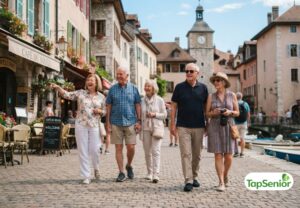
Stay Connected with Family
Modern technology makes staying connected easier than ever.
Before leaving, share:
- Flight information
- Hotel addresses
- Daily itinerary
- Emergency contacts
Regular check-ins reassure family members and provide peace of mind.
Smartphones also allow easy access to:
- Maps
- Translation apps
- Weather forecasts
- Emergency services
- Video calls
Portable charging banks help keep devices powered throughout busy sightseeing days.
Choose Comfortable Transportation
Long travel days can quickly become exhausting.
Whenever possible, select transportation options that prioritize comfort over speed.
Direct flights reduce airport transfers.
Train travel often offers more legroom than airplanes.
Private transportation can reduce stress when navigating unfamiliar cities.
For local transportation, consider reputable ride services designed for older adults whenever available.
Comfortable transportation often sets the tone for the entire vacation.
Take Frequent Breaks
Many enthusiastic travelers try to accomplish too much in one day.
Instead of visiting six attractions daily, choose two or three meaningful experiences.
Schedule regular rest periods.
Sit at cafés.
Enjoy scenic parks.
Take afternoon breaks at your hotel.
These pauses help conserve energy while allowing you to fully appreciate each destination instead of rushing from place to place.
Quality experiences almost always outweigh quantity.
Listen to Your Body
One of the wisest healthy travel tips for seniors is recognizing personal limits.
If you feel tired, rest.
If the weather becomes too hot, seek shade.
If walking becomes painful, use available transportation.
Travel should never feel like endurance training.
Being flexible allows you to enjoy each destination without unnecessary physical strain.
Remember that vacations exist for enjoyment, not competition.
Eat Healthy While Traveling
One of the easiest habits to lose during vacation is maintaining a balanced diet. New destinations often tempt travelers with delicious local specialties, desserts, and oversized restaurant portions. While enjoying regional cuisine is part of the travel experience, seniors should aim for moderation to maintain energy and avoid digestive discomfort.
Try to include fruits, vegetables, lean proteins, and whole grains whenever possible. These foods help support the immune system and provide steady energy throughout the day.
Don’t skip breakfast before sightseeing. A nutritious morning meal can help stabilize blood sugar levels and reduce fatigue during long excursions.
Healthy snack options include:
- Fresh fruit
- Unsalted nuts
- Whole grain crackers
- Yogurt
- Protein bars
- Cheese sticks
Having nutritious snacks readily available can prevent long periods without eating, especially during delays or extended tours.
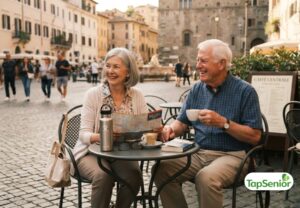
Practice Good Food and Water Safety
Food safety becomes increasingly important while traveling, particularly in unfamiliar destinations.
Wash your hands frequently before eating.
Use hand sanitizer when soap and water are unavailable.
If traveling internationally, pay attention to local recommendations regarding drinking water. In some regions, bottled water may be the safest choice.
Avoid:
- Undercooked meats
- Raw seafood
- Unpasteurized dairy products
- Food left sitting outdoors for extended periods
- Ice made from questionable water sources
Simple precautions can prevent illnesses that might interrupt an otherwise enjoyable vacation.
Stay Physically Active During Your Trip
Travel naturally encourages movement, but it’s important to balance activity with rest.
Walking is one of the best forms of exercise for seniors while traveling.
Instead of rushing from attraction to attraction, enjoy leisurely walks through parks, waterfronts, botanical gardens, and historic districts.
Stretch every morning before beginning your day.
During long flights or bus rides, stand up periodically to improve circulation.
Even a few minutes of movement every hour can reduce stiffness and improve comfort.
Remaining active helps maintain flexibility, reduces joint discomfort, and supports cardiovascular health.
Prioritize Sleep and Rest
Excitement often leads travelers to stay up late and wake early, but inadequate sleep can quickly reduce energy and increase the risk of illness.
Aim for seven to eight hours of quality sleep whenever possible.
If changing time zones, gradually adjust your sleep schedule before departure.
Bring familiar sleep items if they help you rest comfortably, such as:
- Neck pillow
- Eye mask
- Earplugs
- Comfortable pajamas
Afternoon breaks can also help restore energy after busy sightseeing mornings.
Remember that vacations should leave you refreshed, not exhausted.
Protect Yourself From Weather Conditions
Weather can significantly affect comfort and safety.
During hot weather:
- Wear lightweight clothing.
- Use sunscreen with adequate SPF.
- Wear a wide-brimmed hat.
- Stay hydrated.
- Schedule outdoor activities during cooler morning hours.
In cold destinations:
- Dress in layers.
- Wear insulated footwear.
- Protect exposed skin.
- Watch carefully for icy sidewalks.
Sudden weather changes are common in many destinations.
Checking the daily forecast each morning allows you to prepare appropriately.
Prevent Falls While Traveling
Falls remain one of the leading causes of injury among older adults.
Fortunately, many travel-related falls can be prevented.
Wear supportive shoes with non-slip soles.
Avoid walking while distracted by your phone or camera.
Use handrails whenever available.
Be cautious on uneven sidewalks, cobblestone streets, and wet surfaces.
Hotel rooms can also present hazards.
Upon arrival:
- Identify light switches.
- Check for loose rugs.
- Familiarize yourself with bathroom layouts.
- Keep walkways clear of luggage.
Simple awareness dramatically reduces accident risks.
Keep Emergency Information Easily Accessible
Every traveler should carry emergency information.
Include:
- Emergency contact names
- Phone numbers
- Medical conditions
- Allergies
- Blood type
- Current medications
- Physician information
- Insurance policy details
Store this information both digitally and on paper.
Medical identification bracelets may also be beneficial for travelers with chronic health conditions.
In emergencies, quick access to accurate information saves valuable time.
Learn About Local Healthcare Services
Before arriving, research nearby healthcare facilities.
Know the locations of:
- Hospitals
- Urgent care centers
- Pharmacies
- Emergency numbers
Save these addresses on your phone.
Understanding where to seek medical assistance provides confidence throughout your trip.
If traveling abroad, learn basic emergency phrases in the local language or carry a translation app.
Preparation often eliminates unnecessary panic if unexpected situations arise.
Use Technology to Make Travel Easier
Modern technology has transformed travel for seniors.
Helpful smartphone apps include:
- GPS navigation
- Flight tracking
- Language translation
- Medication reminders
- Weather forecasts
- Currency conversion
- Emergency contacts
Portable GPS devices and smart watches can also provide additional safety features.
Many wearable devices include fall detection and emergency calling functions.
Technology should simplify travel rather than complicate it.
Take time to become familiar with apps before departure.
Be Aware of Travel Scams
Unfortunately, tourists are sometimes targeted by scammers.
Common travel scams include:
- Fake taxi services
- Counterfeit tickets
- Overpriced transportation
- Pickpocket distractions
- Fake charity requests
- Currency exchange fraud
Stay alert in crowded tourist areas.
Avoid displaying large amounts of cash.
Use official transportation providers whenever possible.
Trust your instincts.
If something feels suspicious, politely walk away.
Awareness remains your best defense.
Keep Valuables to a Minimum
There’s rarely a need to bring expensive jewelry or unnecessary valuables while traveling.
Instead:
- Wear simple accessories.
- Carry only essential credit cards.
- Leave irreplaceable valuables at home.
- Use hotel safes when available.
The fewer valuable items you carry, the less you need to worry about loss or theft.
Travel becomes much more relaxing when you’re not constantly concerned about expensive possessions.
Travel With Friends or Family When Possible
Although solo travel can be rewarding, many seniors find traveling with companions more enjoyable.
Companions provide:
- Emotional support
- Shared memories
- Assistance during unexpected situations
- Greater personal security
Family vacations also create meaningful experiences across generations.
Grandchildren especially benefit from traveling with grandparents, learning family history and building lifelong relationships.
Even organized senior travel groups can provide wonderful opportunities to meet new friends.
Pace Yourself Throughout the Vacation
Many travelers try to see everything in a short period.
Instead, slow down.
Spend extra time enjoying fewer destinations.
Relax at outdoor cafés.
Watch sunsets.
Visit local markets.
Talk with residents.
Some of the most memorable travel moments occur when there’s no strict schedule.
Slower travel often leads to richer experiences and far less physical fatigue.
Road Trip Safety for Seniors
Road trips remain one of the most popular vacation options.
To stay comfortable:
- Plan shorter driving days.
- Switch drivers if possible.
- Take breaks every two hours.
- Stretch regularly.
- Stay hydrated.
- Keep healthy snacks available.
Ensure your vehicle receives maintenance before departure.
Check:
- Tires
- Brakes
- Battery
- Oil
- Lights
- Windshield wipers
Carry an emergency roadside kit including flashlights, blankets, bottled water, phone chargers, and first aid supplies.
Preparation greatly improves confidence during long drives.
Cruise Travel Tips for Seniors
Cruises offer excellent vacations because accommodations, dining, and entertainment remain conveniently located.
Before booking, consider:
- Medical facilities onboard
- Accessibility features
- Elevator availability
- Shore excursion difficulty
- Cabin location
Choose cabins close to elevators if walking long distances is challenging.
Wear non-slip shoes on deck, especially after rain or near swimming pools.
Participate in activities that match your fitness level.
Cruises provide wonderful opportunities to explore multiple destinations while minimizing frequent hotel changes.

International Travel Considerations
International travel requires additional preparation.
Verify passport expiration dates well in advance.
Research:
- Visa requirements
- Local customs
- Currency exchange
- Healthcare access
- Electrical adapters
- Emergency phone numbers
Register your trip with your country’s travel services if available.
Learn a few basic local phrases, including:
- Help
- Thank you
- Hospital
- Pharmacy
- Please
Respecting local customs enhances both safety and enjoyment.
Mental Wellness While Traveling
Travel should nourish emotional well-being as much as physical health.
Stay flexible when plans change.
Unexpected weather, transportation delays, or attraction closures happen to every traveler.
Maintaining a positive attitude reduces stress and allows you to enjoy spontaneous experiences.
Practice mindfulness by appreciating beautiful scenery, local culture, and meaningful conversations.
Photography, journaling, and sharing experiences with loved ones can help preserve treasured memories long after returning home.
The Benefits of Slow Travel for Seniors
A growing trend among retirees is slow travel.
Rather than visiting multiple cities in a week, slow travel encourages spending several days or weeks in one destination.
Benefits include:
- Less packing
- Reduced transportation stress
- Deeper cultural experiences
- Better rest
- Lower overall travel fatigue
- Stronger connections with local communities
Many seniors discover that slowing down actually makes vacations more fulfilling.
Instead of collecting destinations, they collect meaningful experiences.
How Family Members Can Support Senior Travelers
Families play an important role in helping older loved ones travel confidently.
Helpful support includes:
- Assisting with travel planning.
- Reviewing medication schedules.
- Booking accessible accommodations.
- Monitoring weather forecasts.
- Checking in regularly during the trip.
- Helping organize travel documents.
- Encouraging reasonable daily schedules.
Respecting a senior’s independence while offering practical assistance creates the best travel experience for everyone.
Why Preparation Creates Confidence
The most enjoyable vacations rarely happen by accident.
They result from thoughtful planning, realistic expectations, and smart decision-making.
Preparation reduces uncertainty.
Confidence reduces stress.
Lower stress allows travelers to fully appreciate every destination they visit.
Whether exploring a nearby national park, visiting grandchildren across the country, relaxing on a cruise, or experiencing another continent, preparation transforms travel into a comfortable and rewarding adventure.
Final Thoughts
Travel has no age limit. In fact, retirement often opens the door to some of life’s most meaningful adventures. With additional free time and a wealth of life experience, older adults are uniquely positioned to enjoy travel at a slower, richer, and more fulfilling pace.
Following these Senior Travel Tips for Safe and Comfortable Trips allows older travelers to focus on creating memories instead of worrying about avoidable challenges. From careful planning and healthy habits to smart packing and personal safety, every small step contributes to a smoother journey.
Remember that every traveler has unique needs. Listen to your body, respect your limits, and choose experiences that bring genuine joy. Comfortable transportation, accessible accommodations, proper medical preparation, and flexible schedules all contribute to successful travel.
Most importantly, don’t let age become a barrier to exploration. The world is filled with beautiful destinations, fascinating cultures, breathtaking landscapes, and unforgettable experiences waiting to be discovered. By following these senior travel safety tips, comfortable travel tips for seniors, healthy travel advice, travel planning for older adults, and safe vacation tips for retirees, you can travel with greater confidence, comfort, and peace of mind.
Every journey is an opportunity to learn something new, strengthen relationships, and celebrate the freedom that comes with this stage of life. Pack wisely, stay prepared, embrace each experience, and enjoy the incredible adventures that await. Safe travels!
Bài viết liên quan: