
15 minutes Gentle Chair Exercises for Seniors | No Equipment. Growing older does not mean giving up on movement or accepting stiffness as a normal part of life. In fact, regular physical activity remains one of the most effective ways to maintain independence, improve balance, reduce pain, and support overall health as we age. The good news is that exercise does not have to involve expensive gym memberships, complicated equipment, or high-impact workouts. Sometimes, all you need is a sturdy chair, comfortable clothing, and the willingness to spend just fifteen minutes moving your body.
Gentle chair exercises for seniors have become increasingly popular because they are accessible, safe, and effective for people of nearly every fitness level. Whether you are new to exercise, recovering from illness, managing arthritis, experiencing limited mobility, or simply looking for an easy daily routine, chair exercises provide an excellent starting point.
Unlike standing workouts that may challenge balance, seated exercises allow older adults to strengthen muscles while feeling secure. They improve circulation, increase joint mobility, enhance flexibility, and help maintain muscle mass that naturally decreases with age. These movements can also boost confidence by allowing seniors to exercise without worrying about falls.
Another wonderful advantage is that these exercises fit easily into everyday life. You can complete the entire routine in your living room while listening to your favorite music or watching television. There is no need for special machines or complicated instructions. Every movement can be adjusted to your own comfort level, making this an ideal routine for beginners and experienced exercisers alike.
If you are searching for a simple yet highly effective workout, this 15-minute chair workout for seniors offers a balanced combination of cardiovascular movement, strength training, flexibility exercises, and gentle stretching. By consistently practicing these exercises several times each week, many seniors notice improved energy, better posture, increased confidence while walking, and greater ease performing everyday tasks.
Throughout this guide, we’ll walk through each movement step by step, explain why it matters, discuss proper form, and provide useful tips to help you get the most from every exercise. Remember, the goal isn’t perfection. The goal is simply to keep moving safely while enjoying the many physical and mental benefits that come with an active lifestyle.
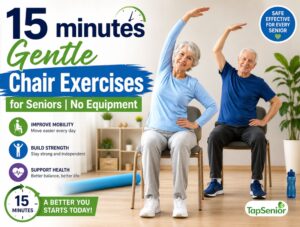
Why Chair Exercises Are Perfect for Older Adults
Many seniors believe exercise must be intense to be effective. Fortunately, research consistently shows that moderate movement performed regularly produces remarkable health benefits.
A well-designed chair exercise program for seniors helps improve nearly every major component of physical fitness.
First, it strengthens muscles throughout the body. Strong muscles make everyday activities such as standing up, climbing stairs, carrying groceries, and getting in and out of a vehicle much easier.
Second, chair exercises help maintain joint flexibility. Gentle movements encourage lubrication inside the joints, reducing stiffness and improving range of motion.
Third, these exercises stimulate blood circulation. Better circulation delivers oxygen and nutrients throughout the body while helping reduce swelling in the lower legs.
Fourth, regular movement supports heart health. Even moderate marching while seated gently raises the heart rate, contributing to improved cardiovascular fitness.
Finally, exercise benefits emotional well-being. Physical activity stimulates the release of endorphins, helping reduce stress, anxiety, and symptoms of depression. Many seniors report feeling happier and more energetic after completing even a short exercise session.
Perhaps most importantly, consistent exercise helps seniors maintain independence for longer, allowing them to continue enjoying hobbies, traveling, spending time with family, and participating in community activities.
Before You Begin Your Workout
Preparation is simple, but a few small details can make your workout safer and more enjoyable.
Choose a sturdy chair with a firm seat. Ideally, the chair should not have wheels or swivel. Chairs with or without armrests both work well, although chairs without armrests provide slightly more freedom of movement.
Wear supportive walking shoes or athletic sneakers whenever possible. Good footwear provides stability and reduces stress on your joints.
Sit toward the front half of the chair while keeping both feet flat on the floor. Maintain a tall posture by lifting your chest slightly and relaxing your shoulders.
During every exercise, remember one important rule:
Move only within a comfortable range.
You should feel your muscles working but never experience sharp pain. If any movement causes discomfort, reduce the range of motion or simply skip that exercise.
Always breathe naturally. Avoid holding your breath during movements, especially while tightening muscles.
Most importantly, remember that this workout is designed to be adapted. Everyone has different abilities, and there is absolutely no need to keep pace with anyone else.
Warm Up Your Body
Every good workout begins with a proper warm-up. Warming up gradually increases circulation, loosens stiff joints, prepares muscles for activity, and reduces injury risk.
The first few minutes focus on gently waking up the body.
Toe Taps
Begin by sitting upright with good posture.
Lightly tap your toes against the floor while keeping your heels down.
The movement is simple, but it activates the muscles in your feet, ankles, and lower legs while encouraging healthy blood flow.
As you continue tapping, allow your breathing to remain relaxed and steady.
Imagine your body slowly coming to life after a long period of sitting.
This easy movement also helps improve ankle mobility, which plays an important role in maintaining balance during walking.
Gentle Marching
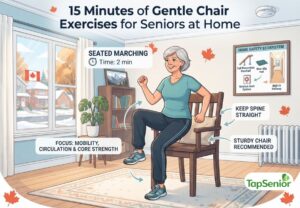
Once your feet feel warmed up, transition into seated marching.
Lift one knee slightly.
Lower it.
Then lift the opposite knee.
Continue alternating in a smooth, controlled rhythm.
There’s no need to lift your knees high.
Small movements performed consistently are just as valuable.
Seated marching raises your heart rate slightly while strengthening your hip flexors and improving coordination between both sides of your body.
If you enjoy music, matching your movements to the rhythm can make the exercise feel much more enjoyable.
Consistency matters far more than speed.
Wide Feet and Narrow Feet
Next, gently step both feet apart.
Pause.
Bring them back together.
Repeat this side-to-side pattern several times.
Although the movement appears simple, it activates muscles around the hips while encouraging better mobility throughout the lower body.
Maintaining hip flexibility becomes increasingly important as we age because stiff hips often contribute to balance problems and slower walking speeds.
Throughout the movement, keep sitting tall and avoid leaning backward.
Wake Up Your Upper Body
After warming up your legs, it’s time to activate the upper body.
Alternating between upper and lower body exercises helps prevent fatigue while allowing each muscle group to recover.
Light Arm Punches
Extend one arm forward.
Then the other.
Imagine gently punching the air.
There is no need for force.
Instead, focus on controlled movement and fully extending each arm before bringing it back.
This movement increases circulation to your shoulders, arms, and upper back while gently engaging your core muscles.
As your confidence grows, you may tighten your arm muscles slightly during each punch to create a mild strengthening effect.
Swimming Arms
Now imagine yourself swimming in warm tropical water.
Reach both arms forward.
Sweep them backward.
Then forward again.
Allow your shoulders to move naturally.
This flowing motion helps improve shoulder mobility while stretching muscles across the chest and upper back.
Many seniors spend long hours sitting or looking downward, which often leads to rounded shoulders.
This exercise encourages better posture while reducing upper-body stiffness.
Try to make each movement smooth and relaxed rather than rushed.
Reach Back and Push Forward
Continue by reaching one arm backward as though pulling something toward you.
Then press forward.
Alternate between pulling and pushing.
As you pull back, imagine squeezing your shoulder blade toward the center of your back.
As you push forward, fully extend your arm while maintaining control.
This movement strengthens muscles responsible for maintaining good posture.
Over time, stronger postural muscles help reduce neck discomfort, shoulder tension, and upper-back fatigue.
Return to Marching
After working your arms, return to seated marching.
Alternating between upper-body and lower-body exercises gives your muscles a chance to recover while maintaining steady cardiovascular activity.
Remember, there is no competition.
Move at your own pace.
If you feel tired, slow down or pause before continuing.
Regular movement is far more important than intensity.
Leg Extensions
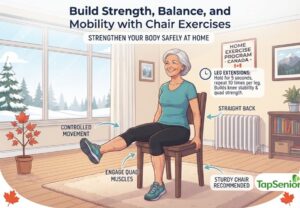
One of the most beneficial seated exercises for older adults is the leg extension.
Sit tall.
Extend one leg forward until it becomes nearly straight.
Pause briefly.
Squeeze the muscles on the front of your thigh.
Then slowly lower your foot back to the floor.
Repeat several times before switching legs.
This exercise targets the quadriceps, one of the most important muscle groups for maintaining independence.
Strong quadriceps help seniors stand up from chairs more easily, climb stairs safely, improve walking endurance, and reduce fall risk.
Rather than simply lifting your leg, concentrate on intentionally tightening the muscles throughout the movement.
Quality always matters more than quantity.
Overhead Reach and Pull
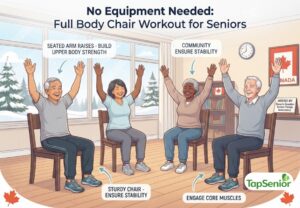
Next, lift one arm overhead.
Reach toward the ceiling.
Then slowly pull your elbow downward.
Imagine you’re pulling a rope hanging above you.
Each time you pull downward, gently squeeze your bicep.
Repeat several repetitions before switching arms.
This exercise strengthens the shoulders, upper arms, and muscles responsible for pulling movements used in many daily activities.
Reaching into kitchen cabinets, lifting light objects, and carrying shopping bags all become easier when these muscles remain strong.
Additionally, reaching overhead promotes shoulder flexibility that often decreases with age.
Increase the Pace Slightly
Now it’s time to raise your heart rate just a little.
Return once again to seated marching.
After several comfortable marches, increase your pace for just a few seconds.
Think of it as a gentle seated jog rather than a sprint.
Lift your knees a little faster while continuing to breathe normally.
Even this brief burst of movement challenges your cardiovascular system in a safe and manageable way.
After several seconds, immediately return to a comfortable marching pace.
This interval-style approach gently improves endurance without overwhelming the body.
Remember that your workout should always feel manageable.
If increasing the pace feels uncomfortable, simply continue marching at your normal rhythm.
There is absolutely nothing wrong with modifying the exercise.
The goal is to finish the workout feeling energized rather than exhausted.
Gentle Leg Kicks to Improve Mobility
After completing the marching intervals, begin gently extending each leg forward in an alternating kicking motion.
Unlike fast kicking movements, these should be slow and controlled.
Lift one leg.
Extend it comfortably.
Return it to the floor.
Repeat with the opposite leg.
This exercise improves coordination while increasing blood flow through the hips, knees, and lower legs.
It also encourages better flexibility throughout the hamstrings and quadriceps, muscles that play an essential role in walking, standing, and climbing stairs.
Try not to swing your legs.
Instead, think about controlling every inch of the movement.
The slower you move, the harder your muscles work.
Forward Reaches for Shoulder Mobility
Bring both arms in front of your body.
Reach forward as though trying to touch something just beyond your fingertips.
Then return your arms to the starting position.
Repeat this movement several times.
Each reach stretches the muscles across the upper back while encouraging your shoulders to move through a healthy range of motion.
Many older adults spend hours sitting or looking downward, causing the shoulders to round forward.
Regular shoulder mobility exercises for seniors help reverse this posture and reduce stiffness.
Imagine creating as much length as possible from your shoulders to your fingertips.
Avoid shrugging your shoulders toward your ears.
Instead, keep your neck relaxed throughout the movement.
Seated Rows to Strengthen the Back
Now lean slightly forward while keeping your back long and your chest open.
Raise both elbows toward the ceiling as if performing a rowing motion.
Pause briefly.
Squeeze your shoulder blades together.
Then slowly lower your arms.
This movement strengthens the upper back, one of the most overlooked muscle groups in older adults.
Strong back muscles improve posture, reduce neck pain, and make lifting everyday objects much easier.
A helpful visual cue is to imagine gently squeezing an orange between your shoulder blades.
That simple image encourages proper muscle activation without unnecessary tension.
Why Alternating Muscle Groups Matters
You may notice that this workout frequently switches between upper-body and lower-body exercises.
There is an excellent reason for this approach.
Alternating muscle groups allows one area of the body to recover while another performs the work.
This keeps your heart rate elevated without overloading any single muscle group.
For seniors, this approach reduces fatigue while making the entire workout feel more comfortable.
It also encourages better endurance over time.
If every exercise focused only on the legs, many participants would tire quickly.
Similarly, too many upper-body exercises performed consecutively could fatigue the shoulders.
A balanced routine keeps your body energized from beginning to end.
Another Round of Seated Marching
Return once again to your seated march.
Lift one knee.
Then the other.
Maintain steady breathing.
Sit tall.
Smile if you can.
Many fitness professionals encourage smiling during exercise because it helps relax facial muscles and often improves mood.
Continue marching at your own comfortable pace.
If you feel confident, increase the speed slightly for several seconds before slowing down again.
These short bursts of movement gently improve cardiovascular endurance without creating excessive strain.
Remember, consistency is far more important than speed.
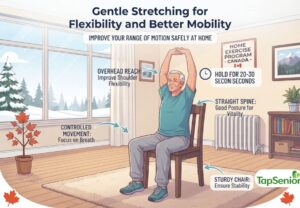
Side Arm Raises
Allow your legs to rest while shifting attention to your shoulders.
Raise both arms slowly out to the sides.
Lift until they reach shoulder height or whatever height feels comfortable.
Lower them with control.
If you’d like to make the exercise slightly more challenging, imagine pushing against invisible resistance as your arms move upward and downward.
This mental cue increases muscle engagement without adding weights.
Upper body strength for seniors is incredibly important because it supports everyday tasks like reaching into cupboards, carrying groceries, opening heavy doors, and lifting grandchildren.
Keep your shoulders relaxed.
Avoid lifting them toward your ears.
Move slowly.
Control every repetition.
Controlled Arm Punches
Return to light forward punches.
Extend one arm.
Then the other.
This simple movement combines shoulder mobility with gentle arm strengthening.
As you extend each arm, tighten the muscles slightly before returning to the starting position.
The movement also encourages coordination between both sides of the body while keeping the heart rate elevated.
Many seniors enjoy performing this exercise while listening to upbeat music because it naturally creates a steady rhythm.
Bicep Curl and Overhead Reach Combination
Next, bend both elbows as though performing a bicep curl.
Pause briefly.
Then extend both arms overhead.
Slowly lower them again.
This combination movement strengthens the biceps, shoulders, and upper back simultaneously.
Functional exercises like this closely resemble everyday movements such as reaching into cabinets or placing lightweight objects onto shelves.
Rather than rushing through the repetitions, focus on smooth, deliberate movement.
Every repetition should feel controlled.
Chest Press Movement
Bring your hands together in front of your chest.
Press your palms together firmly.
Extend your arms forward.
Then pull them back.
Imagine pushing through thick water or pressing against resistance.
This activates the chest, shoulders, and arm muscles while encouraging good posture.
Strong chest muscles contribute to pushing movements used throughout daily life.
Even opening a heavy door becomes easier when these muscles remain strong.
Second Round of Leg Extensions
Return to your legs for another strengthening set.
Extend one leg.
Hold briefly.
Tighten the thigh muscles.
Lower with control.
Repeat several repetitions before switching sides.
This second round reinforces strength gains while improving muscle endurance.
Over time, stronger quadriceps can significantly improve confidence during walking and standing.
One of the best features of chair workouts for older adults is that they build strength without placing unnecessary stress on the knees.
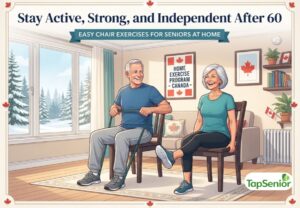
Hip Abduction Exercise
Now move one leg outward to the side.
Bring it back.
Repeat on the opposite side.
These side leg movements strengthen the hip muscles responsible for balance.
Weak hip muscles often contribute to instability during walking.
By strengthening these muscles regularly, seniors can improve stability while reducing fall risk.
If your chair has armrests, simply sit slightly forward to provide enough room for your legs to move comfortably.
Move only as far as your flexibility allows.
Seated Calf Raises
Place both feet flat on the floor.
Lift your heels.
Pause.
Lower them again.
This movement strengthens the calf muscles while encouraging healthy circulation throughout the lower legs.
Improved calf strength contributes to better walking performance and ankle stability.
Calf raises may appear easy, but they play an important role in maintaining mobility as we age.
Triceps Strengthening
Lean forward slightly.
Raise your elbows.
Now straighten your arms backward.
Pause.
Return to the starting position.
This movement targets the triceps located on the back of your upper arms.
Strong triceps make everyday pushing movements easier, including standing up from a chair using your arms if necessary.
Imagine squeezing the muscles each time your arms become fully straight.
Slow Shoulder Raises
Sit upright once again.
Raise both arms slowly to shoulder height.
Lower them just as slowly.
Remember that slower movements create more muscular effort than fast repetitions.
Imagine gently pushing through resistance during both the lifting and lowering phases.
This improves shoulder stability while enhancing muscular control.
Arm Rolls
Extend your arms in front of you.
Roll them backward.
Then forward.
This flowing movement promotes shoulder flexibility while relieving stiffness that commonly develops after long periods of sitting.
Many participants find this movement particularly relaxing.
Full Body Stretching Routine
After strengthening the body, it’s time to cool down with gentle stretching.
Cooling down allows your heart rate to gradually return to normal while reducing muscle tightness.
Bring both hands together.
Reach forward.
Feel the stretch across your upper back.
Hold comfortably while breathing slowly.
Next, keep your feet flat and gently lean forward from your hips.
Many seniors experience relief in the lower back during this stretch.
Move only until you feel a comfortable stretch.
Never force the movement.
Side Body Stretch
Return to an upright position.
Lean gently toward one side.
Reach overhead if comfortable.
Feel the stretch along your side.
Return to the center.
Repeat on the opposite side.
These stretches improve flexibility throughout the spine while encouraging better posture.
Shoulder Stretch
Bring one arm across your chest.
Use your opposite arm to gently pull it closer.
Hold comfortably.
Repeat on the other side.
If you have shoulder pain, reduce the intensity or skip this stretch entirely.
Stretching should always feel pleasant rather than painful.
Wrist Mobility
Rotate both wrists slowly in one direction.
Then reverse.
These gentle movements help maintain flexibility for everyday tasks like writing, cooking, gardening, and opening jars.
Hamstring Stretch
Extend one leg.
Point your toes.
Then flex your foot toward your body.
You should feel a comfortable stretch along the back of your thigh and calf.
Repeat on the opposite leg.
Ankle Circles
Lift one foot slightly.
Rotate your ankle in slow circles.
Reverse directions.
Repeat with the other foot.
Healthy ankle mobility contributes to better balance and smoother walking.
Neck Relaxation
Lower one ear gently toward your shoulder.
Take a slow, deep breath.
Return to center.
Repeat on the opposite side.
Finally, lower your chin toward your chest.
Feel the gentle stretch across the back of your neck.
Avoid forcing the movement.
Gentle stretching is all that’s needed.
Finish with a Deep Breath
Raise both arms overhead.
Take a deep breath in through your nose.
Slowly breathe out as you lower your arms.
Congratulations.
In just fifteen minutes, you’ve completed a balanced routine that strengthened your muscles, improved circulation, increased flexibility, and supported your overall health.
Tips for Long-Term Success
The real benefits of daily chair exercises for seniors come from consistency rather than intensity.
Try completing this routine three to five times each week.
As your confidence grows, you may even perform it daily.
Pair your workouts with healthy eating, adequate hydration, quality sleep, and regular walking whenever possible.
Most importantly, celebrate every workout you complete.
Every movement is an investment in your future health.
Frequently Asked Questions
Can beginners perform these chair exercises?
Absolutely. Every movement can be modified to match your fitness level.
Do I need exercise equipment?
No. A sturdy chair and supportive shoes are all you need.
How often should seniors perform chair exercises?
Most older adults benefit from exercising at least three to five days each week, although gentle daily movement is even better if approved by a healthcare provider.
Will chair exercises help with balance?
Yes. While performed sitting down, these exercises strengthen many of the muscles responsible for standing balance and walking stability.
Are chair exercises good for arthritis?
Many people with arthritis find gentle movement reduces stiffness and improves joint comfort. Always move within a pain-free range and consult your healthcare provider if you have concerns.
Final Thoughts
Remaining active doesn’t require complicated equipment or long hours at the gym. Sometimes, fifteen intentional minutes are enough to make a meaningful difference. By practicing these gentle chair exercises for seniors, you can improve strength, flexibility, circulation, posture, and confidence while reducing stiffness and supporting your independence.
Remember that every small step counts. Whether you’re beginning your fitness journey or simply looking for a safe way to stay active, this routine proves that meaningful exercise can happen anywhere, at any age, and with nothing more than a sturdy chair.
Stay consistent, listen to your body, and enjoy the lifelong benefits of moving every day.
Bài viết liên quan: