
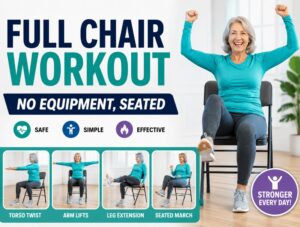
Full Chair Workout – No Equipment, Seated. As we grow older, staying physically active becomes one of the most important investments we can make in our long-term health. Yet many older adults struggle to find an exercise routine that feels safe, comfortable, and easy to follow. Joint pain, arthritis, balance concerns, reduced mobility, and chronic health conditions often discourage seniors from participating in traditional workouts. Fortunately, staying active doesn’t always require standing exercises, expensive equipment, or a gym membership. One of the safest and most effective ways to improve overall health is through a Chair Workout for Seniors that can be completed entirely while sitting.
A well-designed Seated Exercise Routine provides countless benefits without placing unnecessary stress on the knees, hips, ankles, or lower back. It helps improve circulation, strengthen muscles, maintain flexibility, increase cardiovascular endurance, and support healthy aging. More importantly, chair exercises allow seniors of nearly every fitness level to participate confidently, whether they are beginning their fitness journey, recovering from surgery, managing arthritis, or simply looking for a gentle daily movement routine.
The “Full Chair Workout – No Equipment, Seated | More Life Health” workout demonstrates exactly how a complete seated exercise session can activate the entire body. Instead of focusing on only one muscle group, the routine systematically works the shoulders, arms, wrists, hands, core, hips, knees, ankles, legs, and neck while also including cardiovascular intervals and stretching. This balanced approach makes it one of the most comprehensive Home Exercise for Seniors programs available.
Another advantage of this style of training is accessibility. There is no need for resistance bands, dumbbells, treadmills, or specialized machines. All that’s required is a sturdy chair placed on a stable surface. This simplicity removes many barriers that prevent older adults from exercising consistently. Whether someone lives independently, with family, or in a senior community, this routine can become part of a healthy daily lifestyle.
Beyond improving physical health, regular movement contributes significantly to emotional well-being. Exercise stimulates blood flow to the brain, releases mood-enhancing endorphins, reduces stress, and helps seniors maintain confidence in their ability to perform everyday tasks. Activities such as reaching overhead, getting out of a chair, carrying groceries, climbing stairs, or walking around the neighborhood become easier when muscles remain active and joints continue moving through their natural range of motion.
In this comprehensive guide, we’ll explore each section of the workout, explain why every movement matters, discuss the science behind Senior Fitness, and provide practical tips that help older adults safely incorporate this routine into their weekly schedule.
Why Chair Exercises Are Perfect for Older Adults
One of the biggest misconceptions about exercise is that effective workouts must be intense. In reality, consistency matters much more than intensity, especially for older adults.
A properly structured Low Impact Exercise routine delivers meaningful improvements while minimizing injury risk.
Chair workouts are especially beneficial because they provide stability throughout each movement. Sitting reduces the fear of falling while allowing participants to focus on posture, breathing, and muscle activation.
For seniors living with:
- Arthritis
- Osteoporosis
- Parkinson’s disease
- Multiple sclerosis
- Hip replacements
- Knee replacements
- Balance disorders
- Chronic back pain
chair exercises often serve as the ideal starting point for rebuilding strength and confidence.
Unlike traditional workouts that may overload joints, seated exercises distribute body weight safely while still challenging the muscles.
The result is improved function without unnecessary discomfort.
The Importance of Starting with a Proper Warm-Up
Every successful workout begins with preparation.
The More Life Health routine spends several minutes warming up every major joint before increasing exercise intensity.
This approach is extremely important because aging muscles and connective tissues require more time to prepare for movement.
A proper warm-up gradually increases:
- Blood circulation
- Joint lubrication
- Muscle temperature
- Nervous system activation
- Coordination
- Flexibility
Skipping this stage often increases stiffness and raises the risk of muscle strains.
Instead of rushing into harder movements, the workout begins by gently awakening every part of the body.
Shoulder Circles Improve Daily Mobility
The first exercise focuses on gentle shoulder circles.
Although simple, this movement offers tremendous benefits.
The shoulders are among the most mobile joints in the human body, allowing us to reach, lift, dress ourselves, wash our hair, and perform countless daily tasks.
Unfortunately, shoulder mobility often decreases with age due to inactivity or arthritis.
Performing slow shoulder circles helps:
- Improve circulation
- Reduce stiffness
- Increase joint lubrication
- Enhance posture
- Prepare the upper body for movement
Maintaining healthy shoulder mobility makes everyday activities significantly easier.
Gentle Arm Circles Activate Supporting Muscles
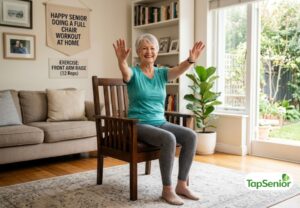
The workout continues with controlled arm circles.
Rather than swinging the arms rapidly, participants perform slow, deliberate circles that activate the shoulders, upper arms, and stabilizing muscles.
These muscles play a vital role in maintaining good posture.
Strong shoulder stabilizers reduce the likelihood of rounded shoulders, neck tension, and upper back discomfort.
For seniors who spend long periods sitting, these exercises help counteract poor posture developed throughout the day.
Consistent practice contributes to better alignment and improved upper-body endurance.
Bicep Curls Without Weights Still Build Strength
Many people believe muscles can only become stronger by lifting heavy weights.
That simply isn’t true.
Even without equipment, controlled movements performed repeatedly can strengthen muscles through resistance created by gravity and body positioning.
During the seated curls, participants straighten their arms before bending at the elbows.
This movement strengthens:
- Biceps
- Forearms
- Grip muscles
- Elbow stabilizers
Strong arms are essential for daily independence.
Tasks such as carrying groceries, opening doors, lifting laundry baskets, preparing meals, or using mobility aids all require functional upper-body strength.
Developing Strength Training for Seniors doesn’t always require heavy equipment.
Consistency often produces better long-term results than occasional intense workouts.
Reaching Overhead Improves Flexibility and Functional Movement
The overhead reaching exercise appears simple, yet it trains one of the most important movement patterns for independent living.
Think about how often we reach upward during the day.
We place dishes into cabinets.
We retrieve clothing from closets.
We wash our hair.
We change light bulbs.
We reach for books.
Without adequate shoulder flexibility, these ordinary activities become surprisingly difficult.
Regular overhead reaching maintains mobility throughout the shoulder complex while gently engaging the upper back and core muscles.
Combined with controlled breathing, the movement also encourages better posture.
Wrist Mobility Often Gets Overlooked
Hands perform thousands of movements every single day.
Yet few exercise programs dedicate time to wrist mobility.
The More Life Health routine wisely includes wrist circles in both directions.
Healthy wrists improve comfort while:
- Writing
- Cooking
- Gardening
- Using phones
- Holding utensils
- Knitting
- Typing
- Opening containers
Maintaining wrist flexibility may also reduce stiffness commonly experienced by seniors with osteoarthritis.
Finger Exercises Preserve Hand Function
One of the standout features of this workout is its attention to hand health.
Opening the fingers wide before making a gentle fist strengthens small muscles throughout the hands.
Touching the thumb to each fingertip improves coordination and dexterity.
These movements support everyday activities like:
- Buttoning shirts
- Using keys
- Holding cups
- Using eating utensils
- Writing
- Managing medication bottles
Maintaining hand strength contributes greatly to independent living.
For seniors experiencing mild arthritis, gentle finger exercises performed daily can help reduce stiffness while improving movement quality.
Hip Mobility Is Essential for Walking
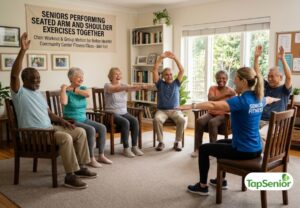
After warming up the upper body, attention shifts toward the hips.
Hip mobility influences nearly every movement we perform.
Standing.
Walking.
Climbing stairs.
Getting into a car.
Turning around.
Even maintaining balance depends heavily upon healthy hip function.
The seated hip lifts and outward movements activate muscles including:
- Hip flexors
- Gluteal muscles
- Hip stabilizers
- Core muscles
These muscles work together to support walking efficiency while reducing fall risk.
Better hip mobility often leads to smoother movement patterns throughout everyday life.
Knee Extensions Strengthen One of the Body’s Largest Muscle Groups
The quadriceps are among the largest muscles in the body.
Unfortunately, they weaken rapidly with age if left unused.
Weak quadriceps contribute to:
- Difficulty standing
- Trouble climbing stairs
- Reduced walking speed
- Poor balance
- Increased fall risk
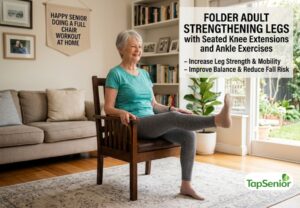
The seated knee extensions included in this Chair Exercise Routine specifically target these muscles.
Straightening the leg while maintaining proper posture encourages controlled muscle activation without excessive pressure on the knee joint.
For individuals managing arthritis, this gentle strengthening exercise often proves far more comfortable than standing squats.
Ankle Pumps Improve Circulation
Many seniors experience swollen feet or ankles after prolonged sitting.
One contributing factor is reduced circulation.
Ankle pumps act as a natural circulation booster.
Alternating between pointing the toes downward and pulling them upward activates the calf muscles, which function as a “second heart.”
Each contraction helps pump blood back toward the heart.
Improved circulation may help:
- Reduce swelling
- Decrease stiffness
- Lower fatigue
- Support healthy veins
- Enhance walking comfort
This simple exercise becomes especially valuable during long periods of sitting, whether watching television or traveling.
Ankle Circles Increase Stability
Healthy ankles provide the foundation for safe walking.
Limited ankle mobility affects balance more than many people realize.
Gentle ankle circles strengthen small stabilizing muscles while increasing flexibility.
These improvements may contribute to better foot placement and smoother walking patterns.
Combined with calf raises later in the workout, ankle exercises support overall Balance and Mobility, reducing the likelihood of trips and falls.
Calf Raises Strengthen Every Step
The calves help propel the body forward during walking.
Weak calf muscles reduce walking efficiency and make climbing stairs more challenging.
Performing seated calf raises strengthens these important muscles while remaining completely safe for individuals who may not yet feel comfortable exercising while standing.
Every repetition prepares the legs for everyday movement.
Although the exercise seems gentle, it contributes meaningfully to lower-body endurance over time.
Deep Breathing Enhances Exercise Performance
Throughout the workout, participants are encouraged to take slow, deep breaths.
Breathing correctly is often overlooked during exercise.
However, controlled breathing offers numerous benefits:
- Improves oxygen delivery
- Supports heart health
- Reduces muscle tension
- Lowers stress hormones
- Encourages relaxation
- Helps maintain proper rhythm
For older adults, combining movement with intentional breathing creates a calming exercise experience that benefits both physical and mental health.
Preparing the Body for Cardiovascular Exercise
Once the warm-up is complete, the body has been thoroughly prepared.
The joints are moving freely.
The muscles are activated.
Circulation has increased.
Posture has improved.
Breathing has become more controlled.
This gradual progression allows participants to safely transition into the more active portion of the workout without shocking the body.
Unlike many exercise programs that immediately introduce high-intensity movements, this thoughtful approach respects the needs of aging muscles and joints.
As the session continues, participants begin incorporating faster arm movements, coordinated punches, core engagement, and longer endurance exercises that elevate the heart rate while remaining completely seated.
Cardiovascular Chair Exercises That Get Your Heart Pumping
After completing a thorough warm-up, the workout gradually shifts into gentle cardiovascular training. While many people associate cardio with walking, jogging, or cycling, seated exercises can also elevate the heart rate effectively. This makes them an excellent option for older adults who need a safer, lower-impact alternative.
The routine begins with a series of seated punches. Although the movements appear simple, they activate multiple muscle groups simultaneously while encouraging rhythmic breathing and continuous movement. This combination helps increase circulation and supports cardiovascular health without requiring participants to stand.
One of the greatest advantages of Chair Cardio Exercises is that they allow seniors to improve endurance while maintaining stability. There is no need to worry about uneven surfaces, balance challenges, or excessive stress on the joints. Every movement can be performed comfortably from a sturdy chair.
Regular cardiovascular exercise has been shown to support:
- Better heart health
- Improved lung function
- Increased endurance
- Enhanced blood circulation
- Better blood sugar management
- Improved mood
- Higher daily energy levels
Even just twenty to thirty minutes of moderate movement several days each week can make a significant difference in overall health.
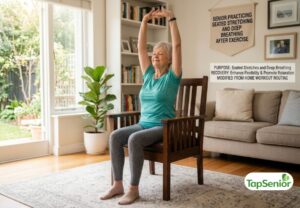
Seated Punches Build Endurance and Coordination
The forward punching sequence serves multiple purposes. Besides raising the heart rate, it also improves coordination between the upper body and core.
Each punch encourages participants to maintain an upright posture while engaging the abdominal muscles. Rather than simply swinging the arms, the exercise teaches controlled movement through the shoulders and upper back.
As the pace gradually increases, participants naturally develop better endurance. This gentle progression allows the body to adapt without becoming overwhelmed.
The workout encourages seniors to listen to their bodies. If fatigue develops, taking a brief rest before continuing is completely acceptable. Consistency is always more important than perfection.
Downward Punches Activate Different Muscle Groups
Changing the punching direction places emphasis on slightly different muscles.
Punching downward strengthens the shoulders, chest, upper back, and arms while also encouraging better trunk stability.
These changing movement patterns prevent repetitive strain while keeping the workout engaging.
Variety is important because daily life rarely requires movement in only one direction. Reaching for objects, pushing open doors, lifting bags, and performing household chores all involve multiple movement patterns.
The more varied the exercises, the better prepared the body becomes for everyday activities.
Uppercuts Improve Functional Upper Body Strength
One of the more enjoyable sections of the routine includes seated uppercuts.
Unlike traditional punches, uppercuts encourage movement from the shoulders, torso, and core simultaneously.
This coordinated action develops:
- Shoulder strength
- Arm endurance
- Rotational mobility
- Core stability
- Body awareness
Rotational movements become increasingly valuable with age because they mimic common daily activities such as reaching across the body, loading groceries into a vehicle, fastening a seatbelt, or turning to speak with someone.
Maintaining rotational mobility helps preserve independence.
Rotational Punches Encourage Core Engagement
As the workout progresses, participants begin rotating slightly through the torso while punching forward.
These gentle twists engage the abdominal muscles without requiring difficult floor exercises.
The core functions as the body’s central support system.
Strong core muscles help with:
- Standing up
- Sitting down
- Walking
- Maintaining balance
- Protecting the lower back
- Improving posture
Developing Core Strength for Seniors reduces the likelihood of falls while making everyday movement feel easier and more controlled.
Overhead Punches Improve Shoulder Endurance
Punching upward challenges both strength and endurance.
Although lifting the arms overhead may initially seem tiring, consistent practice gradually improves shoulder function and muscular stamina.
For many older adults, overhead activities become increasingly difficult due to stiffness or reduced mobility.
Exercises like these help preserve the ability to perform important daily tasks such as placing groceries on shelves, reaching into cabinets, changing curtains, or dressing independently.
Maintaining overhead mobility supports long-term independence.
Strengthening the Lower Body for Better Mobility
After the cardiovascular section, the workout returns its focus to lower-body strengthening.
Strong legs are essential for almost every movement performed throughout the day.
Whether standing from a chair, climbing stairs, walking across a parking lot, or getting into bed, the legs provide the power needed to remain independent.
The seated knee extensions included throughout the workout specifically strengthen the quadriceps.
Research consistently shows that stronger leg muscles are associated with:
- Reduced fall risk
- Faster walking speed
- Better balance
- Greater independence
- Improved confidence
Building lower-body strength should remain a priority throughout every stage of healthy aging.
Calf Raises Improve Walking Efficiency
The repeated seated calf raises strengthen muscles that propel the body forward while walking.
Healthy calf muscles also assist with balance recovery when small slips or trips occur.
Because these exercises are performed while seated, they remain accessible even for individuals recovering from injury or surgery.
Over time, stronger calves contribute to smoother, more confident walking.
Partial Sit-to-Stand Movements Prepare for Everyday Life
One particularly practical exercise involves leaning forward and pushing through the feet without fully standing.
Although subtle, this movement directly mimics one of the most common daily activities: rising from a chair.
Many falls occur during transitions between sitting and standing.
Practicing this movement strengthens the muscles required while reinforcing proper body mechanics.
It also builds confidence for seniors who may feel hesitant about standing repeatedly.
Isometric Leg Exercises Build Strength Safely
The workout includes several isometric contractions where participants press their knees inward against their hands and later push outward.
These exercises strengthen muscles without requiring visible movement.
Isometric training offers several advantages:
- Reduced joint stress
- Increased muscle activation
- Improved stability
- Better control
- Lower injury risk
These gentle contractions effectively strengthen the inner and outer thigh muscles that help stabilize the hips during walking.
Arm Strength Supports Independent Living
Upper-body strength often determines how easily seniors perform everyday tasks.
The routine revisits seated bicep curls while later introducing overhead presses and triceps strengthening.
Together, these exercises target nearly every major muscle group in the arms.
Strong arms assist with:
- Carrying shopping bags
- Preparing meals
- Using walkers
- Holding grandchildren
- Gardening
- Housekeeping
- Lifting household objects
Maintaining Upper Body Strength for Seniors helps preserve independence for years to come.
Shoulder Blade Exercises Improve Posture
Poor posture becomes increasingly common with age.
Hours spent sitting, reading, driving, or watching television often lead to rounded shoulders.
The seated shoulder blade squeezes included in the workout help reverse this pattern.
Strengthening the muscles between the shoulder blades encourages:
- Better posture
- Reduced neck pain
- Improved breathing
- Greater upper-body stability
Small improvements in posture can make daily movement feel significantly easier.
Building a Stronger Core Without Floor Exercises
Many older adults avoid abdominal exercises because getting onto the floor feels difficult.
Fortunately, this workout demonstrates that effective core training can be performed entirely from a chair.
Controlled leaning movements require participants to engage the abdominal muscles while maintaining an upright spine.
Unlike fast crunches, these slow, deliberate movements emphasize control rather than momentum.
The result is safer and often more effective Core Exercise for Older Adults.
A stronger core contributes to:
- Better balance
- Reduced back pain
- Improved posture
- Easier transfers
- Safer walking
Seated Leg Raises Increase Coordination
Later in the workout, participants combine controlled leg lifting with core engagement.
These coordinated movements challenge both the brain and muscles simultaneously.
Coordination naturally declines with age if not practiced regularly.
Exercises requiring multiple body parts to work together help maintain neurological function while improving movement quality.
They also keep workouts mentally engaging.
The Importance of Cooling Down Properly
Finishing a workout correctly is just as important as the warm-up.
The cool-down gradually lowers the heart rate while allowing muscles to relax.
Suddenly stopping after exercise can leave muscles feeling tight and may contribute to stiffness later in the day.
The More Life Health routine includes gentle stretching for the:
- Upper back
- Shoulders
- Arms
- Neck
- Spine
- Hips
- Legs
These stretches help restore flexibility while encouraging relaxation.
Stretching Supports Healthy Aging
Regular stretching offers benefits far beyond flexibility.
Maintaining muscle length allows joints to move more comfortably throughout their full range of motion.
Older adults who stretch consistently often experience:
- Better posture
- Less stiffness
- Improved mobility
- Easier walking
- Reduced muscle tension
- Greater comfort during daily activities
Stretching also creates an opportunity to slow breathing and transition into a relaxed state.
Controlled Breathing Encourages Relaxation
Throughout the cool-down, participants focus on slow, controlled breathing.
Deep breathing activates the body’s relaxation response.
Benefits include:
- Lower heart rate
- Reduced stress
- Improved oxygen delivery
- Better mental clarity
- Enhanced recovery
This mindful conclusion transforms the workout into more than just physical exercise. It becomes a complete wellness routine supporting both body and mind.
Tips for Getting the Best Results
To maximize the benefits of this Chair Workout for Seniors, consider the following recommendations:
- Exercise at least three to five days each week.
- Choose a sturdy chair without wheels.
- Wear supportive footwear.
- Keep water nearby to stay hydrated.
- Move slowly and with control.
- Focus on good posture throughout every exercise.
- Breathe naturally and avoid holding your breath.
- Stop immediately if you experience dizziness, chest pain, or severe discomfort.
- Progress gradually instead of rushing.
- Celebrate consistency rather than intensity.
Small improvements made consistently produce meaningful long-term health benefits.
Creating a Weekly Chair Exercise Schedule
Older adults often achieve the best results by establishing a regular routine.
A balanced weekly schedule might include:
Monday: Complete full seated workout.
Tuesday: Gentle walking and stretching.
Wednesday: Repeat the full chair workout.
Thursday: Light mobility exercises and relaxation.
Friday: Complete the chair workout again.
Saturday: Leisure activities such as gardening or an easy walk.
Sunday: Recovery with gentle stretching and breathing exercises.
This balanced approach allows muscles adequate recovery while maintaining regular physical activity.
Who Can Benefit from This Workout?
This routine is suitable for many individuals, including:
- Older adults beginning an exercise program.
- Seniors with mild arthritis.
- Individuals recovering from illness or surgery after receiving medical clearance.
- People with limited mobility.
- Adults who spend extended periods sitting.
- Caregivers looking for safe home exercise ideas.
- Residents of retirement communities.
- Individuals wanting to improve overall Senior Fitness without expensive equipment.
As always, anyone with significant medical concerns should consult a healthcare professional before beginning a new exercise program.
Frequently Asked Questions
How often should seniors perform chair exercises?
Most healthy older adults benefit from performing chair exercises three to five times each week, combined with regular walking and flexibility training.
Can chair workouts improve strength?
Absolutely. Consistent bodyweight exercises performed while seated strengthen muscles, improve endurance, and enhance daily function.
Do I need exercise equipment?
No. This workout requires only a stable chair, making it one of the most accessible forms of Home Exercise for Seniors.
Are chair workouts safe for beginners?
Yes. They are specifically designed to reduce fall risk while providing an effective full-body workout.
Will these exercises help improve balance?
Yes. Although performed while seated, many movements strengthen the muscles responsible for standing, walking, and maintaining balance.
Final Thoughts
Remaining active is one of the most powerful ways to maintain independence, confidence, and quality of life as we age. The Full Chair Workout from More Life Health proves that effective exercise does not require a gym, expensive equipment, or high-impact movements. With nothing more than a sturdy chair and a commitment to move regularly, older adults can strengthen their muscles, improve cardiovascular health, increase flexibility, and support better balance.
Perhaps the greatest strength of this routine is its accessibility. Whether someone is just beginning their fitness journey, managing arthritis, recovering from surgery, or simply looking for a safer way to stay active, these seated exercises provide a practical and sustainable solution. Every gentle movement contributes to healthier joints, stronger muscles, improved posture, and greater confidence in performing everyday activities.
Healthy aging is built on consistent habits rather than dramatic efforts. By making this Chair Exercise Routine part of a weekly schedule, seniors can continue enjoying greater mobility, increased energy, enhanced independence, and a more active lifestyle for years to come. Every session is a reminder that it is never too late to improve your health, and every movement is a meaningful step toward living a stronger, happier, and more fulfilling life.
Bài viết liên quan: