
The Brain-Changing Benefits of Exercise. For decades, most people believed that exercise was primarily about maintaining a healthy weight, building stronger muscles, or improving heart health. While all of these benefits are undeniably important, modern neuroscience has revealed something even more fascinating: exercise has the remarkable ability to change the brain. Every walk around the neighborhood, every swim, every bike ride, and every session of gentle stretching creates powerful biological changes inside your brain that influence how you think, feel, remember, and age.
This discovery is particularly meaningful for older adults. As people grow older, many worry about memory loss, slower thinking, depression, anxiety, or the possibility of developing Alzheimer’s disease or other forms of dementia. Although no single lifestyle habit can completely eliminate these risks, research consistently shows that regular physical activity is one of the most effective ways to support long-term brain health, improve emotional well-being, and maintain independence.
Scientists now understand that the brain is far more adaptable than previously believed. This ability, known as neuroplasticity, means the brain continues creating new connections throughout life. Even in later years, healthy habits can strengthen existing neural pathways while encouraging the growth of new ones. Among all lifestyle choices, exercise for brain health stands out as one of the simplest, safest, and most affordable interventions available.
One of the reasons exercise is so powerful is that its benefits begin almost immediately. Within minutes of moderate physical activity, the brain receives increased blood flow, more oxygen, and a surge of beneficial chemicals that improve mood and sharpen concentration. Over weeks and months, these small improvements accumulate into lasting changes that enhance memory, increase resilience to stress, and support healthy aging.
For seniors, these changes often translate into real-life improvements. Daily tasks become easier. Conversations become more engaging. Learning new hobbies feels less intimidating. Confidence grows. Energy returns. Even sleep quality often improves, creating a positive cycle that benefits the entire body.
Families also notice the difference. Older adults who stay physically active frequently remain socially engaged for longer periods, experience fewer symptoms of depression, and maintain greater independence in their daily routines. Rather than simply adding years to life, regular aerobic exercise helps add life to those years.
In recent years, neurologists, psychologists, and geriatric specialists have increasingly emphasized the importance of physical activity for seniors as a cornerstone of healthy aging. While medications remain valuable for treating many diseases, exercise uniquely addresses multiple aspects of health simultaneously. It strengthens the cardiovascular system, reduces inflammation, supports metabolic health, and directly improves the structure and function of the brain itself.
Perhaps the most exciting discovery is that you do not need to become a marathon runner or spend hours in the gym every day. Moderate activities such as brisk walking, dancing, cycling, gardening, water aerobics, or even energetic household chores can produce meaningful neurological benefits when performed consistently.
In this comprehensive guide, we’ll explore exactly how exercise transforms the brain, why these changes matter for older adults, the science behind improved memory and mood, and practical strategies that seniors can use to make movement an enjoyable part of everyday life.
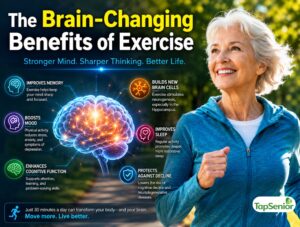
Understanding How Exercise Affects the Brain
The human brain contains approximately 86 billion neurons communicating through trillions of connections. Every memory, emotion, decision, and movement depends upon these incredibly complex networks.
For many years, scientists assumed that once people reached adulthood, the brain stopped producing new neurons. Aging was viewed as an unavoidable process of gradual decline.
Today, that belief has changed dramatically.
Researchers have discovered that certain parts of the brain continue producing new neurons throughout adulthood. This finding completely transformed neuroscience and provided hope that lifestyle choices could influence cognitive aging.
Among the most important brain regions affected by exercise are the hippocampus, the prefrontal cortex, and the brain’s communication networks that regulate mood, attention, and decision-making.
The hippocampus serves as the brain’s memory center. It helps transform daily experiences into long-term memories while supporting learning and navigation. Unfortunately, this area naturally shrinks with age and is one of the earliest regions affected by Alzheimer’s disease.
The prefrontal cortex sits just behind the forehead and manages many of the brain’s executive functions. It helps people focus attention, solve problems, plan ahead, regulate emotions, and make thoughtful decisions.
Regular exercise strengthens both of these critical regions.
Instead of simply slowing decline, physical activity actively encourages the brain to remain flexible, adaptable, and efficient.
Exercise Immediately Changes Brain Chemistry
One of the most fascinating discoveries in neuroscience is how quickly movement changes brain chemistry.
Even after a single workout, the brain begins releasing several important neurotransmitters.
These include dopamine, serotonin, and norepinephrine.
Each plays a unique role in supporting mental performance.
Dopamine increases motivation, learning, reward, and focus.
Serotonin helps regulate mood, emotional stability, and sleep.
Norepinephrine improves alertness, concentration, and reaction speed.
Together, these chemicals explain why many people report feeling happier, calmer, and mentally sharper after exercise.
Unlike temporary stimulants such as excessive caffeine or sugary snacks, exercise creates a healthier biological response that supports both immediate performance and long-term brain function.
Older adults often notice these improvements after activities like walking through a park, participating in a fitness class, swimming laps, or dancing with friends.
Many seniors describe feeling mentally refreshed instead of physically exhausted.
This mental clarity is not imagined.
It is a direct reflection of changing brain chemistry.
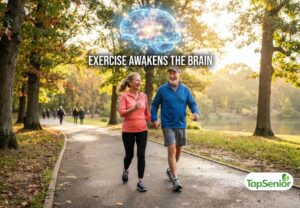
Better Blood Flow Means Better Brain Performance
The brain represents only about two percent of total body weight, yet it consumes roughly twenty percent of the body’s oxygen supply.
Every thought depends upon an uninterrupted flow of oxygen-rich blood.
Exercise strengthens the cardiovascular system, allowing the heart to pump more efficiently.
As circulation improves, the brain receives greater supplies of oxygen and nutrients.
This enhanced blood flow supports healthier neurons while removing waste products more effectively.
For older adults, improved circulation can contribute to:
- Faster thinking
- Better concentration
- Improved mental endurance
- Enhanced learning
- Greater alertness throughout the day
Although these changes may appear subtle at first, consistent physical activity gradually produces measurable cognitive improvements.
Exercise Encourages New Brain Cell Growth
One of the most revolutionary discoveries in neuroscience involves neurogenesis.
Neurogenesis refers to the creation of entirely new brain cells.
For many years, experts believed this process stopped after childhood.
Today, scientists know this is not true.
Exercise stimulates the production of new neurons inside the hippocampus.
This means movement literally helps build a healthier memory system.
The process is supported by increased production of Brain-Derived Neurotrophic Factor (BDNF), often called “fertilizer for the brain.”
BDNF helps neurons:
- Survive longer
- Grow stronger
- Form new connections
- Repair damaged pathways
- Improve communication between brain cells
Higher BDNF levels have been associated with better learning, faster memory formation, and healthier cognitive aging.
For seniors, this is especially encouraging because it suggests the brain retains an impressive ability to adapt throughout life.
Why Memory Improves with Regular Exercise
Memory depends upon efficient communication among billions of neurons.
When exercise strengthens the hippocampus and increases BDNF production, these communication networks become more effective.
As a result, older adults often experience improvements in:
Short-term memory
Remembering names.
Keeping track of appointments.
Following conversations.
Managing medications.
Long-term memory
Recalling family stories.
Learning new hobbies.
Remembering important events.
Building lasting memories with grandchildren.
Working memory
Keeping multiple pieces of information active while solving problems.
Following directions.
Planning daily activities.
Managing finances.
These improvements may appear gradually, but consistency often produces meaningful long-term benefits.
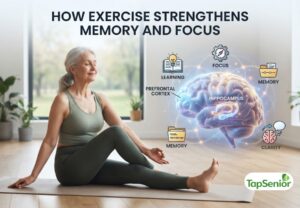
Improved Focus and Attention
Modern life constantly competes for our attention.
Phones ring.
Televisions play.
Notifications appear.
Background noise increases.
The ability to focus has become increasingly valuable.
Exercise strengthens the prefrontal cortex, improving attention control and mental flexibility.
Research demonstrates that even a single moderate workout can improve concentration for several hours afterward.
For seniors, better focus may help with:
Reading books.
Playing card games.
Completing crossword puzzles.
Cooking safely.
Driving more confidently.
Participating in conversations.
Learning new technology.
These improvements enhance both independence and overall quality of life.
Exercise Helps Reduce Stress
Stress affects far more than emotions.
Chronic stress raises cortisol levels, which can gradually damage brain cells, particularly inside the hippocampus.
Long-term stress contributes to:
Memory problems.
Poor sleep.
Depression.
Anxiety.
Reduced immune function.
Heart disease.
Exercise acts as a natural stress regulator.
Physical activity reduces cortisol while increasing endorphins, often called the body’s natural feel-good chemicals.
Many seniors find that walking outdoors combines multiple benefits simultaneously.
Fresh air.
Sunlight.
Nature.
Gentle movement.
Social interaction.
Together, these elements create powerful protection against chronic stress.
The Strong Connection Between Exercise and Mental Health
Depression and anxiety affect millions of older adults.
Unfortunately, symptoms often go unnoticed because people assume sadness or isolation are simply normal parts of aging.
They are not.
Exercise has consistently demonstrated significant benefits for emotional health.
Regular physical activity helps reduce symptoms of mild to moderate depression while improving resilience against anxiety.
These benefits result from several biological mechanisms.
Exercise increases serotonin.
It improves sleep quality.
It reduces inflammation.
It enhances self-confidence.
It creates opportunities for social engagement.
It gives individuals a sense of accomplishment.
For many seniors, joining a walking group or community fitness class provides emotional benefits that extend far beyond the exercise itself.
Friendships develop.
Purpose increases.
Isolation decreases.
Confidence returns.
The combination of physical movement and meaningful social interaction creates one of the strongest protective factors for healthy aging.
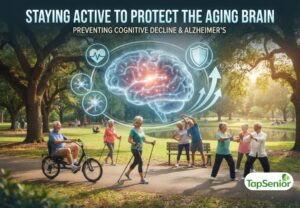
Exercise Builds a More Resilient Brain Against Aging
Growing older naturally brings changes to the brain. Processing speed may slow slightly, learning new information can require more repetition, and recalling names or appointments may take longer than it once did. While these changes are common, they are not the same as dementia, and they are certainly not a reason to stop challenging the brain.
One of the greatest discoveries in neuroscience is that regular exercise helps the brain become more resilient as it ages. Scientists often describe this concept as building a “cognitive reserve.” Think of it as creating extra pathways inside the brain. When some neurons become damaged or less efficient over time, the brain has alternative routes to keep functioning effectively.
Every brisk walk, cycling session, swimming workout, or dance class contributes to this reserve. Over months and years, these activities strengthen neural connections and improve communication between brain cells.
Instead of viewing aging as an unavoidable decline, modern research suggests that older adults have tremendous opportunities to influence how well their brains function throughout life.
Can Exercise Help Prevent Alzheimer’s Disease?
One of the biggest concerns among seniors and their families is Alzheimer’s disease.
Although scientists have not discovered a cure, numerous studies indicate that exercise and cognitive health are closely connected.
Exercise does not eliminate the possibility of developing Alzheimer’s disease, but it may significantly reduce risk and delay the onset of symptoms.
Researchers believe several mechanisms explain these protective effects.
Physical activity improves blood circulation to the brain.
It reduces chronic inflammation.
It lowers blood pressure.
It improves blood sugar regulation.
It supports healthier cholesterol levels.
It encourages the growth of new neurons.
It increases brain plasticity.
Each of these factors contributes to healthier brain aging.
Since Alzheimer’s disease develops gradually over many years, maintaining an active lifestyle throughout adulthood and into retirement can become one of the most valuable investments a person makes in future brain health.
The Role of Aerobic Exercise
Not all physical activity affects the brain equally.
While strength training, stretching, and balance exercises all provide valuable health benefits, aerobic exercise has received particular attention from neuroscientists.
Aerobic activities raise the heart rate for sustained periods, increasing oxygen delivery throughout the body and brain.
Examples include:
Walking at a brisk pace
Swimming
Cycling
Low-impact aerobics
Dancing
Water fitness
Light hiking
Tennis
Rowing
Even active gardening can qualify when performed continuously.
The goal is not intensity but consistency.
Moderate aerobic activity performed regularly produces measurable improvements in attention, memory, mood, and executive function.
Strength Training Supports Brain Function Too
Many people associate strength training only with building muscles.
However, resistance exercise also contributes to healthier brain function.
Lifting light weights, using resistance bands, or performing bodyweight exercises stimulates hormones that support tissue repair and healthy aging.
Strength training also improves:
Balance
Posture
Mobility
Bone density
Functional independence
Reduced fall risk
When seniors feel physically stronger, they often become more confident participating in social activities, traveling, volunteering, or learning new skills.
That increased confidence further benefits emotional well-being and cognitive health.
Ideally, an exercise routine should combine aerobic exercise with strength training, flexibility work, and balance exercises.
The Importance of Balance and Flexibility
Balance becomes increasingly important with age.
Falls remain one of the leading causes of injury among older adults.
Fortunately, balance can be trained.
Activities such as Tai Chi, yoga, and simple standing exercises strengthen the muscles responsible for stability while improving body awareness.
Flexibility exercises also reduce stiffness, improve posture, and increase comfort during daily activities.
Together, balance and flexibility training help seniors remain active, which indirectly benefits the brain by encouraging more consistent movement.
How Much Exercise Is Enough?
One of the most encouraging aspects of exercise science is that meaningful benefits do not require extreme effort.
Health experts generally recommend:
At least 150 minutes of moderate aerobic exercise each week.
Strength training at least two days per week.
Balance exercises several times weekly.
Stretching after physical activity or on most days.
For many people, this can be divided into manageable sessions.
Thirty minutes of walking five days each week already meets aerobic recommendations.
Even shorter sessions can be valuable.
Three ten-minute walks spread throughout the day can provide many of the same cardiovascular benefits as one continuous thirty-minute session.
The most important factor is developing a routine that becomes part of everyday life.
A Sample Weekly Brain-Healthy Exercise Plan
Creating a sustainable schedule often works better than trying to exercise intensely for a few weeks before giving up.
A balanced weekly routine might look like this:
Monday
Brisk walking for 30 minutes followed by gentle stretching.
Tuesday
Light resistance training using resistance bands or light dumbbells.
Wednesday
Swimming or water aerobics.
Thursday
Tai Chi or yoga focusing on flexibility and balance.
Friday
A longer neighborhood walk with a friend.
Saturday
Gardening, dancing, or recreational cycling.
Sunday
Relaxing nature walk combined with stretching exercises.
This variety keeps exercise enjoyable while challenging different parts of the body and brain.
Exercise Improves Sleep Quality
Sleep plays a vital role in brain health.
During sleep, the brain processes memories, removes waste products, repairs cells, and prepares for another day of learning.
Unfortunately, sleep problems become more common with age.
Regular exercise can improve:
Falling asleep faster.
Sleeping more deeply.
Reducing nighttime awakenings.
Feeling more refreshed in the morning.
Better sleep supports stronger memory formation, improved concentration, and healthier emotional regulation.
Exercise and quality sleep reinforce one another, creating a powerful cycle that benefits both body and mind.
Exercise Encourages Social Connection
The benefits of movement extend beyond biology.
Group exercise introduces opportunities for conversation, friendship, laughter, and community participation.
Older adults who exercise with others often remain more motivated than those exercising alone.
Social activities that involve movement include:
Walking clubs.
Senior fitness classes.
Dance lessons.
Community recreation programs.
Golf.
Pickleball.
Volunteer gardening projects.
Outdoor excursions.
Strong social relationships have independently been associated with lower rates of depression, improved cognitive function, and longer life expectancy.
When exercise combines physical activity with meaningful relationships, its benefits become even greater.
Nutrition Supports Exercise and Brain Health
Exercise works best alongside healthy nutrition.
The brain requires high-quality nutrients to build new neurons and maintain efficient communication between brain cells.
Foods that support brain health include:
Fatty fish rich in omega-3 fatty acids.
Leafy green vegetables.
Colorful berries.
Whole grains.
Nuts and seeds.
Beans and legumes.
Olive oil.
Fresh fruits.
Adequate hydration.
Limiting excessive sugar and highly processed foods also supports long-term cognitive health.
Combined with consistent physical activity, these nutritional habits create an environment where the brain can thrive.
Common Myths About Exercise and the Brain
Several myths prevent older adults from becoming more active.
One misconception is that people are “too old” to benefit.
Scientific evidence clearly disagrees.
Even individuals beginning exercise in their seventies or eighties often experience improvements in strength, balance, mood, and cognitive performance.
Another myth suggests that only vigorous workouts produce results.
In reality, moderate activity performed consistently often provides substantial benefits.
Walking remains one of the most effective forms of exercise available.
Some people believe memory loss is inevitable regardless of lifestyle.
Although aging cannot be stopped, healthy habits significantly influence how well the brain functions throughout life.
Finally, many assume exercise requires expensive gym memberships.
Simple activities performed at home or outdoors are often just as effective.
Practical Tips for Staying Consistent
Starting an exercise routine is one challenge.
Maintaining it is another.
The following strategies increase long-term success.
Choose activities you genuinely enjoy.
Exercise with friends whenever possible.
Set realistic weekly goals.
Celebrate small milestones.
Keep comfortable walking shoes readily available.
Schedule exercise like any important appointment.
Listen to your body while remaining consistent.
Remember that progress comes from regular movement rather than perfection.
Missing one workout is not failure.
Simply begin again the next day.
The Lifelong Power of Movement
Every movement sends a message to the brain.
That message says the body is alive, active, adaptable, and ready to learn.
The remarkable thing about exercise for brain health is that its benefits begin almost immediately while continuing to accumulate over months and years.
A single workout can improve mood and concentration.
Several weeks of consistent activity strengthen memory and attention.
Years of regular exercise help preserve independence, protect cognitive function, and support healthier aging.
Few lifestyle choices offer such wide-ranging benefits.
Whether someone chooses walking, swimming, dancing, cycling, Tai Chi, strength training, or gardening, every form of meaningful movement contributes to a healthier brain.
The goal is not athletic perfection.
The goal is lifelong consistency.

Frequently Asked Questions
Is walking enough to improve brain health?
Yes. Brisk walking is one of the most effective forms of aerobic exercise. Walking regularly improves circulation, supports memory, enhances mood, and contributes to long-term cognitive health.
How quickly will I notice mental benefits from exercise?
Many people experience improved mood and increased focus immediately after a workout. Long-term improvements in memory and overall cognitive function typically develop after several weeks or months of consistent activity.
Can exercise reverse dementia?
Exercise cannot cure Alzheimer’s disease or other forms of dementia. However, research suggests it may reduce the risk of cognitive decline, delay symptom progression, and improve quality of life.
What is the best exercise for seniors?
There is no single best exercise. A combination of walking, swimming, cycling, strength training, flexibility exercises, and balance activities provides the most comprehensive health benefits.
Is it ever too late to start exercising?
No. People can experience meaningful improvements in strength, mobility, mood, and brain function even when beginning exercise later in life.
Final Thoughts
The science is becoming increasingly clear: physical activity for seniors is about much more than maintaining muscles or protecting the heart. Every step, stretch, and movement supports a healthier, stronger, and more resilient brain.
By making regular exercise part of daily life, older adults can improve memory, sharpen focus, reduce stress, elevate mood, sleep more soundly, and build greater resistance against age-related cognitive decline. These benefits extend far beyond the individual, enriching relationships with family, friends, and the broader community.
Perhaps the most inspiring aspect of this research is its simplicity. You do not need expensive equipment, advanced athletic skills, or hours of free time. A commitment to moving your body consistently is enough to begin changing your brain for the better.
Healthy aging is not determined by genetics alone. Daily choices matter, and few choices are as powerful as choosing to move. Every walk through the neighborhood, every dance with loved ones, every swim, every bike ride, and every moment of purposeful movement is an investment in a brighter, healthier future.
Your brain is designed to adapt throughout life. Give it the opportunity to thrive through the lifelong gift of exercise.
Bài viết liên quan: